Asianet Newsable says India BESS to 236.2 GWh by FY32 as AI data centers signal an opex shift
Asianet Newsable reports an Equirus estimate that India’s battery energy storage demand will reach 236.
Edward Mullen ·
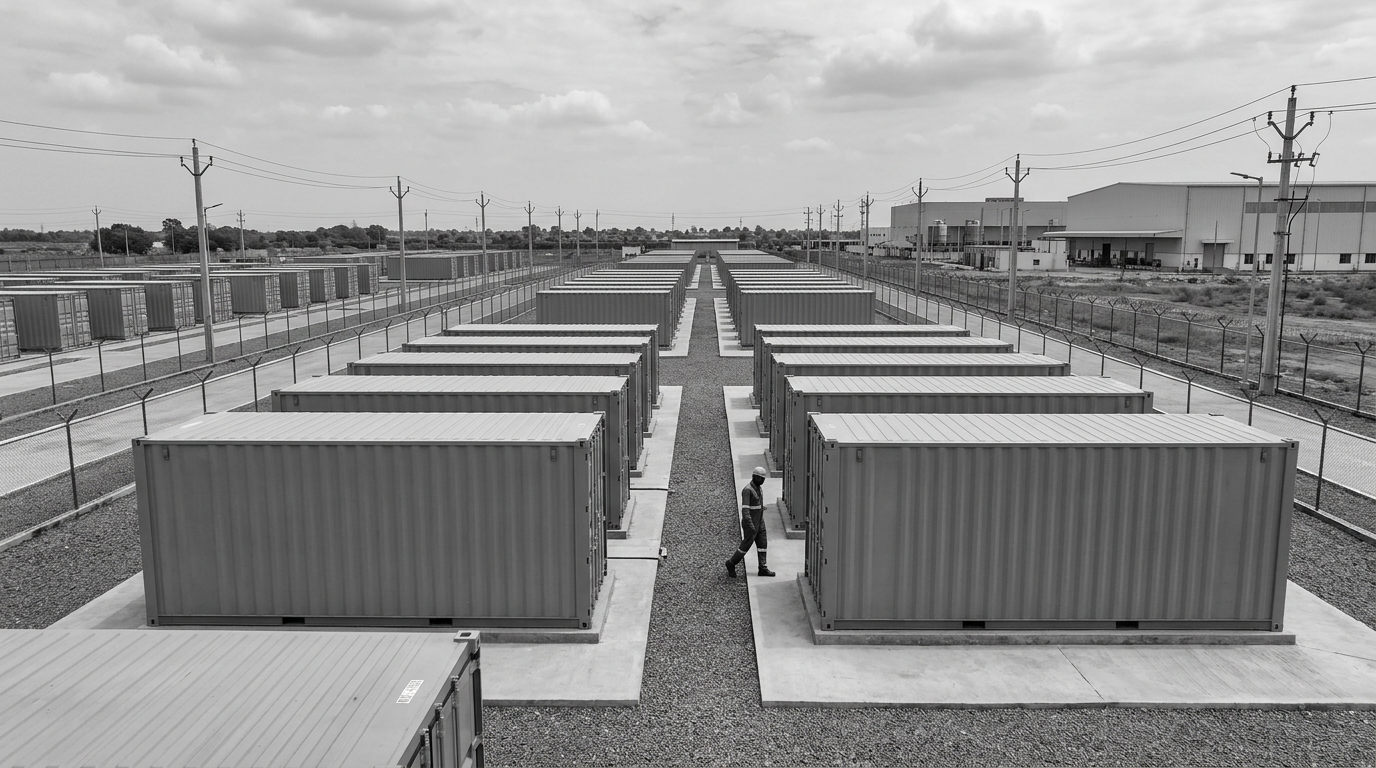
Conventional wisdom suggests battery energy storage systems (BESS) are primarily a utility play, part of large-scale grid modernization and renewable integration. Yet, that perspective overlooks a significant, impending change in India. The relentless power demands of AI and data centers are poised to shift BESS development within 12 months, moving it from utility capital expenditure to direct enterprise operational expenditure.
One number, two markets hiding inside it
Why data center loads pull storage into the opex column
The cost story misses the contract story
The counter: utilities could still absorb the demand
What changes for AI buildouts over the next 12–18 months
The mispriced middle: grid firming vs. power quality When the same battery asset can deliver wholesale market services and behind-the-meter resilience, the procurement path chosen determines revenue stacking and control. The article’s single aggregate number blurs a real pricing wedge: a battery sized for site reliability may not be optimized for grid services, and vice versa. If enterprises move first, utilities may later integrate these assets via contracts, but the initial deal structure — monthly service vs. regulated CAPEX — sets the margin structure and who captures value from AI-driven load growth.
Signals to watch through FY25
Why this is a work and procurement story, not a battery story If storage shifts to enterprise OPEX to secure AI uptime, responsibility moves from utility planners to site reliability, facilities, and procurement teams inside data center operators and large enterprises. That pulls new vendor categories — storage service providers, integrators, and financiers — into the core stack of AI deployment, with contract SLAs for power quality alongside compute SLAs. The Asianet Newsable report puts a long-dated number on the board; the day-to-day change is who inside the enterprise must now buy reliability on a recurring basis.
Asianet Newsable’s write-up collapses two distinct uses into one headline figure: grid-scale batteries for renewable firming and behind-the-meter batteries for facility-level reliability. The piece explicitly links demand to “the need for firm renewable energy” and to “the growth of AI and data centres” that require “clean, stable power,” which points to power quality and uptime at specific sites — not just balancing across a region.
The same 236.2 GWh can be developed through very different procurement channels with different time horizons, costs of capital, and control over uptime.
If the driver is AI compute, the constraint is not average megawatt-hours — it’s continuity. That favors enterprise-controlled storage at or near the load, acquired via leases or energy-as-a-service contracts and booked as OPEX, because it can be deployed on a facility timeline rather than a multi-year utility CAPEX plan.
Asianet Newsable’s framing puts cost declines first, but when AI workloads require stable power immediately, time-to-reliability often dominates levelized cost; enterprises will pay for batteries the same way they pay for redundant connectivity and backup generation — monthly, with SLAs, not as multi-year grid investments.
The report summary centers cost declines as the demand engine, but does not specify how AI and data centers will actually secure “clean, stable power” in India’s current grid context. That omission matters: whether storage is utility-owned for wholesale services or enterprise-owned for uptime determines who signs the PO, who carries balance-sheet risk, and how fast capacity is available.
No one in the reported packet is on the record, and there are no details on power purchase agreements, storage-as-a-service, or data center interconnection timelines — all of which shape whether the 236.2 GWh appears on utility CAPEX lines or enterprise OPEX lines first.
A credible counter-read is that utilities deploy most BESS to support renewables and overall grid stability, with enterprises benefiting indirectly. If regulators or new schemes de-risk storage CAPEX for utilities specifically to serve data center growth, the load could stay on utility balance sheets and enterprises would rely on tariffs and interconnection upgrades rather than buying or leasing their own batteries.
That would keep the spend in CAPEX-led rate base rather than enterprise OPEX — but the article provides no evidence of such frameworks tied to data centers today.
For data center developers and enterprise CTOs expanding AI in India, the working assumption from the article’s linkage — AI demand plus reliability — is that storage procurement will increasingly be bundled with site development, not left to utilities. Expect energy procurement teams to scope BESS alongside backup generation and power conditioning, with finance treating it as an operating line item via leases or service contracts.
This is less about chasing the cheapest battery in 2032 and more about securing predictable uptime for 2026 workloads.
This thesis is falsifiable in the accounting. If by Q4 FY25 major utility earnings show BESS CAPEX spikes explicitly linked to data center interconnections, the pendulum is with utilities.
If, instead, financials of leading Indian data center operators begin showing material OPEX for storage leases or self-managed BESS, the enterprise-led path is underway. A third swing factor would be a government program that explicitly de-risks utility BESS CAPEX to support data centers; such a move would keep the spend off enterprise books and slow the opex shift.
The Asianet Newsable piece does not surface any of these signals, so the next two earnings cycles and policy updates will tell us where the 236.2 GWh starts to land.