Artemis II hits halfway point to the Moon
Artemis II passed the Earth-Moon midpoint about 219,000 km from Earth, two days after launching from Cape Canaveral, officials said.
Jason Kwon ·
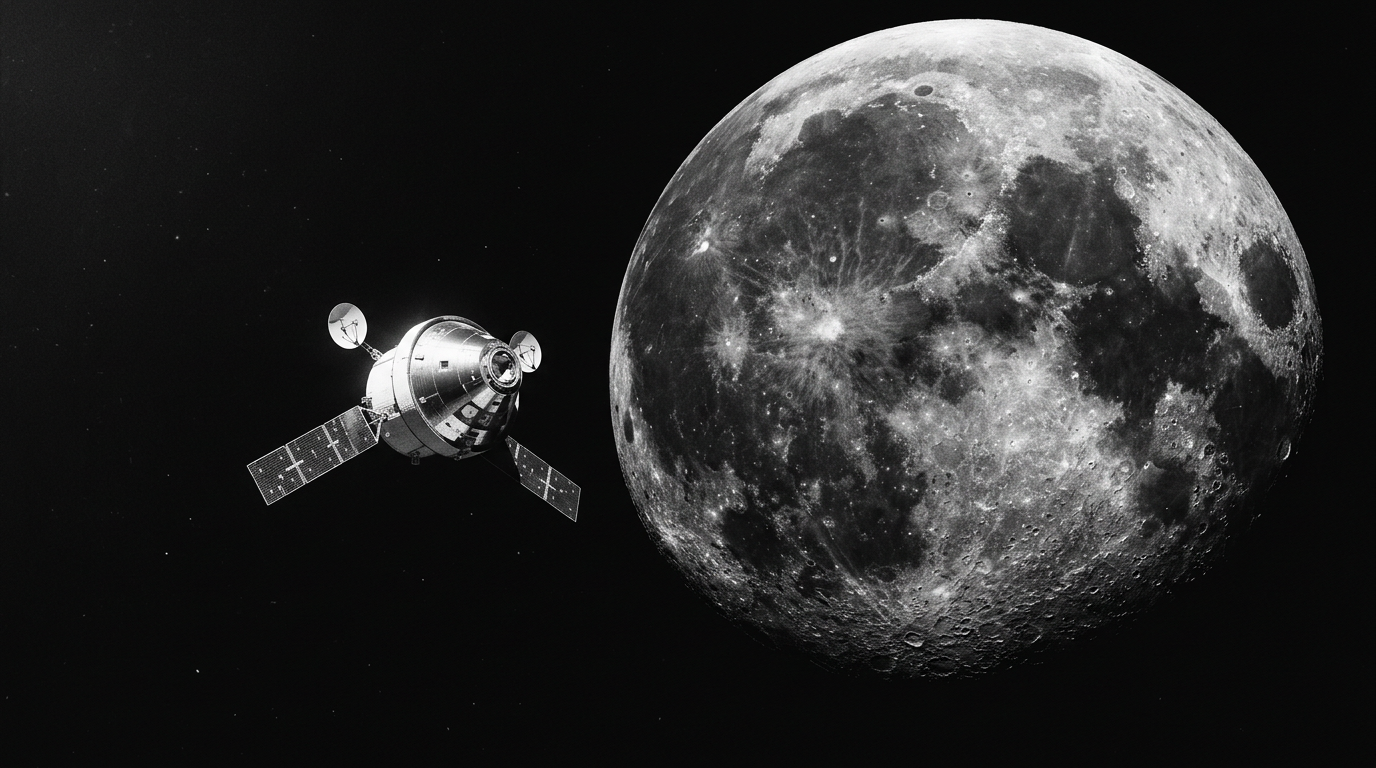
Artemis II has reached a key milestone on its trip toward the Moon , with mission control confirming the spacecraft has passed the midpoint between Earth and the lunar surface. Officials said the Orion capsule was about 219,000 kilometers (136,080 miles) from Earth when it crossed that halfway mark. The update came two days, five hours, and 24 minutes after the mission lifted off from Cape Canaveral, Florida.
The flight is carrying four astronauts: Americans Christina Koch, Victor Glover, and Reid Wiseman, along with Canadian Jeremy Hansen. Officials said the crew is traveling on a “free-return” path, a route designed to use the Moon’s gravity to swing the spacecraft back toward Earth without requiring additional propulsion. Mission control in Houston confirmed the spacecraft’s position and noted its increasing proximity to the Moon.
Artemis II is described as the first human mission headed toward the Moon since Apollo 17 in 1972. The mission’s central purpose is to check Orion’s systems in space as part of preparations for a planned lunar landing in 2028. Officials also described a longer-term objective of establishing a lunar base.
During the outbound leg, the astronauts captured and transmitted photographs of Earth, according to officials. Mission managers said the flight is continuing to unfold as planned and that the milestone supports validation of systems considered critical for future lunar exploration. The spacecraft’s trajectory and the ongoing system checks are intended to provide information needed for later missions.
What it means: The midpoint update is a progress marker for a mission framed by officials as a systems test for future lunar operations, including the 2028 landing plan and the stated longer-term goal of a lunar base. S. and Canadian astronauts, with Houston-based mission control providing navigation confirmation and status reporting.
For global markets and politics, the program’s stated objectives tie to long-horizon government space spending and international participation, while the immediate focus remains on executing the current flight plan and verifying capsule performance.
Risks and unknowns: Officials did not provide additional technical details beyond the confirmed distance, timing, and trajectory description, leaving the public without specifics on system performance metrics at this stage. The mission is still in progress, and further updates will determine how fully the capsule’s systems are validated for later lunar missions.