Fatal Peru train collision leaves one dead and thirty injured near Machu Picchu
Peru Machu Picchu rail crash involving two tourist trains killed 1 and injured about 30, with cause and service status still unclear.
Ayla Demirhan ·
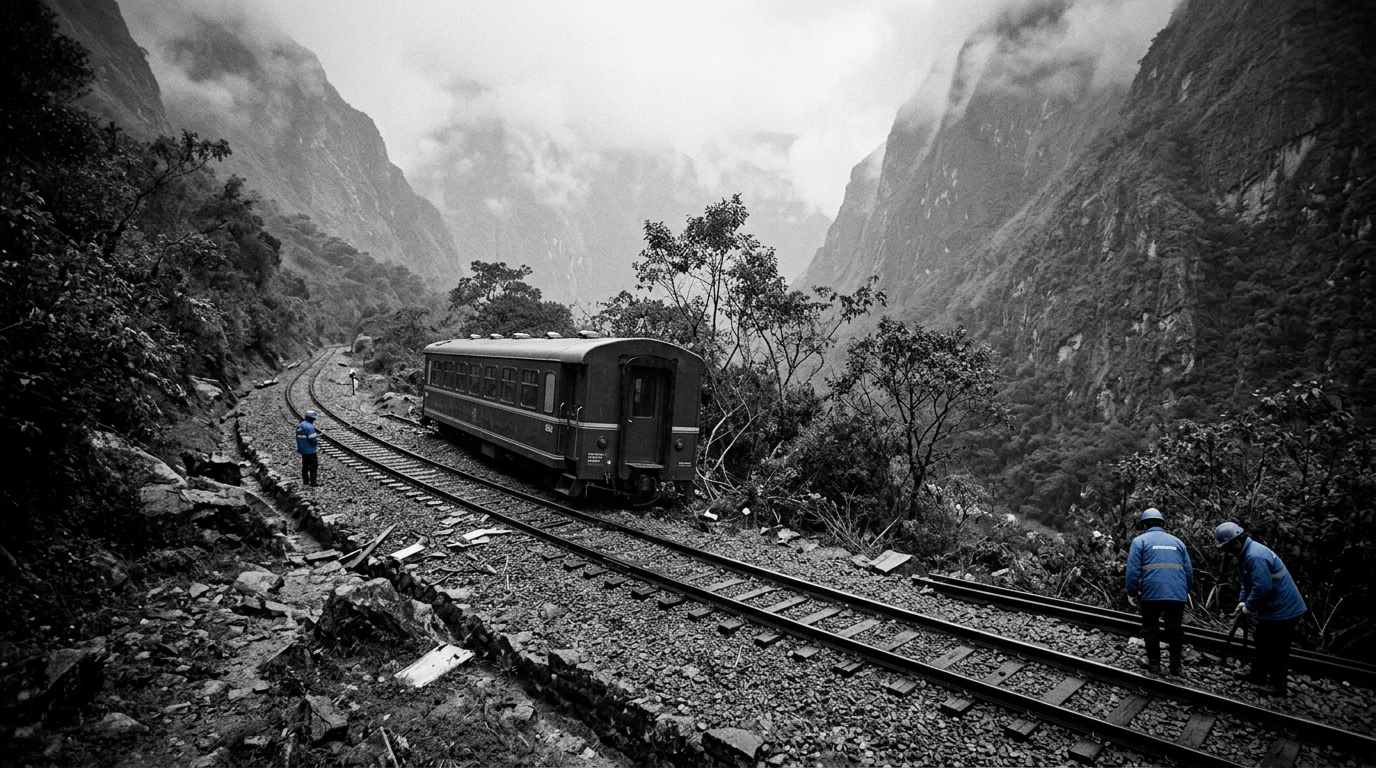
A collision involving two tourist passenger trains on Peru’s rail corridor serving Machu Picchu left one person dead and about 30 others injured, raising fresh questions about safety on one of the country’s most important visitor routes.
The incident occurred on the line used by travelers heading to the Machu Picchu area. Authorities had not released key details in initial information, including the precise crash location, the cause, or the identities and nationalities of those affected.
What is confirmed, and what remains unknown
Confirmed reports indicate that two trains carrying tourists were involved. The casualty count reported so far is one fatality and roughly 30 injuries.
Several operational questions were still unanswered in early reporting. It was not clear whether rail services were suspended, diverted, or operating with restrictions after the collision.
Why the Machu Picchu rail link matters
Machu Picchu is a central pillar of Peru’s tourism economy, and the rail connection is a critical piece of access infrastructure for visitors. When this route is disrupted, the effects can extend beyond transport to hotels, guides, restaurants, and tour operators that depend on steady arrivals.
Even without a prolonged shutdown, incidents involving tourists can influence perceptions of travel reliability and safety. That reputational channel can affect booking decisions and seasonal demand, which in turn shapes revenue expectations for local businesses tied to the visitor economy.
Market and policy relevance
From a markets perspective, the most direct exposure is local and regional: firms and workers linked to tourism services, and the broader ecosystem that supports travel to the Machu Picchu area. The scale of any economic impact will depend on whether the line faces extended interruptions and what investigators conclude about operational procedures.
Investigators had not yet indicated whether factors such as infrastructure condition, scheduling, signaling, or other operating elements contributed. Without those findings, it is not possible to assess whether the crash points to a wider systemic issue or a one-off failure.
Broader context: heritage sites and operational risk
The crash comes as cultural heritage destinations worldwide continue to balance public access with operational and security challenges. Separate from the Peru incident, recent heritage-related developments cited in the same context include an ancient wall segment identified in Jerusalem, efforts to safeguard Sudanese heritage amid conflict, and discoveries such as a Roman sarcophagus in Budapest and ancient canoes in Wisconsin.
In Peru, pre-Incan remains have also been identified, underscoring how heritage assets can generate sustained public interest and economic activity. At the same time, the combination of high visitor volumes and complex logistics increases the importance of resilient infrastructure and clear safety protocols.