Anthropic computing deal adds $35 billion Texas AI capacity
Anthropic agreed to a $35 billion computing deal with Lambda as the Claude maker races to expand AI capacity.
Atlas Newsdesk ·
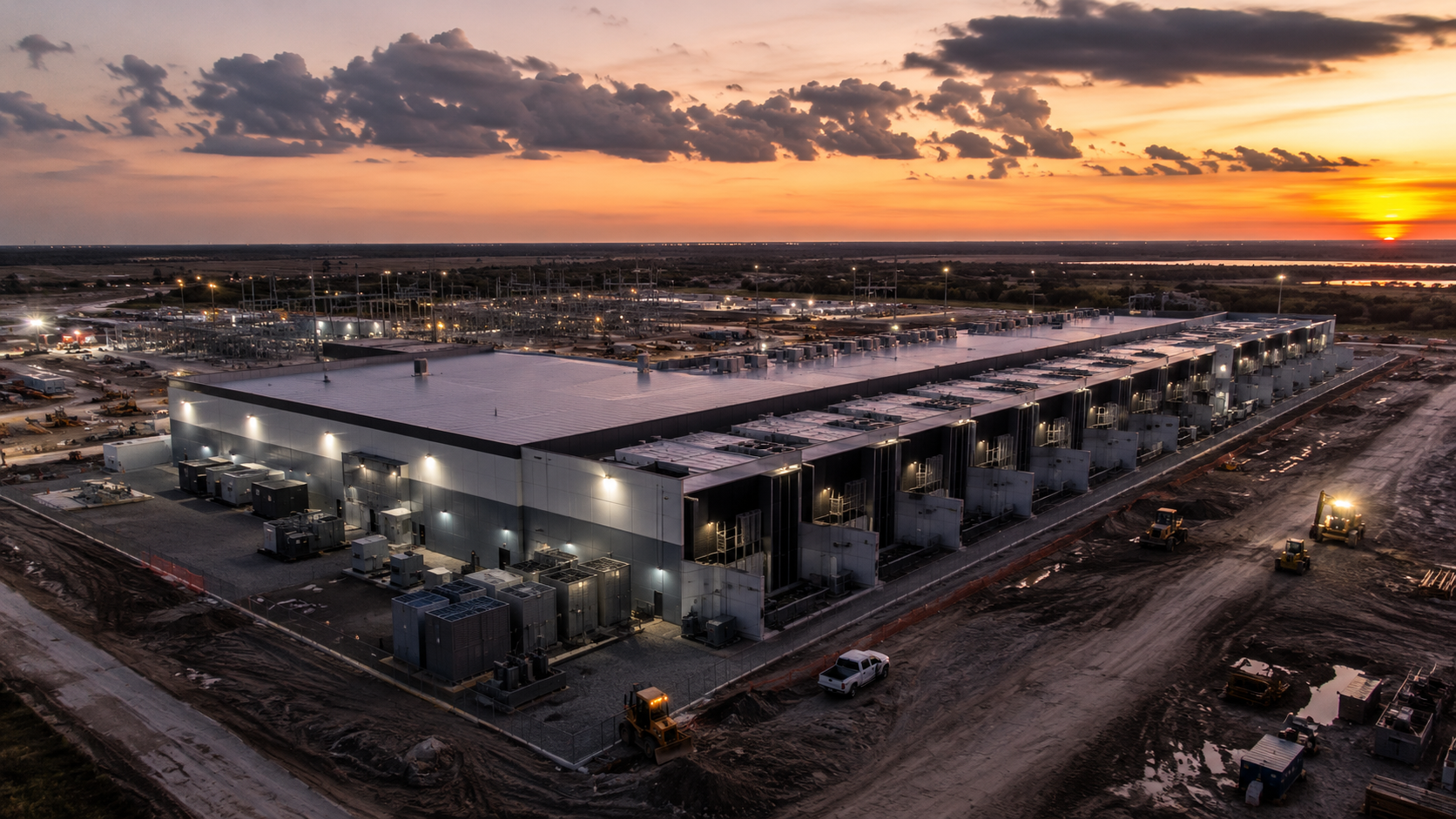
Anthropic computing deal with Lambda totals $35 billion, giving the Claude maker another route to secure scarce AI data-center capacity.
Lambda’s $35 billion role
Anthropic PBC agreed to the cloud-computing arrangement with Lambda, a cloud provider backed by Nvidia Corp., according to a person familiar with the matter. The person asked not to be identified because the talks are private, and Anthropic declined to comment.
Nvidia, Lambda and Hut 8 did not immediately respond to requests for comment, according to the account. The absence of company confirmation leaves the size and structure of the agreement attributed to the person familiar with the matter.
Hut 8, an infrastructure company, is developing the Texas data center tied to the project, the person said. The site is in Nueces County, adding another large AI-related power and construction commitment to a state already used by cloud and energy-intensive computing operators.
Nvidia’s capacity flywheel
The agreement links Anthropic’s demand for computing power with Nvidia’s widening role in AI infrastructure. Nvidia is the leading supplier of AI chips, and deals that bring more data-center capacity online can create additional demand for its processors.
Lambda has already been part of that buildout. The company reached an agreement with Microsoft Corp. last year to deploy AI infrastructure powered by tens of thousands of Nvidia processors, tying its growth to both cloud customers and chip supply.
The Texas project also shows how AI companies are turning to specialized cloud providers, infrastructure developers and chip suppliers rather than relying only on the largest public-cloud platforms. That model can accelerate access to capacity, but it also spreads execution risk across financing, construction, power procurement and equipment delivery.
Anthropic’s capacity stack grows
Anthropic has become one of the most visible buyers of data-center capacity as demand for its Claude chatbot and enterprise AI products grows. The Lambda agreement follows a $45 billion rental-capacity deal with Nscale in West Virginia announced last week, making the Texas commitment slightly smaller by headline value.
The company has also signed a $50 billion cloud deal with neocloud Fluidstack Ltd. and a $45 billion agreement with Elon Musk’s SpaceX in recent months. Taken together, the disclosed commitments point to a strategy built around securing long-term compute access before shortages in chips, power or sites constrain model development.
The figures also show the financing pressure behind the AI infrastructure cycle. For Anthropic, the main operational question is whether contracted capacity arrives on a schedule that supports product growth without locking the company into costs that outpace revenue.
Lambda seeks more funding
Lambda is in talks to raise as much as $3 billion, according to people familiar with those discussions. The company has discussed a valuation of as much as $12 billion or more, which would be eight times the more than $1.5 billion it raised in a November funding round.
If Lambda secures new capital near that valuation, it would have more room to finance equipment, leases and construction commitments tied to AI customers. That path would support Anthropic’s access to computing power, add demand for Nvidia-linked systems and keep pressure on rivals to secure comparable capacity.
If financing terms tighten or project delivery slips, the effect would move in the opposite direction. Anthropic could face slower access to compute, Lambda would carry a heavier execution burden, and the wider AI cloud sector would have to prove that demand for model training and inference can support the cost of new data centers.
For the global macro picture, the conditional link runs through capital spending, energy demand and supply chains. If AI infrastructure spending continues at the current pace described by these agreements, it can support construction, power equipment and chip orders; if funding or electricity access becomes the bottleneck, the constraint shifts from model ambition to physical capacity.