Fauci Debuts in D.C. Play During DC Climate Week
Fauci debuted in a D.C. dramatic reading on March 25, 2025, joining DC Climate Week programming that linked Oedipus themes to climate denial.
Ayla Demirhan ·
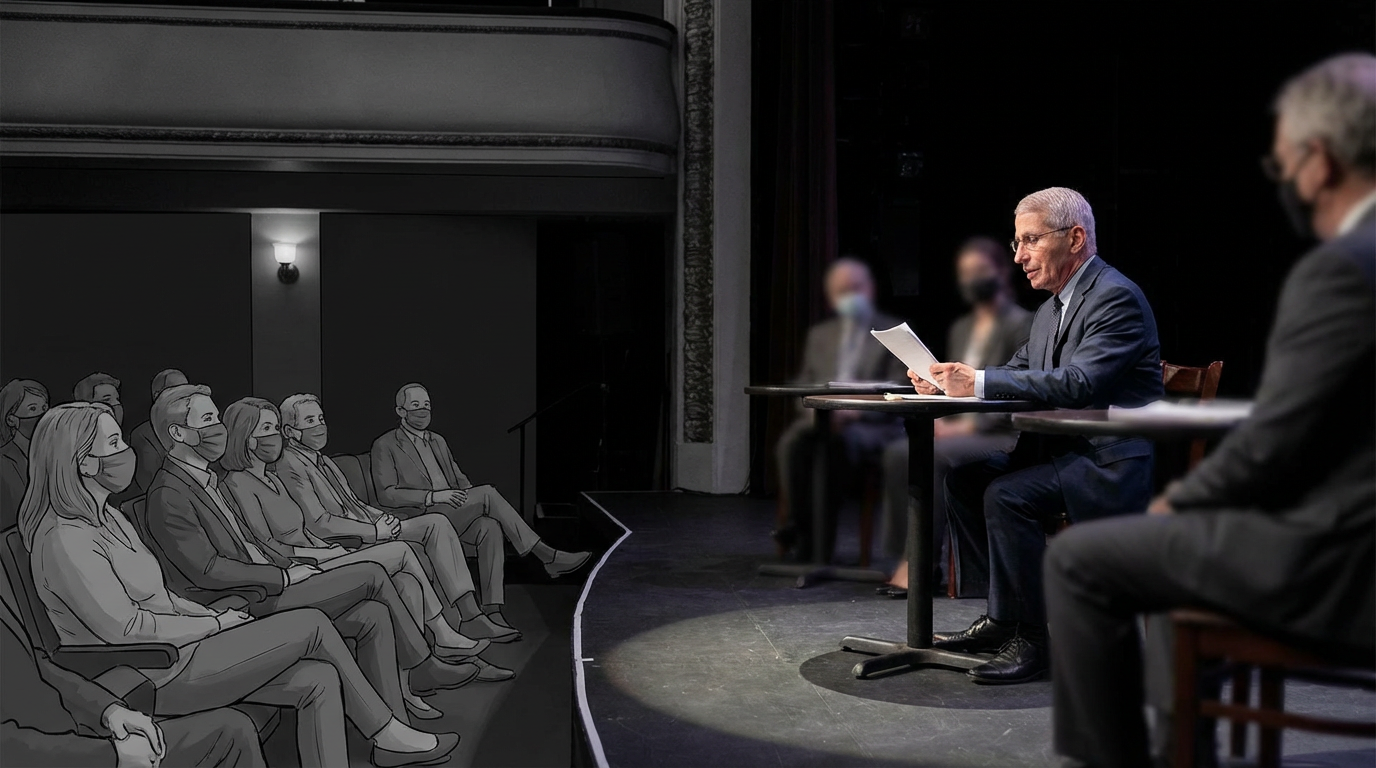
Anthony Fauci , the former chief medical adviser to the U.S. President, appeared on stage for the first time on Tuesday, March 25, 2025, in Washington, D.C., taking part in a dramatic reading of Sophocles’ Oedipus the King . The event was hosted at Georgetown University and was presented as part of DC Climate Week .
In the performance, Fauci played Tiresias , the blind prophet. Organizers framed the staging as a way to connect the ancient tragedy’s focus on denial and consequences with present-day debates around climate change. The production was mounted by Theater of War Productions , a group known for using readings of classical works to prompt public discussion about current social challenges.
Fauci, 85 , shared the program with actor Jesse Eisenberg , who took the role of Oedipus , and Senate Democratic Leader Chuck Schumer , who also participated. The selection of Oedipus the King was described as intentional, with the themes of rejecting prophecy, leadership arrogance, and ecological collapse highlighted as relevant to the climate crisis.
According to the event’s framing, the reading aimed to underline how denial can persist even when evidence is visible. Fauci emphasized that point by drawing a comparison between Oedipus’s struggle to accept his fate and modern resistance to climate science. The organizers positioned the performance as a public-facing cultural moment within DC Climate Week, using a well-known text to encourage reflection on environmental risks described as global in scope.
Theater of War Productions has previously used ancient drama to engage audiences on a range of contemporary traumas and pressures, including PTSD , refugee crises , and racial injustice . In this staging, the focus was placed on environmental concerns, with the company’s approach presented as a way to create structured conversation through shared storytelling rather than a conventional policy forum.
While the event linked classical themes to climate change, the material provided does not specify any policy announcements, fundraising totals, or commitments tied to the performance. It also does not detail the format of any post-reading discussion or the audience size, leaving open questions about how the organizers measured impact beyond the symbolic and educational aims described.