

Amazon Custom Silicon Reaches $25 Billion Run Rate
Amazon's custom silicon division achieved a $25 billion annual revenue run rate, altering cloud infrastructure economics and procurement strategies.
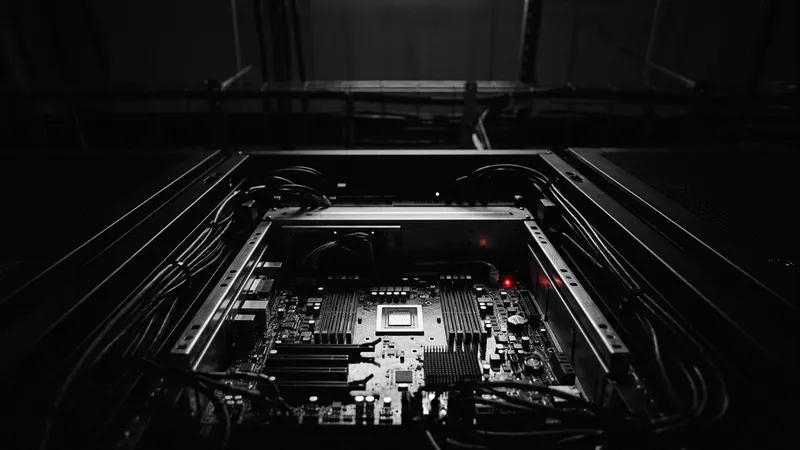
Amazon's custom silicon division has achieved an annual revenue run rate of $25 billion, a figure recently disclosed through company blog updates. This financial milestone signals a notable shift in the economic landscape of cloud infrastructure, moving away from purely operational expenditures towards more integrated, capital-intensive models.
The significant scale of Amazon's internal silicon development points to a broader industry trend where major cloud providers are rethinking hardware acquisition and long-term infrastructure planning. Amazon's strategy involves the tight integration of chip design with software development and server deployment. This approach aims to optimize the entire technology stack, from silicon manufacturing processes to data center rack space.
Vertical Integration's Economic Impact
Company officials assert that this vertical integration creates a self-reinforcing cycle. This cycle is designed to reduce the marginal cost of computing at scale, fundamentally transforming the economics of data center capacity. This model prioritizes long-term investments over short-term, quarterly operational spending, suggesting a strategic pivot in capital allocation.
The internal optimization by a major hyperscaler like Amazon raises critical questions for Chief Information Officers (CIOs) and procurement leaders across the technology sector. It challenges existing assumptions about whether similar scale-driven economic efficiencies can be achieved with multi-vendor hardware stacks, or if vertically integrated silicon engines will provide certain hyperscalers with an unparalleled advantage in pricing, capacity, and service level agreements.
Evolving Procurement Landscape
Consequently, the discussion surrounding margins within the cloud sector is evolving beyond engineering-focused microchip advancements. It is increasingly becoming a significant challenge related to procurement and vendor management. This shift necessitates a redefinition of roles for those authorizing purchase orders, managing forecasts, and allocating capital between external and internal compute assets.
The dynamic also holds implications for the wider technology ecosystem, including Electronic Design Automation (EDA) tool providers, silicon manufacturing foundries, and data center equipment suppliers. Companies such as Siemens EDA, alongside traditional manufacturers, play a crucial role in this evolving supply chain. If these integrated economic benefits prove sustainable, incumbent technology providers that rely on standard, multi-vendor silicon solutions for their core workloads will likely face increased pressure to reassess their vendor relationships and capital expenditure strategies.
Rebalancing the Technology Supply Chain
A margin shift of this magnitude implies a fundamental rebalancing of the technology supply chain. Fewer components may be treated as generic inputs, with a greater emphasis on strategic, long-term capacity investments. For suppliers, this could lead to longer contract cycles, more stringent performance guarantees, and new financial arrangements focused on capacity commitments rather than individual component sales. For customers, it signals a move toward fixed-cost, long-horizon engagements with specific silicon platforms, potentially discouraging frequent, incremental hardware upgrades.
This could alter how first-tier EDA tools are packaged, how foundries price high-volume production, and how data center infrastructure vendors structure service-level agreements based on silicon-driven performance. While it remains uncertain whether other hyperscalers will adopt an identical strategy, the current trajectory suggests a need for strategic recalibration in the near term. Procurement teams may need to re-evaluate whether external silicon investments can be amortized across a broader range of internal workloads, or if a hybrid model, combining internal compute fabrics with targeted external accelerators, offers the most robust margin profile.
Key Indicators to Monitor
Over the next six to twelve months, several key indicators will require close observation. These include external procurement commitments from rival cloud providers, such as Google Cloud or Microsoft Azure, especially any multi-billion dollar agreements with non-internal vendors for general-purpose workloads. A visible increase in externally monetized custom silicon programs from these players would suggest that the margin structure shift extends beyond Amazon.
Monitoring the evolution of silicon toolchains and partner ecosystems will also be vital. This involves observing whether EDA providers and foundries align their pricing and capacity planning with platform-centric compute stacks, or if they maintain traditional, multi-vendor procurement models. Furthermore, how Amazon Web Services (AWS) and its competitors articulate their strategies at major industry conferences and in regulatory filings will provide insights into any pivot toward externalized, platform-level monetization, marking a tangible shift in procurement and risk management practices.
More stories
- Deadlock’s Solomon hides 8-to-32 chess reload boards
- Nintendo Life polls 673 readers on Ocarina pronunciation
- Bandai Namco says Ace Combat 8 sells over 1 million copies
- Kingdom Hearts holds No. 1 on Switch 2 eShop chart
- Cyberpunk 2077 tops 40m sales as Paramount develops film, Odatv says
- L3Harris says 60 Wolf Pack flights tighten defense buying options
- IBM Launches Granite 4.2 LLMs for On
- OpenAI benchmarks Jalapeño chip against Nvidia AI rivals
- Subquadratic publishes Appen benchmarks for sparse AI model
- Long March 7A explodes after Wenchang liftoff
Latest news
- Mashreq CEO Abdelaal joins 15-member Swift board
- Sudan strikes kill 112, rights group says
- Ticketory says six-month bookings exceed €550,000
- Merck KGaA tops MediciNova on 8 of 15 metrics
- Tanker burns near Hormuz after munition strike
- Donor-specific genomes reveal 1,790 chromatin hotspots
- Trump claims Ukraine-Russia energy ceasefire agreement
- Zelensky condemns US-Russia diesel deal as Putin gift