Alibaba’s 20 GW data-center plan puts Chinese cloud growth on Washington’s radar
Alibaba’s overseas data-center push targets Europe and the Middle East, putting cloud infrastructure, data security and allied resilience into the same…
Lauren Collins ·
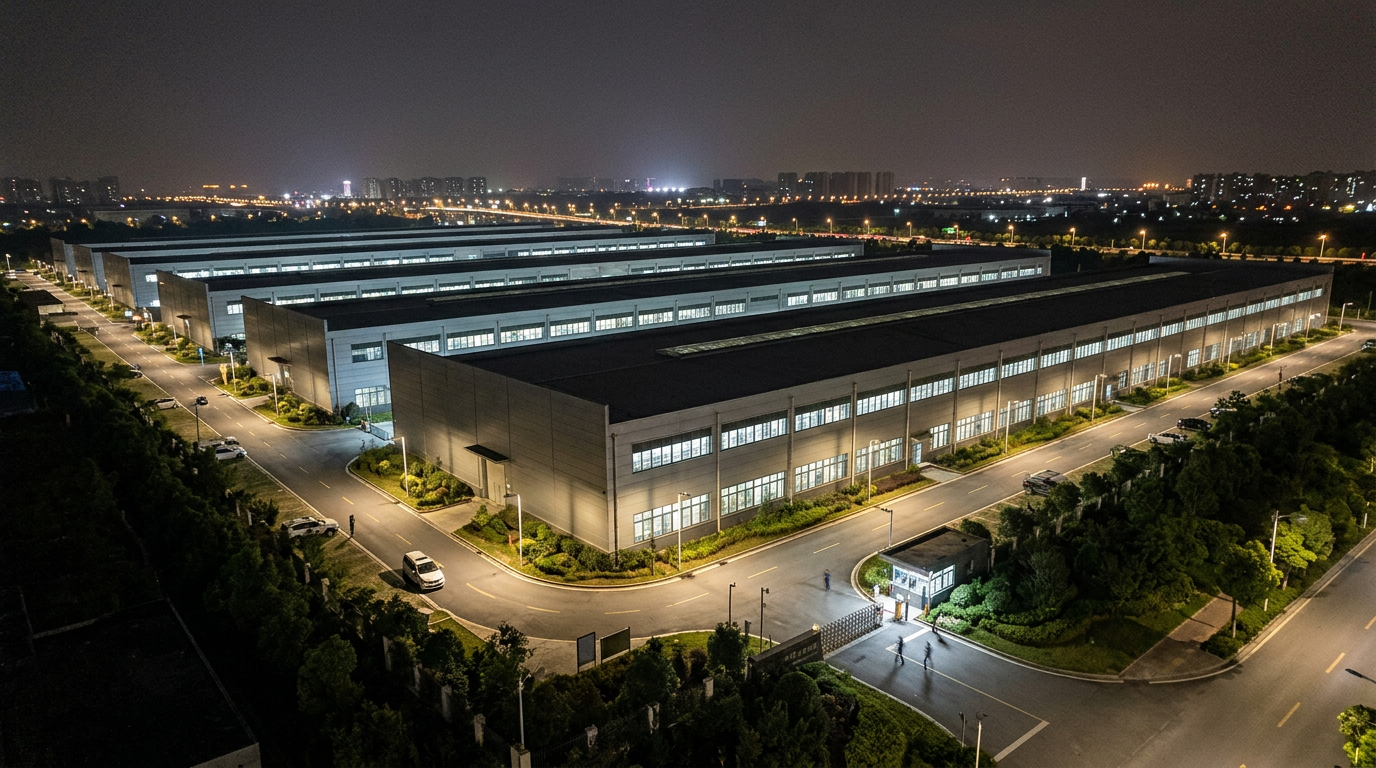
Alibaba’s 20 GW data-center plan puts Chinese cloud growth on Washington’s radar
Alibaba said Wednesday it plans to expand overseas data centers and target more than 20 gigawatts of global capacity by 2032, a scale that places Chinese cloud infrastructure back inside Washington’s security debate. The company announced the push at its annual flagship conference in Hangzhou, with Europe and the Middle East identified as priority markets.
Middle East
For Washington, the announcement is less about one company’s server footprint than about who builds, operates and governs digital infrastructure in allied and partner economies. Cloud capacity now sits alongside chips, subsea cables and telecom networks in the US view of strategic technology competition with China.
Alibaba is one of China’s largest technology companies, and Alibaba Cloud is its computing arm. Data centers are the physical backbone of cloud services: they house servers, storage systems, networking gear and power infrastructure used by businesses, governments and artificial-intelligence developers.
The company’s stated target of more than 20 gigawatts by 2032 gives the plan a measurable industrial scale. Gigawatts refer to power capacity, not revenue or market share, and the figure matters because AI computing and cloud services are increasingly constrained by access to electricity, land, cooling systems and high-end chips.
Europe and the Middle East are not just
The overseas focus adds the geopolitical layer. Europe and the Middle East are not just commercial growth markets; they are regions where governments are tightening rules on data sovereignty, critical infrastructure and foreign technology suppliers. Data sovereignty generally means that information generated in a country or region is stored, processed or accessed under local law.
In Washington, the relevant agencies would span more than one lane. The White House and National Security Council shape the strategic view of Chinese technology risk; the Commerce Department oversees export-control tools; the State Department works allied alignment; the Pentagon watches cloud and cyber exposure across defense ecosystems; and Congress can press for restrictions through procurement, sanctions or investment-screening legislation.
The policy problem is not identical to the fight over telecom networks during the 5G cycle. Cloud infrastructure is more dispersed, more integrated with private-sector software stacks and more difficult to judge from the outside. A data center can be locally owned, operated through a joint venture, supplied by foreign hardware, or connected to services controlled by a parent company abroad.
That distinction matters for Europe. The EU has built a dense regulatory architecture around privacy, data transfer and platform conduct, while individual governments still make national-security judgments on infrastructure, procurement and public-sector cloud use. A Chinese cloud provider expanding there would have to show customers and regulators how data is stored, who can access it and how local law governs operations.
The Middle East presents a different mix of incentives. Gulf governments are spending heavily on AI, cloud capacity and digital-government projects, and they are also trying to balance US security partnerships with commercial ties to China. If Alibaba pursues regional partnerships, Washington will watch whether those deals keep data local, involve state-linked customers or touch sectors such as energy, finance and logistics.
Alibaba’s announcement also lands as the United States tries to preserve leverage over the inputs that make advanced cloud services valuable. Export controls on advanced semiconductors already shape what Chinese firms can build and sell, while proposed or future rules on cloud access could focus on whether foreign users obtain AI computing power through providers tied to China.
For Alibaba, the commercial logic is visible. Overseas data centers can reduce latency, satisfy local data rules and make cloud contracts easier to sell to governments and companies that do not want information routed through China. They also give Alibaba a way to compete beyond China’s domestic market, where growth is affected by pricing pressure, regulation and a crowded field of cloud rivals.
The risk is that the larger the overseas buildout becomes, the harder it is to treat it as a routine capacity expansion. A 20-plus gigawatt target by 2032 invites questions about financing, host-country approvals, grid access and political tolerance. It also gives US officials and allied governments a clearer number against which to judge China’s role in global digital infrastructure.
Industry effects would reach beyond Alibaba. US cloud providers could face more price competition in markets where governments want alternatives, local cloud companies could seek partnerships with Chinese suppliers, and regulators could respond by drawing tighter lines between commercial cloud services and infrastructure judged sensitive.
The global macro channel runs through capital spending, power demand and AI infrastructure. If Chinese cloud firms build more capacity abroad, host countries may see investment in data-center campuses, grid connections and local technical jobs. The same buildout could intensify pressure on power systems and widen the divide between countries that can host AI-scale computing and those that cannot.
For Washington, the first scenario is a managed expansion. If Alibaba localizes data, uses transparent ownership structures and avoids sensitive public-sector contracts, US and allied governments may treat the push as a commercial challenge rather than a security trigger. In that case, the macro effect would be more global cloud supply, Alibaba would gain a broader overseas platform, and the industry would compete harder on price, compliance and AI services.
The second scenario is a regulatory collision. If a major European or Middle Eastern government links Alibaba facilities to security concerns, procurement risk or cross-border data exposure, Washington could press allies to align rules on Chinese cloud providers. That would limit Alibaba’s access to some customers, raise compliance costs across the sector and turn data-center ownership into a more explicit part of US-China economic statecraft.
The third scenario is regional fragmentation. If Europe, Gulf states and the United States adopt different standards for Chinese cloud infrastructure, Alibaba could proceed market by market, accepting local restrictions in some places while expanding faster in others. The global effect would be a more fragmented cloud map, with companies choosing providers not only by cost and performance but by jurisdiction, alliance politics and data-transfer rules.
The falsifiable test is whether Alibaba’s overseas plan produces a formal US or EU policy action, a major regulatory update on Chinese cloud providers, or a host-country localization deal by December 22, 2026. The call is right if one of those occurs and directly addresses cloud ownership, data movement or critical-infrastructure exposure; it is wrong if Alibaba’s expansion proceeds without new scrutiny and remains a mainly market-driven capacity buildout.