UK wildfire alert sent across England and Wales
UK wildfire alert sent across England and Wales at 7:00 p.m. Friday as officials cite extreme heat, rising incidents, and drought pressure on farming.
Atlas Newsdesk ·
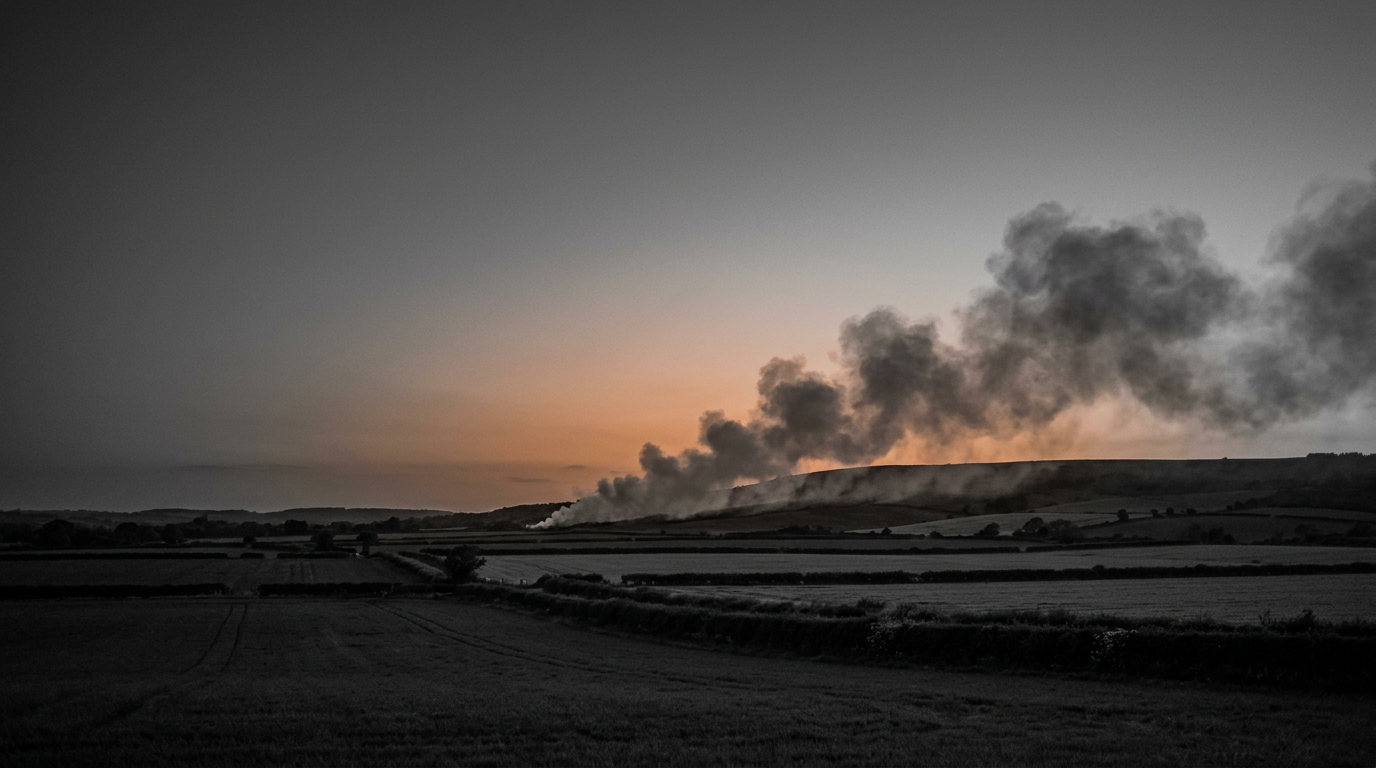
The UK government issued a severe emergency mobile alert across England and Wales on Friday at 7:00 p.m., warning that wildfire risk has risen sharply. Officials attributed the escalation to extreme heat and very dry conditions that have left large areas more prone to burning.
Officials said the message was designed to create immediate awareness across a wide area as fire activity accelerates. They added that the year-to-date number of incidents has now surpassed the 1,017 cases recorded in 2025.
Emergency services report rapid escalation in incidents
Fire services reported 11 major incidents in the 24-hour period ending Thursday, officials said. They presented the figure as an indication of how quickly conditions have deteriorated in recent days.
Officials warned that hot, drought-affected land can allow small ignitions to spread rapidly. They said this increases the likelihood that incidents which would normally be routine callouts can develop into larger fires.
The decision to use a severe mobile notification was described by officials as reflecting the pace and scale of the risk. The alert was sent broadly to reach residents quickly as conditions shifted.
Why extreme dryness raises the threat
Officials linked the elevated risk to the combination of heat and very dry ground and vegetation. They said these conditions can shorten the time between ignition and rapid fire growth, making suppression more difficult once flames take hold.
Military support in South Wales and restrictions to cut ignition sources In South Wales, fire services said around 200 military personnel were deployed to help support the response. Officials described the assistance as part of wider efforts to strengthen local capacity during repeated incidents and sustained pressure on crews.
Alongside the alert, the government introduced an immediate national ban on the sale of disposable barbecues. Officials said the restriction is intended to reduce avoidable ignition sources while dry vegetation can ignite quickly.
Officials seek to curb preventable fire starts
Officials framed the barbecue ban as a practical step aimed at lowering the number of human-caused ignitions during a period of heightened vulnerability. They said the is to reduce risks that can be mitigated while emergency services handle fast-moving incidents.
Drought support for farmers as harvest outlook worsens
The government also allocated 65 million pounds in emergency funding for farmers affected by the ongoing drought. Officials said the support is meant to help the agricultural sector manage acute impacts while land and water conditions remain under strain.
At the same time, the administration is facing pressure over the farming outlook, with the cereal harvest projected to drop to its lowest yield since 1984. Officials have not said when conditions might improve, leaving uncertainty over how long the elevated wildfire risk could persist and how large the agricultural disruption could become.
Mixed reactions as climate and resilience debates sharpen
According to comments cited in the debate, public and political responses to the alert were mixed. Some critics argued that dramatic warnings could be viewed as overreach and may weaken responsiveness if used too often.
Others said the fires reinforced calls for faster climate action. London Mayor Sadiq Khan cited the unfolding wildfire conditions as support for accelerating decarbonisation, linking the immediate emergency to longer-term policy priorities.
Officials have characterised the near-term task as managing a fast-moving emergency while also addressing wider demands tied to climate policy, rural livelihoods, and planning for national resilience. Key unknowns include how quickly weather and ground conditions could change, and whether incident levels will continue to rise.