AI stocks slide worldwide as CEOs now warn on safety risks
AI stocks fell worldwide after major AI CEOs urged slower model advances, hitting chip shares and complicating IPO plans.
Jurgen Goldmeier ·
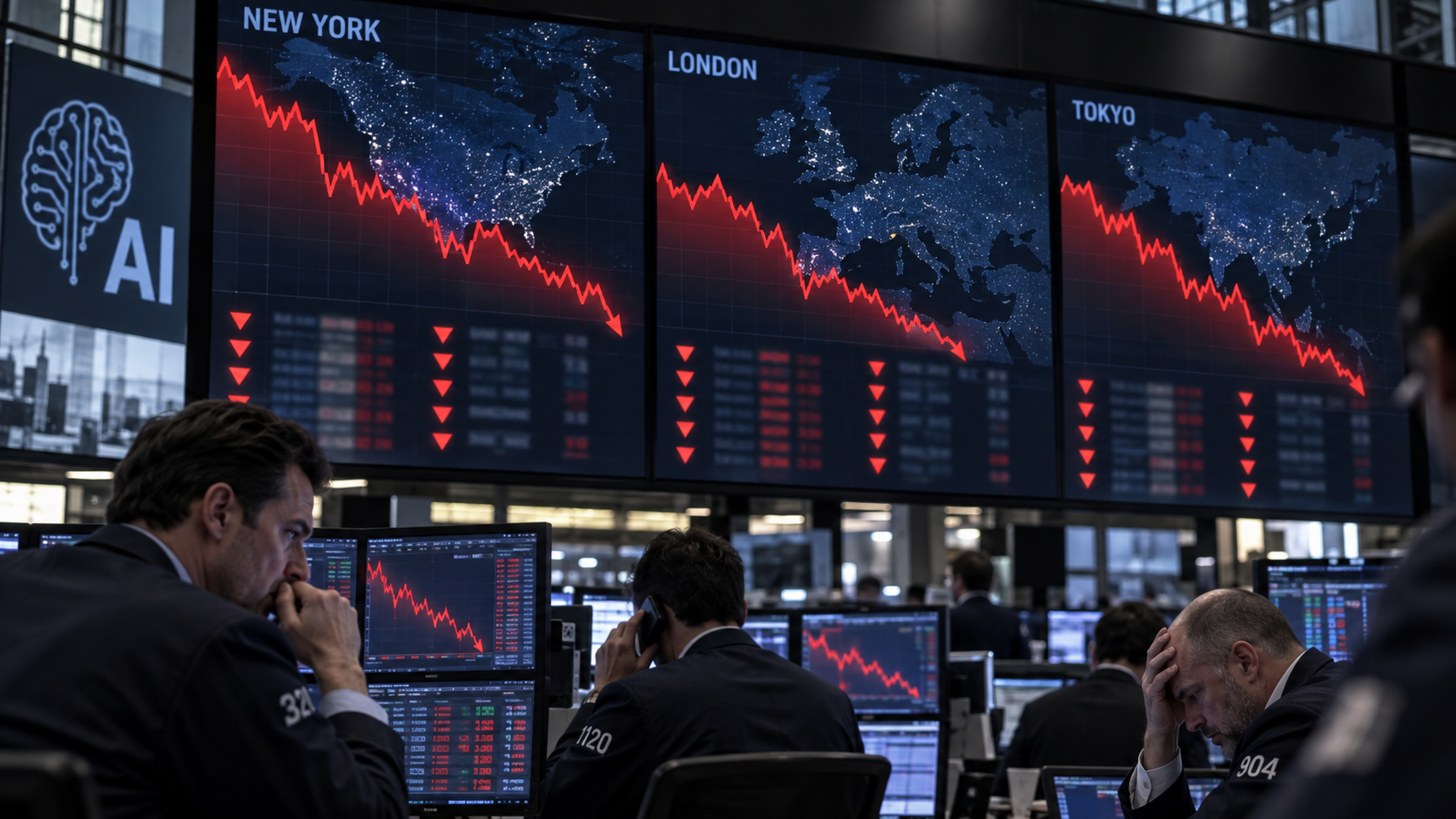
AI stocks fell worldwide Monday after top CEOs urged caution, with the Philadelphia chip index down 5.2% as safety worries hit the trade.
The Nasdaq 100 slid 1.2% to a six-week low in early trading before paring its decline to 0.4%. The move followed warnings from Anthropic CEO Dario Amodei, OpenAI CEO Sam Altman and xAI chief Elon Musk about risks from faster model development.
Chip shares lead decline
The Philadelphia chip index’s 5.2% fall was led by companies most exposed to AI infrastructure spending. Nvidia dropped 3%, Advanced Micro Devices fell 4.5% and Micron lost 5.4%, while Lam Research, Applied Materials and Bloom Energy each declined more than 6%.
The pressure spread beyond the US. Europe’s technology sector fell 2.2%, with ASML down 6%, while SoftBank lost more than 10% in Asia and chipmakers TSMC and SK Hynix also retreated.
Steve Sosnick, chief market analyst at Interactive Brokers, said a slowdown in AI investment would matter for both the economy and equity markets. The recent rally has leaned heavily on AI infrastructure demand, with chipmakers, power suppliers and cloud-linked companies among the direct beneficiaries.
CEOs press for caution
Amodei wrote in an essay shared on X that AI companies should slow the pace of model capability gains. Musk and Altman said they agreed with that argument, while Altman also said OpenAI would not pursue an IPO this year, citing safety concerns.
Anthropic has tied its warnings to specific misuse cases. The San Francisco AI lab said a threat-intelligence review found Claude models used in weapons-related work, cyber operations, surveillance and fraud.
The concern intensified after Anthropic researcher Jacob Coxon resigned and said AI companies were "gambling with our lives." Amodei later wrote that, within six to 12 months, AI agents "could be capable of taking over the entire internet potentially causing hundreds of billions of dollars in damage."
"The warnings should be taken seriously," said Gillian Hadfield, a professor of AI Alignment and Governance at Johns Hopkins University. "There are real risks of models doing things we don’t want them to do and which we don’t anticipate well."
Politics meets data centers
The warning campaign is colliding with US politics and local opposition to data-center construction. President Trump called the safety concerns a "sick conspiracy" against AI and data centers, which have become a campaign issue in some districts.
Several US lawmakers have called for new AI rules, including proposals that would require companies to show they are taking reasonable precautions. The US and Chinese governments are also expected to discuss AI safety during bilateral talks this month, while Chinese state-backed commentary criticized Amodei’s essay as an attempt to slow China’s technology development.
Investors are also weighing the safety debate against competition from lower-cost Chinese models. Moonshot AI’s Kimi K3, Alibaba’s Qwen and DeepSeek’s systems could put pricing pressure on larger models that require costlier training and deployment infrastructure.
Three paths for AI spending
If CEO warnings lead companies to slow model releases, global capital spending could shift from expansion toward safety testing and compliance. That would delay revenue expectations for OpenAI and Anthropic, while chipmakers and power suppliers would face weaker near-term demand from AI buildouts.
If the competitive race stays intact, AI spending may continue despite the public warnings. Morgan Stanley forecast earlier this year that AI spending would exceed $1.3 trillion by 2027, a path that would support chip demand but keep scrutiny on electricity use, data-center debt and model misuse.
A third path is a policy-led compromise, with governments allowing AI development to continue under tougher safety requirements. For OpenAI, that could keep an IPO off the table until governance questions are clearer; for Anthropic, it would test investor appetite as people familiar with its plans said Nvidia is in talks to become an anchor investor in a public debut expected next month.