AI aids design teams, shifting margins toward strategic oversight
Explore how AI-augmented tools are redefining design roles. We analyze the impact on labor margins and what executives should watch in the next 18 months.
Edward Mullen ·
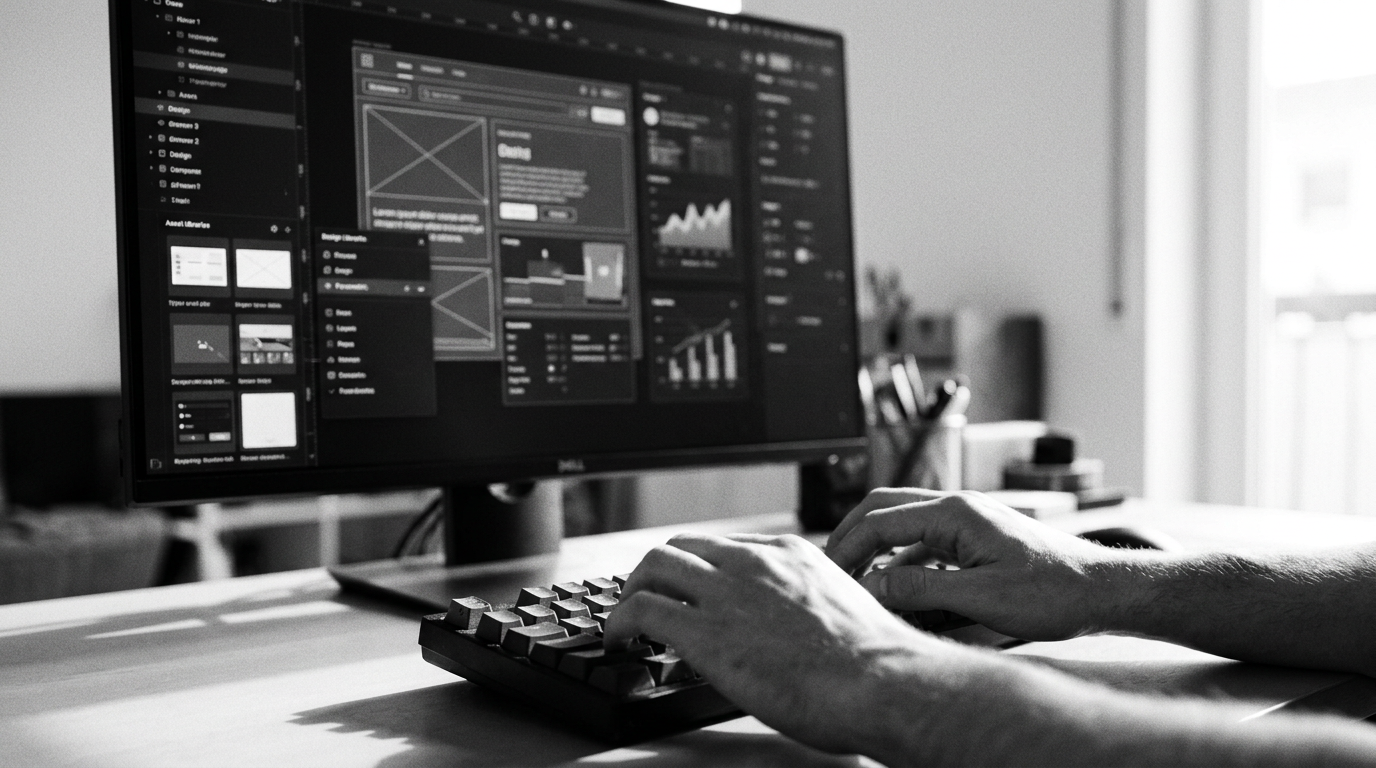
A designer, once hunched over a drawing board meticulously crafting each line, now navigates a complex dashboard, curating and critiquing AI-generated options. This evolution isn't about replacing human skill with algorithms, but rather recalibrating it. AI integration into design tools is fundamentally shifting design labor margins from manual execution towards strategic oversight and creative judgment.
AI design tools redefine labor margins The signal from the podcast aligns with a broader industry narrative: automation in design shifts tasks from hands-on drafting to interpretation, iteration, and critique. In practice, teams that embed AI as a design assistant tend to reallocate time from rote execution to evaluating AI outputs, setting design intent, and negotiating between user needs and technical constraints.
The margin comes less from unit-task speed and more from the quality of decisions and the speed at which those decisions scale across products. The consequence is a potential widening of margins for teams that upskill and embed AI-enabled governance processes, while those who cling to manual drafting risk erosion of their value proposition.
This is the central premise of the single-thread view: AI increases leverage for capable design leaders who can choreograph AI outputs into strategic design outcomes.
The displacement myth vs margin reality The dominant read across media is that AI will automate designers out of work. The counter-reading, which the podcast does not fully rebut in public, centers on the idea that automation redefines roles rather than eliminates them, much as calculators shifted math from rote computation to reasoning and problem solving.
The mechanism is straightforward: when AI handles repetitive drafting, designers invest in higher-order thinking—concept refinement, stakeholder alignment, and critical evaluation of AI-generated options. The risk is not universal unemployment but a reorganization of tasks, titles, and budgets toward design leadership functions that are harder to automate.
The counter-narrative is important to surface because it challenges the prevailing fear and reframes the labor-market dynamics around value generation rather than headcount.
Distinguishing training cost from inference cost A core domain detail that executives must track is the difference between training cost and inference cost. Training represents a one-time capex spike tied to building or fine-tuning a model, whereas inference is a recurring opex that governs day-to-day product work.
Getting this distinction right matters for budgeting and for assessing when a margin shift actually materializes. If teams overextend on bespoke training without achieving durable accuracy gains in deployment, the margin impact may be temporary or illusory.
Conversely, lean inference pipelines that leverage shared, well-tuned foundations can preserve margin by reducing labor time spent on ad hoc experimentation. The distinction also helps explain why the business case for AI in design often hinges on governance, prompts, and evaluation cycles as much as on raw model scale.
What to watch in the next 6–12 months If margins are shifting, several observable signals should emerge. First, major design software companies are expected to publish evidence of workforce changes tied to AI-enabled design workflows—whether through case studies, productivity metrics, or hiring data—rather than relying on anecdote.
Second, design leadership roles—titles like design strategist or prompt-engineer for design—could appear in job postings and internal budgets as responsibilities migrate from drafting to guidance and critique. Third, enterprises may report budget reallocations toward AI-enabled governance, user-research integration, and design-system maturation, with inflection points in procurement and vendor governance cycles.
If any of these indicators fail to surface, or if senior design roles shrink without replacement in leadership tracks, the margin-shift thesis would face serious pushback.
Who benefits and who bears risk in the Who benefits and who bears risk in the margin shift In the near term, teams that institutionalize AI-assisted workflows and invest in design governance are best positioned to improve margins. The designers who translate AI outputs into compelling experiences stand to gain leverage and influence over product strategy. Conversely, organizations slow to adopt AI-enabled oversight or those stuck in manual drafting may see marginal real burn as costs rise relative to perceived output. The middle lies in vendors and platforms that provide governance frameworks, tooling that accelerates critique, and educational programs that help teams upskill quickly. The podcast anchors the argument in a practical frame: design labor margins are not erased by AI; they migrate toward strategic leadership and decision-making capabilities that AI cannot replace.
Signals to test in 6–12 months and what to do now Executives should watch for three concrete signs: first, shifts in design leadership hiring toward roles that emphasize strategy and governance; second, budget reallocation toward AI-enabled design governance and evaluation cycles; third, public reports from vendors detailing design-organization productivity gains tied to AI-assisted workflows. If any of these emerge alongside stable or growing senior design leadership, the margin-shift thesis gains credibility; if they do not, the sector should be prepared to reframe expectations about AI’s role in creative labor.
In the absence of corroboration, procurement and governance remain the most reliable levers to manage risk and maintain margin discipline.
The implications for knowledge work and the design ecosystem Ultimately, the interview underscores a broader implication for knowledge work: AI does not simply reduce effort; it redefines how expertise is bundled into teams. For product roadmaps and design systems, the lesson is to treat AI tooling as an amplifier of human judgment, not a replacement for it.
That means investing in training, governance, and cross-functional workflows that allow designers to supervise AI outputs at scale, while maintaining accountability for user value and ethical considerations. This is not a victory lap for automation; it is a reallocation of labor value toward tasks that require strategic critique and creative direction.