New US Tariff Strategy Fractures Global Trade Through Targeted Exemptions
US tariff regime replaces broad duties with carveouts and probes, widening gaps in effective rates for partners and raising uncertainty over the next year.
Atlas Newsdesk ·
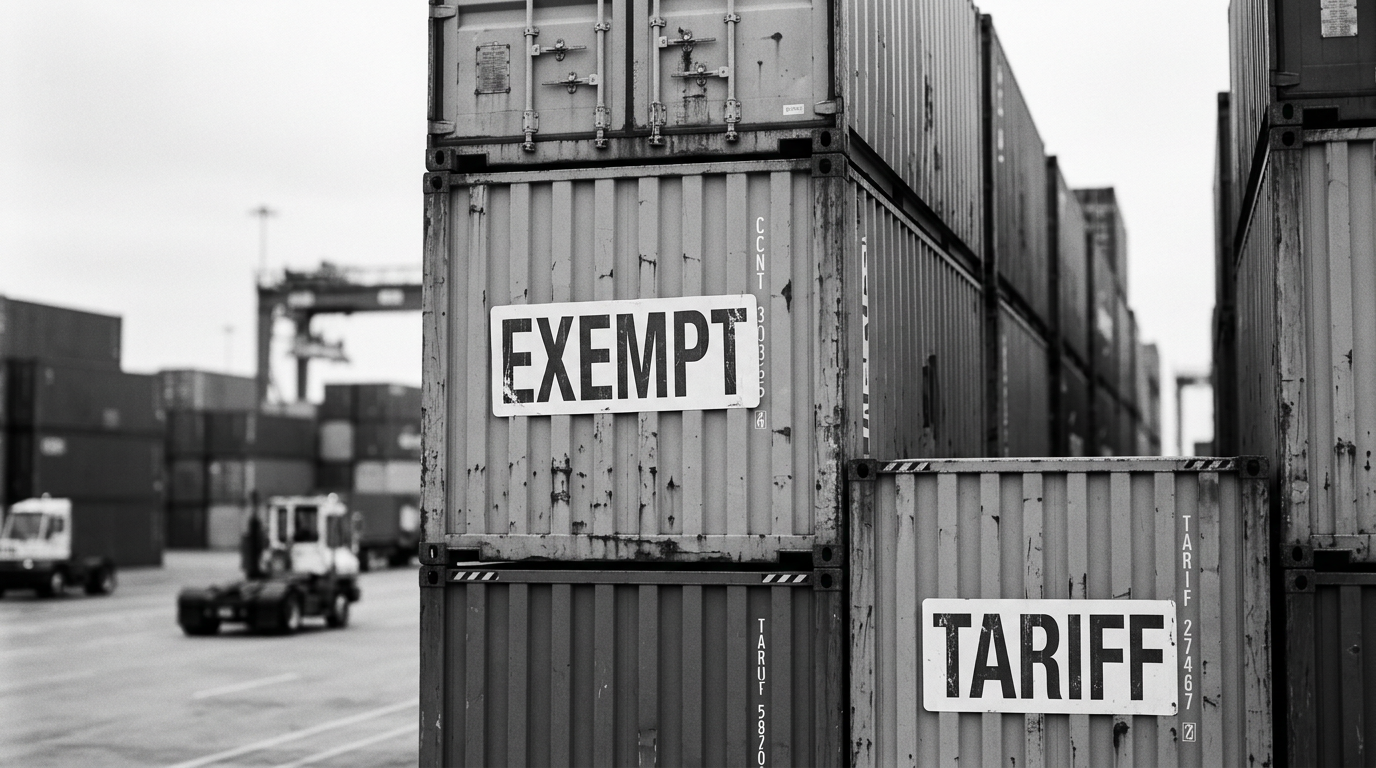
The Trump administration has put in place a multi-layered tariff framework that moves away from blanket duties and toward a patchwork of exemptions, bilateral carveouts, and sector-specific investigations. Officials have anchored the approach in Section 301 of the Trade Act of 1974 , creating wide differences in the effective tariff rates faced by trading partners.
Under this structure, trade policy is being applied through multiple channels at the same time. The regime combines traditional tariff tools with national security provisions and import prohibitions tied to forced labor criteria, reshaping how goods enter the US market and how suppliers position their shipments.
How the new framework changes effective tariff rates Latin American nations have benefited from lower effective One of the clearest outcomes has been uneven effective tariff levels across regions. Latin American nations have benefited from lower effective rates of below 3 percent, while Asian economies have faced heavier burdens, reflecting stricter application of forced labor standards in the tariff and import-screening process. The policy also produces outcomes that can diverge from headline tariff figures. India’s effective tariff rate has fallen to 3.6 percent after policy alignment with US standards, according to the described regime, while Brazil’s effective rate stands at 16.4 percent despite higher headline numbers. China’s narrowing room as investigations expand For China, the administration has raised the effective tariff rate by 6.4 percentage points. The described configuration leaves limited negotiating space before reaching Beijing’s stated 20 percent tolerance threshold.
The Trump
At the same time, a pending investigation into industrial excess capacity is set to cover over 75 percent of total US imports. If pursued through the same system of targeted exemptions and sector probes, the investigation would sit on top of the existing structure rather than replacing it, reinforcing the sense of a layered and shifting trade environment.
Carveouts and bilateral deals add complexity
The mechanism relies on a sequence of bilateral arrangements and exemptions that can alter effective rates in ways that are not uniform across suppliers. That design complicates planning for companies and governments because the applicable burden may depend on product category, investigation status, and whether a specific carveout applies.
Officials have framed the approach as a way to redirect trade flows using a mix of legal authorities rather than a single across-the-board tariff. The result, based on the described elements, is a fragmented global trade landscape with large variation in effective rates among partners.
Uncertainty over the next year
With a major investigation pending and a system that depends on ongoing deals and exemptions, the current framework is described as a precursor to additional volatility in international trade relations over the coming year. The timing and scope of any follow-on actions remain uncertain, but the structure in place is already producing significant disparities across countries and sectors.