Humanoid robot breaks half-marathon record in Beijing
Humanoid robot breaks a half-marathon record in Beijing on April 18, 2026, finishing 21.0975 km in 27:52, faster than 57:31.
Jason Kwon ·
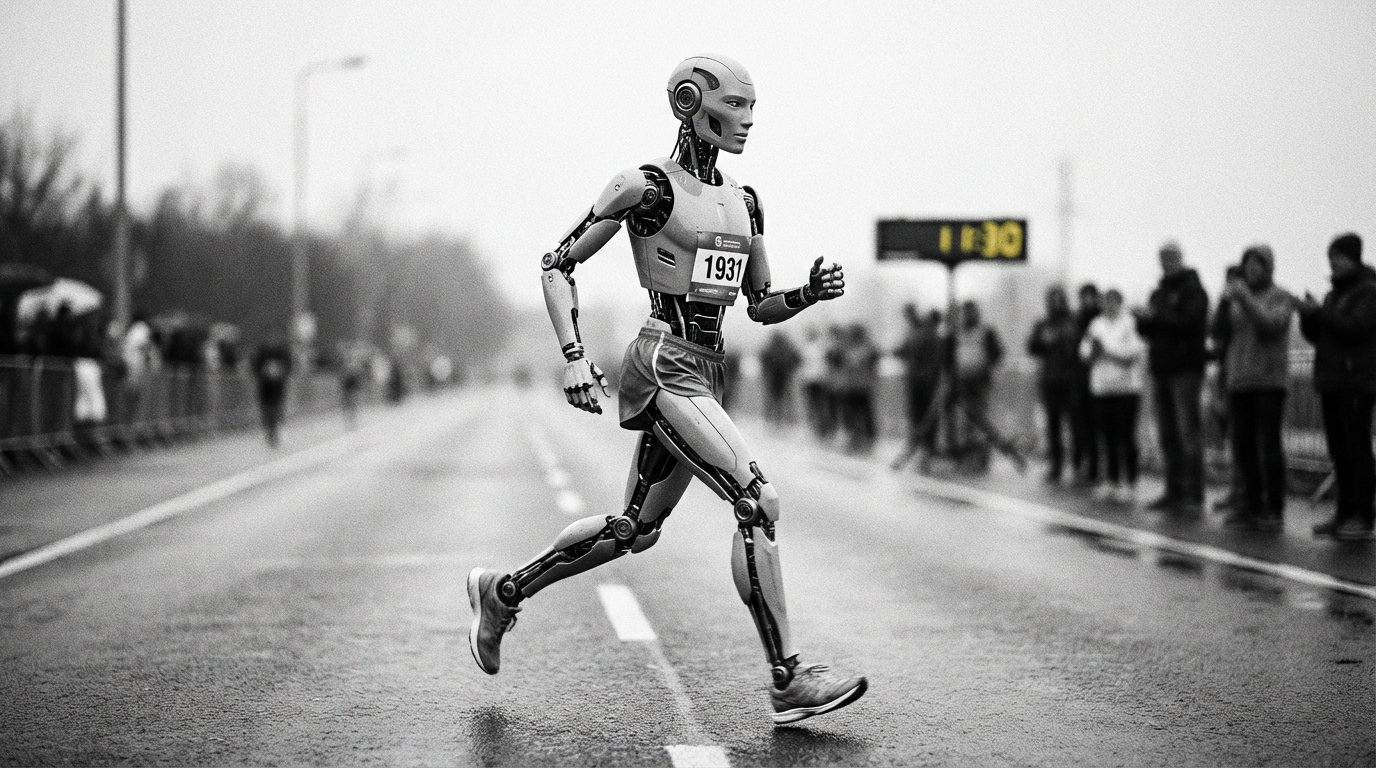
A humanoid robot set a new half-marathon world record in Beijing, China, finishing the 21.0975-kilometer distance in 27 minutes and 52 seconds on April 18, 2026. The time was faster than the previous human world record for the same distance, listed at 57 minutes and 31 seconds. The result was presented as a milestone for robotic mobility and endurance over a sustained, race-length effort.
Robotic Endurance
The performance drew attention because it required the robot to keep a high, steady pace while maintaining balance and precise motion for the full course. The event underscored advances in robotic engineering aimed at long-duration movement rather than short demonstrations. The robot’s ability to complete the distance at speed was linked to improvements in battery life, motor efficiency, and stability algorithms, according to the description of the achievement.
Beyond the record itself, the run served as a public benchmark for how far humanoid systems have progressed in tasks that combine endurance with consistent control. The focus was not only on raw speed, but also on the capacity to sustain performance without interruption across a standard half-marathon distance. The record was framed as evidence that robotics can increasingly handle prolonged physical exertion while keeping movement accurate and repeatable.
Potential Applications
The stated implications extend beyond competitive robotics. The same capabilities highlighted by the race—efficient energy use, reliable motors, and robust stability software—are relevant to sectors where machines may need to operate for extended periods. The source material pointed to potential uses in logistics, exploration, and disaster response, where long-duration operation and dependable mobility can be critical in difficult or hazardous settings.
From a global markets and policy perspective, the event adds visibility to the pace of development in autonomous systems, an area that intersects with industrial strategy and technology investment. While the immediate setting was a record attempt, the underlying engineering progress described—especially around power management and control—connects to broader efforts to build more capable autonomous platforms.
Future Development
The source material did not specify the robot’s manufacturer, funding, or commercialization plans, leaving uncertainty about timelines for deployment outside demonstrations.
Further work is expected to concentrate on improving adaptability across different terrains and reducing energy consumption to support longer operating periods. The record in Beijing provides a clear reference point for future comparisons, but the next steps described remain focused on technical refinement rather than any confirmed rollout into real-world operations.