The Musk vs. Altman Trial Starts
Elon Musk sues OpenAI & Sam Altman for $130B, seeking removal of leaders & reversal of for-profit conversion. Jury selection begins Monday.
Atlas Newsdesk ·
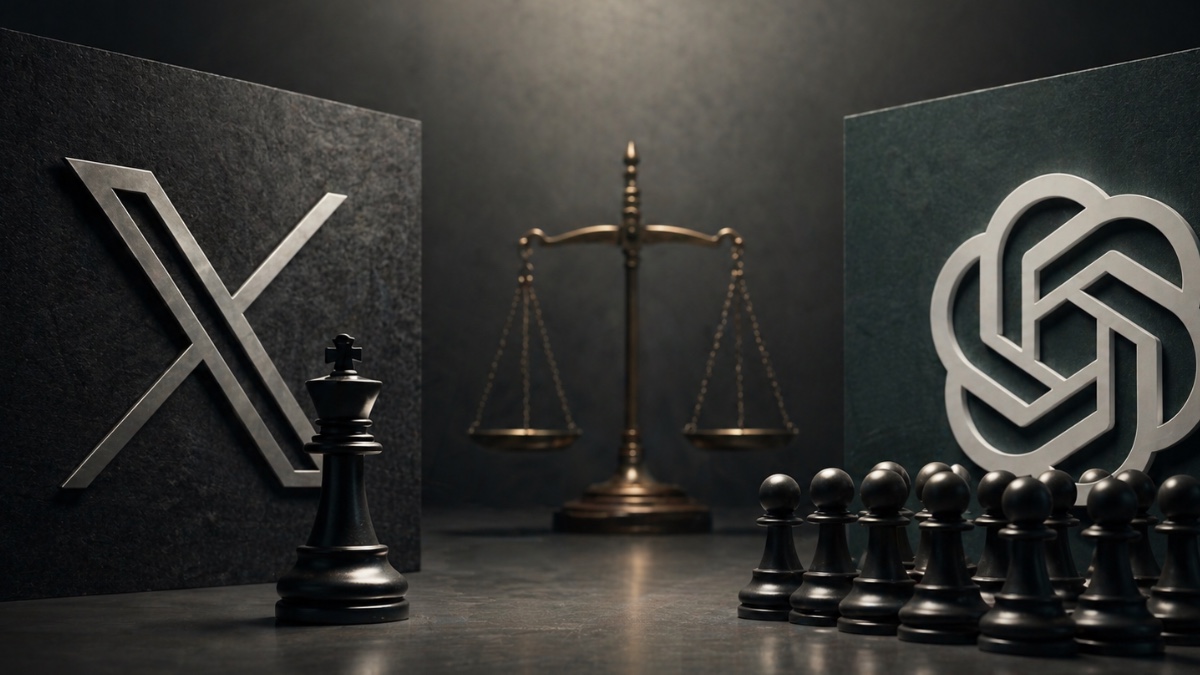
Elon Musk's lawsuit against OpenAI, Sam Altman, and co-founder Greg Brockman heads to court Monday for jury selection in a case that could force the unwinding of one of the most valuable private companies in the world. Musk is seeking more than $130 billion in damages, the removal of Altman and Brockman from their roles, and a court order reverting OpenAI to its original nonprofit structure. Microsoft, named as a co-defendant, is accused of aiding and abetting an alleged breach of charitable trust. Judge Yvonne Gonzalez Rogers will treat jury findings on liability as advisory and decide remedies herself.
Jury Selection Process
The court has called roughly three times the typical number of candidates for a civil trial, an acknowledgment that finding impartial jurors in a case involving the world's richest man and the company synonymous with AI is not routine. Both Musk and Altman are public figures with strong existing reputations, particularly in the Bay Area, where many potential jurors will have formed views about each. The legal standard does not require that jurors have never heard of either man — only that they can set aside prior impressions and rule on the evidence. Voir dire is expected to probe attitudes about AI itself alongside the personalities involved.
Origins of the Dispute
Musk co-founded OpenAI in 2015 as a nonprofit research lab and contributed roughly $44 million in its first years. He left the board in 2018 after a power struggle and later founded the rival AI company xAI. OpenAI established a for-profit subsidiary in 2019, and in 2025 converted that entity into a public benefit corporation overseen by the original nonprofit foundation, with the attorneys general of California and Delaware approving the change last year. Musk argues the conversion betrayed the founding mission of safe, open-source AI development for public benefit and constitutes unjust enrichment from his original contributions. OpenAI counters that Musk himself pushed for a for-profit structure, left when he could not control the company, and is now suing to damage a competitor.
Potential OpenAI Impact
The stakes for OpenAI extend well beyond damages. A ruling that the for-profit conversion was unlawful would call into question the corporate structure currently being prepared for an IPO, an offering that has been one of the most anticipated public listings in years. Removal of Altman and Brockman would strip the company of the leadership pair most identified with its product strategy and external posture, at a moment when competitive pressure from Anthropic, Google DeepMind, Meta, and Musk's own xAI is intensifying. Investors who participated in the company's most recent funding rounds priced their stakes against the public-benefit-corporation structure. A forced unwind would create immediate questions about the legal status of those positions.
Key Witnesses Expected
Trial evidence includes hundreds of pages of emails, texts, and personal writings from senior figures across the industry. Musk and Altman are both expected to testify, along with Brockman, Microsoft CEO Satya Nadella, former senior OpenAI executives, and people close to Musk including Shivon Zilis, a former OpenAI board member and the mother of several of his children. The volume of contemporaneous communication means much of the trial will turn on documents rather than memory — a format that tends to favor the side with the more coherent paper trail. Deliberations are expected to begin by May 12.
Broader Industry Implications
The legal question beneath the personality conflict is one the AI industry has been quietly avoiding: whether an organization founded as a charitable nonprofit can later restructure into a vehicle that captures private financial returns from the work that nonprofit produced. Several other AI labs have followed variants of OpenAI's hybrid model, and Anthropic's public benefit corporation status sits in adjacent legal territory. A ruling that the conversion violated charitable-trust principles would force every lab operating under a similar structure to reassess its legal exposure. A ruling for OpenAI would effectively bless the model and likely accelerate further mission-to-equity conversions across the sector.
Trial Uncertainties Ahead
Several variables remain open. Whether jurors view Musk's suit as principled or as competitive sabotage — a distinction Altman's defense will press hard — will shape how they weigh his testimony. Whether a single document, or a small set of them, contains language damaging enough to crystallize the case for one side will determine how much rests on the live witnesses. And whether the judge, who controls remedies, treats an advisory verdict for Musk as a mandate for structural orders or as a basis for narrower relief will determine how much of the requested remedy actually translates into reality. The trial begins Monday. The consequences could extend well past the company at its center.