Himalayan Glacier Collapse Kills 270, Destroys Infrastructure
A Himalayan glacier collapse caused 270 deaths and 1,300 missing in Nepal and Tibet, destroying infrastructure and impacting rivers downstream.
Lauren Collins ·
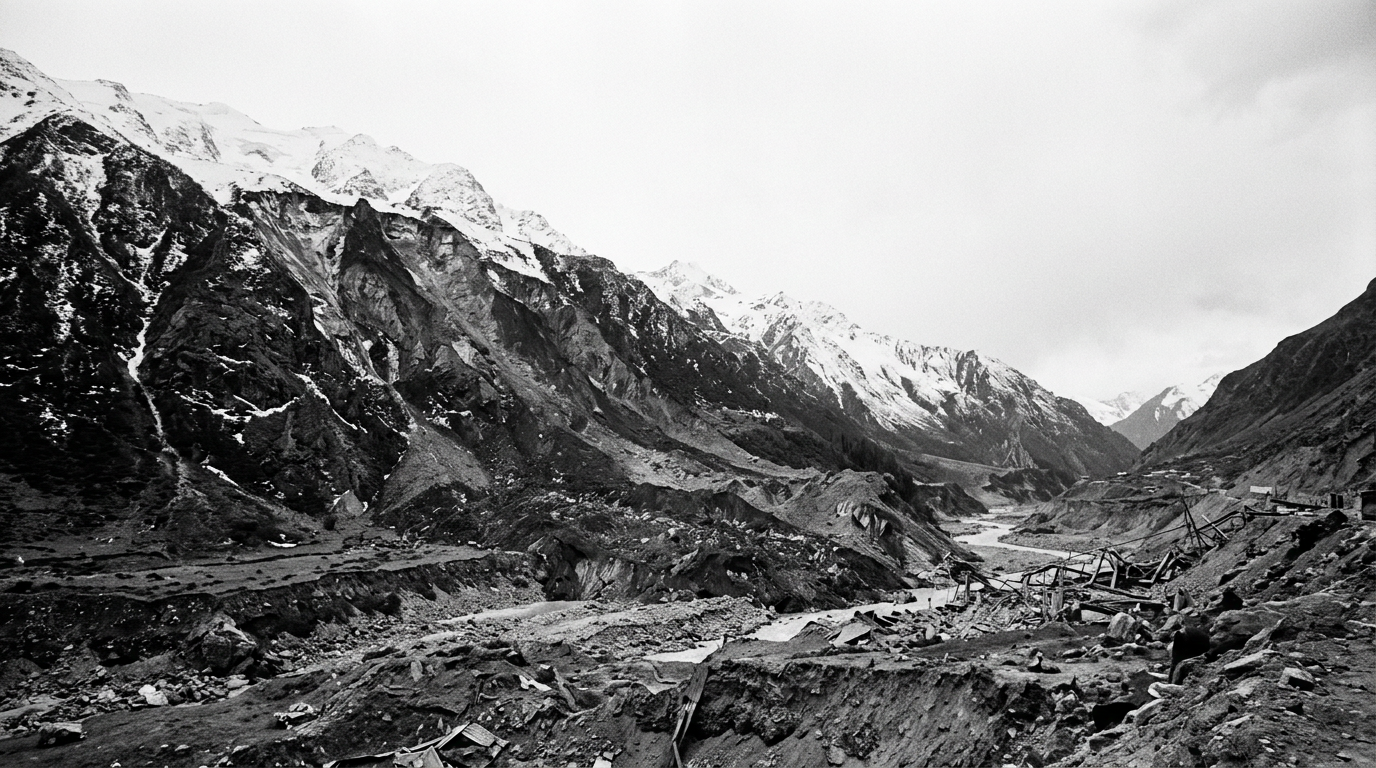
A significant glacier collapse in the Himalayan region has resulted in at least 270 fatalities, with an estimated 1,300 individuals reported missing across parts of Nepal and China's Tibet region. The catastrophic event occurred at approximately 8:40 a.m. local time on Wednesday, commencing with a large detachment of ice and rock above the Lhende River. This triggered a powerful debris surge that devastated border infrastructure and settlements situated downstream.
The incident generated seismic activity equivalent to a magnitude 5.2 earthquake, according to data from the United States Geological Survey. Officials clarified that this tremor was a direct consequence of the massive landslide itself, rather than an underlying tectonic seismic event. The subsequent flow of debris and water caused widespread destruction throughout the affected areas, leading to significant loss of life and property.
Extensive Infrastructure Damage and River Surge
The immediate aftermath of the collapse saw a rapid and dramatic rise in the Trishuli River, which surged by an astonishing 9 meters in just 30 minutes. This sudden inundation obliterated 19 bridges and severed approximately 40 kilometers of the local road network, severely impeding connectivity and emergency access.
Satellite imagery, confirmed by Planet Labs, revealed extensive damage to residential zones. The village of Syapru Besi, for instance, was completely submerged under mud. The destructive path of the surge began in the Lhende Khola, flowed into the Bhotekoshi River, and then merged with the Trishuli River. On the Tibetan side, mud and debris directly impacted Gyirong Port, located within the Shigatse region, disrupting vital cross-border operations.
Wider Hydrological Impact and Rescue Challenges
The Trishuli River ultimately connects with the Narayani River, which then flows into India's Bihar state, where it is known as the Gandak River. This hydrological connection suggests a potentially broader geographical impact for the floodwaters, extending beyond the immediate collapse zone and affecting regions further south.
Rescue and recovery operations face considerable obstacles due to the extensive destruction of critical transportation links. The inherently remote and rugged terrain also significantly complicates access for search teams. Authorities anticipate that the death toll will continue to rise as responders gradually reach isolated areas in Nepal's Rasuwa district and other downstream regions, including Nuwakot and Dhading. Bodies have already been recovered much further south, specifically in the Gorkha, Tanahun, Chitwan, and the two Nawalparasi districts, underscoring the extensive reach and devastating force of the floodwaters.