Washington Weighs Human Safeguards as Israel Leans on Battlefield AI
Israel’s AI edge tests Washington: how to support a close ally’s battlefield speed without loosening human control over lethal decisions.
Lauren Collins ·
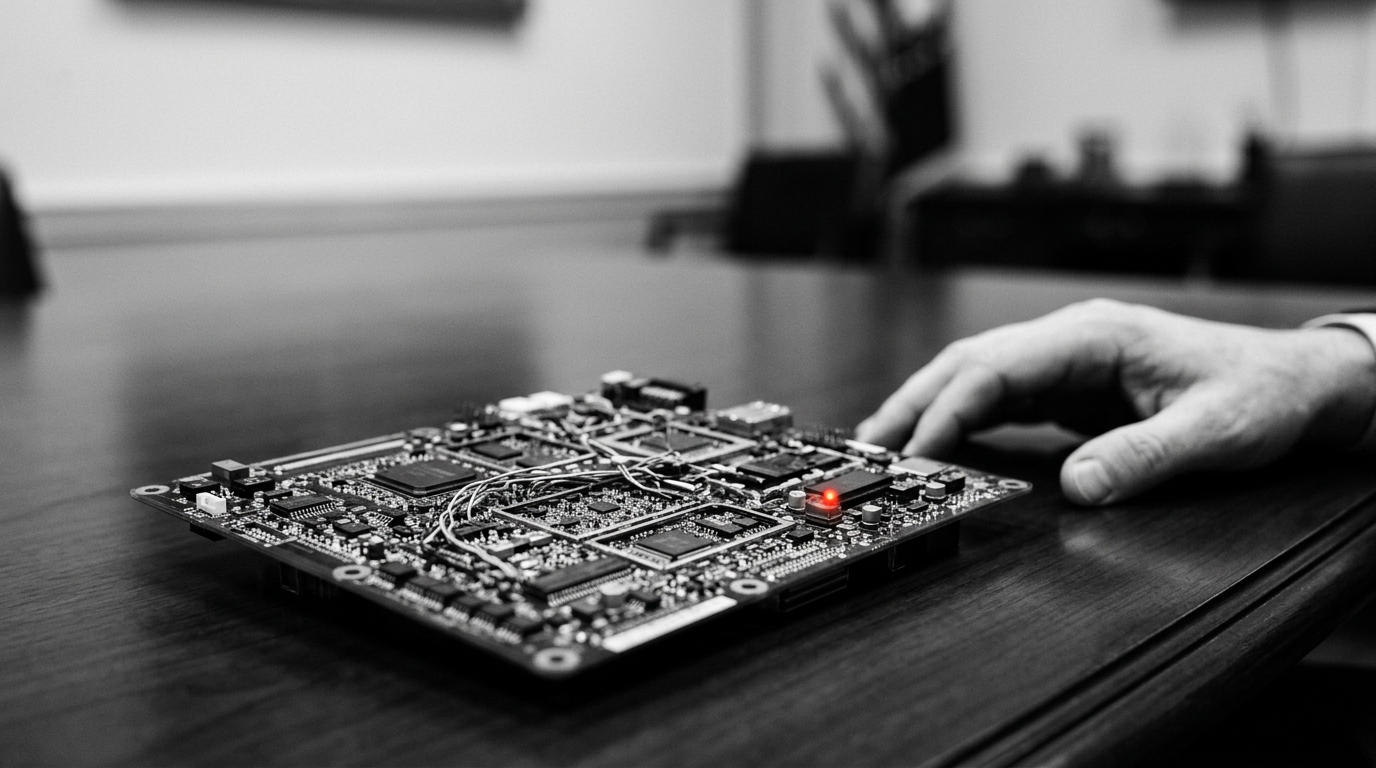
WASHINGTON, September 20, 2026 — Washington’s debate over Israel’s battlefield use of AI has shifted toward human control, as U.S. officials weigh how intelligence-sharing, technology transfer and defense aid should treat systems that can accelerate military decisions.
The core issue is not whether AI can help the Israel Defense Forces process intelligence, detect threats or support operational planning. It is whether the United States should attach clearer safeguards to cooperation with an ally whose military advantage increasingly depends on software, sensors and data fusion, while Israeli commanders remain accountable for battlefield outcomes.
Israel has spent years building military systems designed to shorten the time between detection and action. In practice, AI can sort large volumes of signals intelligence, flag patterns in surveillance feeds, help prioritize potential threats and support logistics or targeting workflows. Those uses do not automatically make a weapon autonomous, but they can compress the judgment window for human officers.
That distinction matters in Washington. The White House can set broad policy for responsible military AI, the Pentagon can define how U.S. forces cooperate with allies, the State Department can shape arms-transfer and diplomatic guidance, and Congress can use aid, hearings and reporting requirements to demand accountability. Each player has a different lever, but all face the same question: how to preserve human responsibility when machine-generated recommendations arrive faster than traditional command processes were built to handle.
The Israeli position emphasized in the current debate is that humans in the IDF remain responsible for battlefield decisions. That is a central claim, not a minor procedural detail. If AI is framed as decision support, Washington’s policy task is to verify where human review sits in the chain. If AI begins to select, rank or recommend targets in ways operators cannot meaningfully understand, the oversight problem becomes harder.
Israel Defense Forces
The U.S.-Israel defense relationship adds weight to the issue. Washington is not an outside observer of Israeli military modernization. U.S. assistance, joint training, intelligence cooperation and technology exchange give American officials influence over how allied capabilities are developed, tested and governed. That influence is strongest before systems become operational habits and weakest after they are embedded in daily battlefield practice.
For the Pentagon, the operational question is practical: can U.S. forces share data, intelligence or battlefield tools with an ally using AI without inheriting legal, ethical or strategic risk? For the State Department, the issue extends to diplomacy. Civilian harm, accountability and the perception of autonomous targeting can affect U.S. credibility with partners, adversaries and international institutions.
Congress has a separate incentive to focus on traceability. Lawmakers overseeing defense aid and export controls can demand answers on who approves AI-enabled targeting support, what audit trails exist, how errors are reviewed and whether U.S.-origin technology is being used in ways consistent with American policy. Those questions are likely to grow more pointed if civilian casualties, mistaken identification or escalation incidents are linked to AI-assisted processes.
The broader policy problem is that “human in the loop” can mean several things. It can mean a commander approves every action after reviewing the underlying intelligence. It can also mean a human clicks through a recommendation generated by a system whose logic is opaque. Washington’s challenge is to define the difference before the phrase becomes a shield rather than a safeguard.
Israel’s advantage is partly geographic and partly institutional. A small country facing multiple security fronts has strong incentives to invest in rapid detection, border surveillance, air defense integration and intelligence analysis. AI tools fit that requirement because they can help sift data faster than human analysts alone. But speed is also the risk. Faster systems can improve warning and response, while also narrowing the time available to challenge a flawed signal.
The regional stakes go beyond Israel. If AI-assisted targeting, surveillance and command tools prove useful in the Middle East, other states and nonstate actors will seek cheaper versions. Some will buy them, some will build them, and some will adapt commercial models for military use. Washington’s rules for a close ally could become a template, or a warning, for how other partners expect to be treated.
There is also a deterrence angle. If Israeli leaders believe AI gives them better early warning or more precise options, they may have more confidence in limited operations. Adversaries may read the same capability differently, seeing speed and automation as a reason to disperse assets, hide among civilians, target data links or act earlier in a crisis. In that sense, AI can stabilize some tactical problems while complicating strategic signaling.
For the United States, the macro effect is indirect but real. The Middle East remains tied to energy markets, shipping routes, U.S. force posture and coalition diplomacy. AI-enabled escalation would not need to be global in scale to consume American attention, move risk premiums or force new deployments. Conversely, clearer guardrails could help Washington argue that allied innovation remains bounded by human command and legal accountability.
The company-level effect depends on which firms sit inside the U.S.-Israel defense technology pipeline. Contractors building sensors, analytics platforms, cloud infrastructure, secure communications or decision-support tools could face stronger compliance requirements if Washington tightens oversight. They could also benefit if the United States creates clearer standards that make approved systems easier to sell, integrate and defend politically.
The wider defense industry will read any U.S.-Israel framework as a signal. If Washington insists on auditable human review, explainability standards and post-strike assessment records, vendors will design around those requirements. If policy stays vague, the market will reward speed, integration and operational claims first, leaving accountability to be negotiated after deployment.
The forward test is concrete: by December 19, 2026, watch whether U.S. and Israeli officials publicly define human-in-the-loop requirements for AI-enabled systems used in joint operations, intelligence-sharing or U.S.-supported defense programs. If they do, Washington will have shown that allied AI cooperation can be tied to oversight mechanisms rather than trust alone, with effects on regional deterrence, Israeli military practice and defense-sector compliance. If they do not, the policy vacuum will favor faster deployment, leave Congress with fewer enforceable benchmarks and make future incidents harder to evaluate when officials must explain where human judgment actually entered the chain.