Oil prices hold weekly surge as Iran risks lift diesel costs
Oil prices held near $95 Brent as U.S.-Iran tensions and Hormuz shipping limits kept crude on course for its best week since mid-July.
Atlas Newsdesk ·
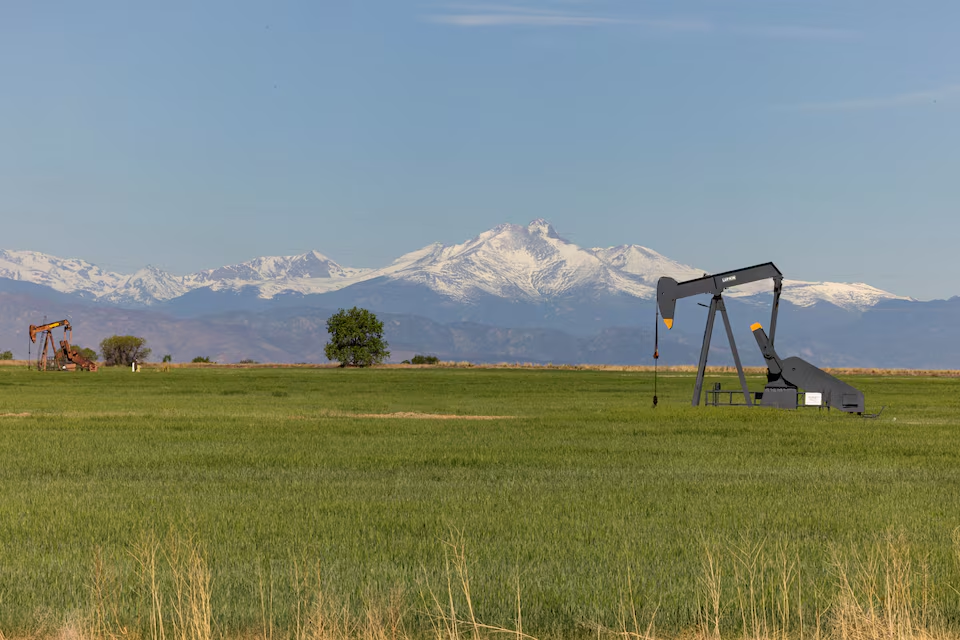
Oil prices were steady Friday, with Brent at $95.52, as U.S.-Iran clashes kept crude headed for its strongest week since July.
Brent crude futures were little changed at $95.52 a barrel by 0645 GMT, while U.S. West Texas Intermediate rose 7 cents, or 0.1%, to $91.36. For the week, Brent was up 7.6% and WTI had gained 10.4%, putting both benchmarks on track for their largest weekly increases since the week ended July 20.
Brent holds near $95
The price action followed a week of military and diplomatic strain around two oil-producing regions. U.S. attacks this week killed and wounded dozens, including Iranian civilians, according to the source account, marking the most intense U.S.-Iran clashes since July.
The war is in its seventh month after U.S.-Israeli strikes began in late February. Israeli Defence Minister Israel Katz renewed a warning that Israel would "cripple" Iran's military and civilian infrastructure, including energy facilities.
U.S. Vice President JD Vance said Thursday that Washington does not plan to hold talks with Iran unless Tehran stops attacking commercial shipping in the Strait of Hormuz. The strait is the immediate channel through which the regional conflict could affect crude flows, tanker insurance and delivered fuel costs.
Hormuz rules unsettle tankers
Iran also widened the list of vessels it considers non-compliant, leaving them exposed to fines, confiscation or detention if they attempt to pass through Hormuz. Iraqi ships remained among the limited group of vessels Tehran has cleared for transit, according to the officials cited in the source material.
ANZ analysts raised their short-term Brent forecast to $95 a barrel on Friday and said the estimate carried upside risk if the Middle East conflict escalates. "The market is entering a delicate adaptation phase," the analysts said in a note, adding that inventories had helped absorb the first supply shock but could provide less protection as buffers decline.
The supply concern is not confined to the Gulf. Ukrainian attacks on Russian refineries have added pressure to refined fuel markets, while average U.S. diesel prices were reported at record highs, although the source material did not provide a national price level for the fuel.
Iraq exports draw buyers
One counterweight came from Iraq, where August oil exports rose to about 2.34 million barrels per day from about 1.35 million bpd in July, two Iraqi energy officials said Wednesday. The increase amounted to roughly 990,000 bpd from the prior month, helped by heavy discounts and Iranian approvals for Iraqi tankers.
The same officials said September exports are expected to rise again as buyers respond to those discounts and transit approvals. That flow matters because extra Iraqi barrels can partly offset risk premiums tied to Hormuz, even if the underlying security threat remains unresolved.
Another limiting factor for crude's advance came from Russia. President Vladimir Putin said there was still a route to an agreement ending the war in Ukraine, and added that both the United States and China were prepared to support a peace settlement.
If Hormuz restrictions hold or expand, traders are likely to keep pricing higher freight, insurance and delay risk into crude and diesel. That path would keep pressure on import-dependent economies, support Brent and WTI benchmarks, and widen margins or operating strains unevenly across refiners, shippers and fuel distributors.
If diplomacy around Ukraine progresses and Iraqi exports continue rising, additional supply and lower perceived disruption risk could limit crude's weekly advance. The main open questions are whether Iran enforces the new vessel rules, whether Washington and Tehran remain outside talks, and how long inventories can cushion refinery or shipping disruptions.