NHS Dental Care Declines as 600 Practices Exit Public Service
Approximately 600 dental practices in England have left state-funded NHS services, intensifying regional disparities and impacting patient access.
Atlas Newsdesk ·
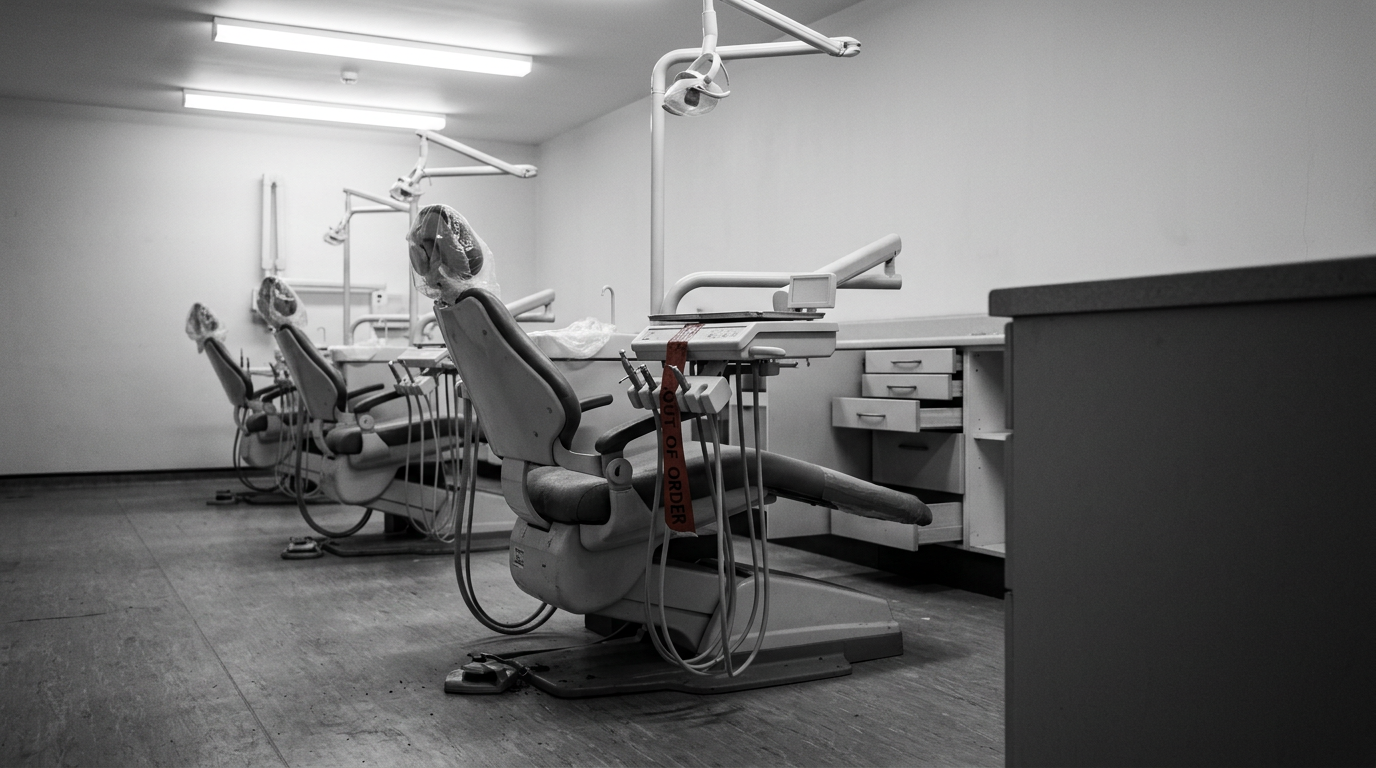
Access to National Health Service (NHS) dental services across England has significantly declined over the past ten years, with an estimated 600 practices ceasing to offer state-funded care. This reduction has exacerbated existing regional inequalities, particularly affecting residents in the South West and East of England who face increasing difficulty in securing NHS dental appointments.
Official data indicates that the overall activity level for NHS dentistry remains 8% below pre-pandemic figures, highlighting persistent challenges in service provision. A substantial majority of adults, approximately 60%, have not utilized NHS dental services within the last two years. This widespread lack of access to routine care not only compromises individual oral health but also places additional strain on emergency departments as preventable dental issues escalate into more severe conditions.
Financial Pressures on Dental Practices
Dental professionals frequently cite the existing contractual framework as the primary reason for their departure from NHS services, deeming it financially unsustainable. The 'units of dental activity' (UDA) system, introduced in 2006, is a major point of contention. Dentists contend that this system primarily incentivizes the volume of treatments rather than their complexity or quality, offering a fixed payment regardless of the actual work required.
This structure often renders it financially impractical for practices to treat patients with extensive needs under the NHS, prompting many to transition towards exclusively private service models. The increasing shift to private care has significant implications, as patients unable to afford private treatment may delay necessary procedures. Such deferrals can lead to more acute dental problems, eventually forcing individuals to seek assistance from emergency departments. This, in turn, increases pressure on the broader healthcare system and diverts resources from other critical medical needs.
Government Response and Industry Concerns
In an effort to tackle these escalating challenges, the government has proposed contract reforms and suggested mandatory service periods for new dental graduates. These initiatives aim to bolster the dental workforce and enhance access to care. However, stakeholders within the dental industry largely skepticism regarding the sufficiency of these measures.
Industry representatives argue that the current funding allocated to NHS dentistry remains inadequate to properly incentivize practices to participate in public services, especially in areas already suffering from significant underservice. A failure to address these structural financial issues, rather than solely focusing on workforce shortages, is widely considered crucial for reversing the ongoing decline in NHS dental provision. Experts emphasize that resolving these underlying problems is essential for safeguarding public health infrastructure against future burdens caused by preventable oral diseases.
Long-Term Outlook for Dental Provision
The long-term impact of these trends points towards a growing two-tier system in dental care, where access is increasingly determined by a patient's ability to pay for private treatment. This divergence risks widening health inequalities, as vulnerable populations are disproportionately affected by the shrinking availability of affordable public services. Sustained underinvestment and a misaligned incentive structure within the NHS dental contract could further entrench these issues, making future reforms more challenging.
Addressing the root causes of practice withdrawals, including a comprehensive review of the UDA system and an increase in allocated funding, is vital. Without such fundamental changes, the pressures on emergency services from escalating dental emergencies are likely to persist, undermining broader public health goals and increasing overall healthcare costs.