AI chips push Amazon deeper into Nvidia’s data center market
Amazon says its AI chips business would exceed $25 billion as cloud providers and startups press into Nvidia’s data center market.
Jason Kwon ·
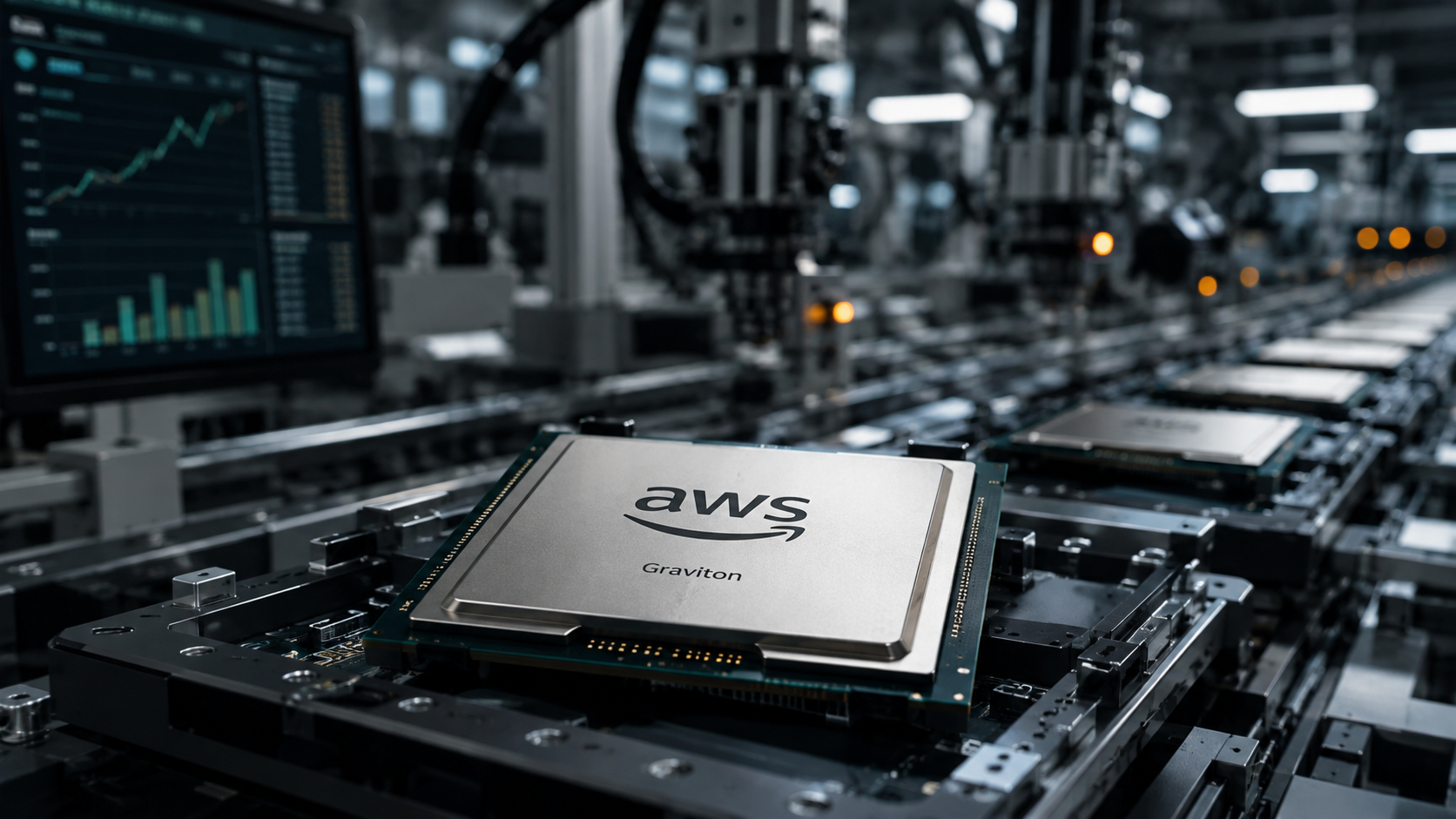
AI chips are becoming a larger battleground inside Amazon, where Andy Jassy says an internal silicon operation tops $25 billion in annualized revenue.
Jassy, chief executive of Amazon.com Inc., told analysts in July that the chip unit would clear that level if it were separated from the company. He also said revenue growth is running at a triple-digit rate, an unusually strong figure for a business still housed inside Amazon Web Services.
Amazon remains one of Nvidia Corp.’s largest customers, but its growing chip effort shows how the artificial intelligence supply chain is becoming less centered on one supplier. The shift matters because the biggest buyers of Nvidia processors are also building alternatives for their own cloud platforms and, increasingly, for outside customers.
Amazon puts numbers on silicon
Jassy has used conference calls this year to draw attention to Amazon’s place in the data center chip market. In July, he said, "We’re quite excited about what’s happening in our chips business," framing the operation as a large and fast-growing part of the company’s infrastructure strategy.
The company’s chips sit inside a broader race to lower the cost and increase the supply of computing power used to train and run AI models. Nvidia still dominates the highest-profile segment of that market, particularly the processors used for training large models, but Amazon’s internal designs give it more control over cost, capacity and product differentiation.
That control is becoming more valuable as AI demand presses against data center limits. People familiar with the matter said some major Nvidia customers have been told that servers containing its artificial intelligence chips are rising by more than 15% in many cases, a price move that would increase the incentive to test alternatives.
Nvidia’s lead draws rivals
Nvidia’s position remains difficult to challenge. Analysts estimate the company’s revenue nearly doubled from a year earlier to $92 billion in the latest quarter, a quarterly figure that exceeds the annual revenue of many competitors in the data center market.
The company has also expanded beyond graphics processors into networking, software and other systems that make its products harder to replace. That ecosystem gives customers performance and integration benefits, while also making switching decisions more complicated for cloud providers and AI developers.
Hendi Susanto, a portfolio manager and analyst at Gabelli, said "Nvidia has a strong ecosystem." He added that market changes, including Amazon and Google selling their own chips to other buyers, arrived faster than many expected.
Advanced Micro Devices Inc. and Broadcom Inc. are also generating tens of billions of dollars in data center revenue, according to the source material. Their growth gives cloud companies and AI labs more options, even as Nvidia’s scale and margins continue to make its market position difficult to dislodge.
Cloud buyers become suppliers
Recent moves point to a wider reordering of the chip market. Google has reached a deal with Marvell Technology Inc. tied to its chip ambitions, while Cerebras Systems Inc. announced a new computer that it says can handle AI prompts faster than any other system.
Anthropic PBC has also hired a former Google silicon executive while weighing its own entry into chips, according to the source material. If AI model developers move further into hardware, the industry’s traditional split between chip suppliers, cloud platforms and software companies would become less clear.
The total AI chip market is poised to cross $1 trillion in revenue, according to the source material, which explains why capital is flowing toward challengers. Startups are raising billions from investors seeking exposure to a market where a small share shift could support a large business.
Three paths for chip demand
If Nvidia keeps widening its software, networking and processor lead, global AI investment would remain tied to its supply cycle and pricing. For Nvidia, that path supports high revenue visibility; for the wider industry, it keeps challengers dependent on niches where cost or customization matters more than ecosystem depth.
If Amazon and other cloud providers expand sales of in-house chips to outside customers, the macro effect would be more competition for AI computing budgets and possibly lower unit costs over time. For Amazon, the $25 billion internal benchmark becomes a platform for external revenue; for the sector, cloud companies become direct competitors to chipmakers they still buy from.
If startups and rival suppliers win meaningful workloads, spending could spread across more architectures rather than concentrating around one stack. The main open question is whether customers will accept the engineering cost of diversification when Nvidia’s installed base, developer tools and supply relationships remain strong.