World Cup investor plan draws AFC president's hard rebuke
The World Cup investor plan drew a sharp AFC rebuke after FIFA proposed a $20 billion commercial subsidiary without prior confederation consultation.
Mehmet Şahinoğlu ·
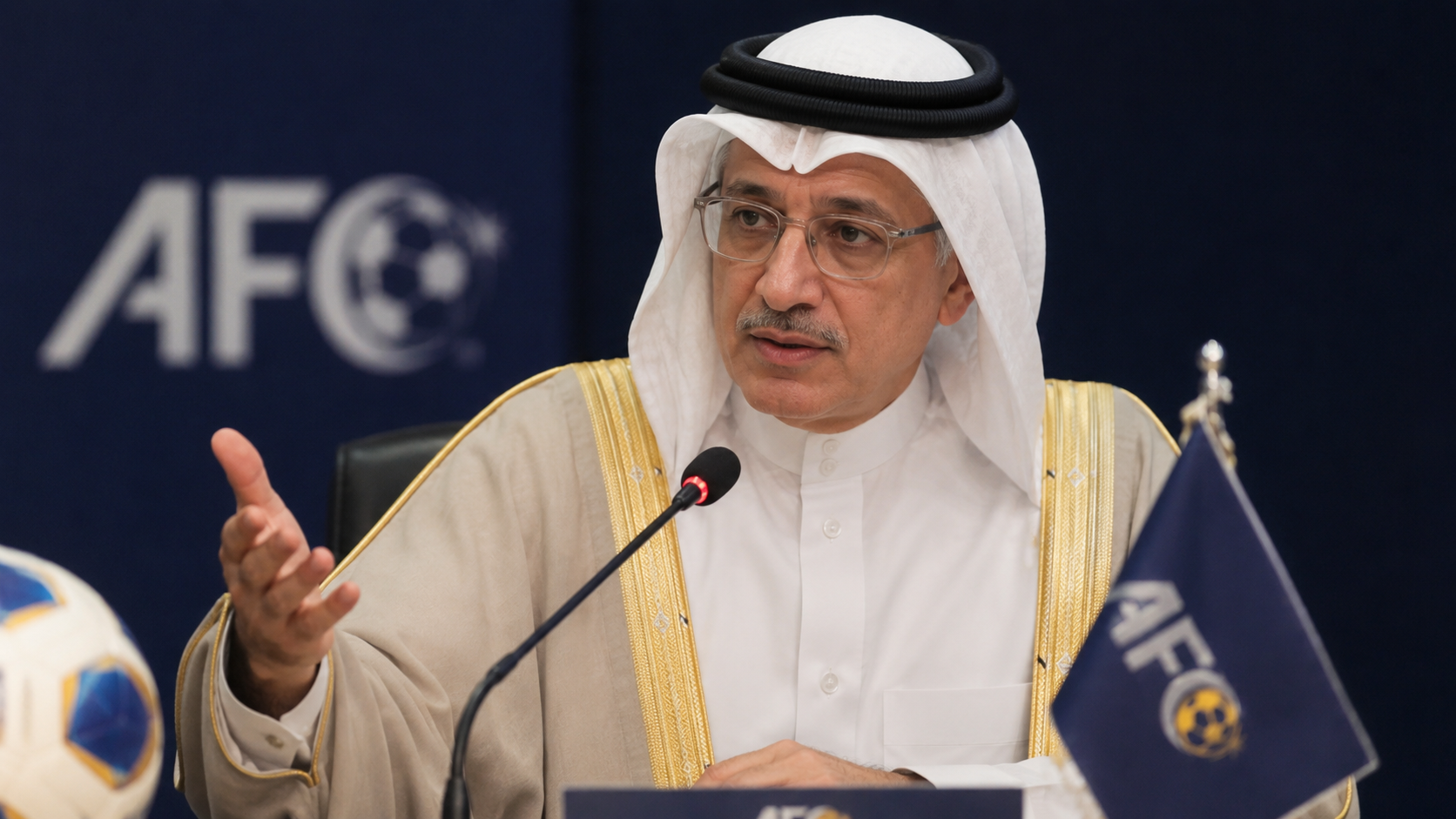
The World Cup investor plan has triggered an AFC backlash, with Sheikh Salman saying FIFA failed to consult Asian football before unveiling it.
Sheikh Salman bin Ebrahim Al Khalifa, president of the Asian Football Confederation, told the body's 47 member associations in a Thursday letter that FIFA's process was "totally unacceptable." His objection puts one of world football's six regional confederations openly against the way FIFA has handled a commercial proposal tied to its most valuable tournament.
Sheikh Salman challenges FIFA
The dispute centers on FIFA's plan, announced Tuesday, to create a $20 billion commercial subsidiary covering the World Cup and other FIFA events. The structure would allow private investors to buy into the business, according to FIFA's announcement described in the source material.
The AFC president's complaint was not aimed only at the financing idea. His sharper point was procedural: Asian football, he wrote, had not been brought into the process before FIFA made the plan public.
"The AFC notes with great concern and disappointment that it was not consulted by FIFA at any level prior to the public announcement of this proposal," Sheikh Salman wrote. He added that the confederation had not received detailed "governance, financial or legal" material on the plan or its possible consequences.
A $20 billion company plan
For FIFA, the proposed subsidiary would shift more commercial control into a dedicated vehicle built around global competitions. For the AFC, the missing consultation is the foul in the buildup, because the World Cup is not just a FIFA asset in practical terms; it sits inside a football system that relies on regional bodies to qualify teams, stage competitions and distribute influence.
The AFC is based in Kuala Lumpur and oversees football across Asia, the Middle East and Australia. Its remit includes regional club tournaments and national team competitions, making it a central operating layer between FIFA and domestic associations.
Sheikh Salman argued that FIFA's approach risked cutting across that layer. In his letter, he said FIFA's unilateral conduct appeared to threaten "the very foundations of continental football," which he linked to solidarity, cooperation and transparency.
The language was unusually direct for football politics, where disputes over money and authority are often kept behind closed doors until votes approach. Here, the AFC president moved the row to his member associations quickly, giving the issue a formal constituency before FIFA has presented full detail to the confederations.
Confederation backing becomes test
The immediate impact falls on FIFA's ability to build legitimacy for the plan. A $20 billion structure may attract financial attention, but in football governance, commercial scale does not remove the need for political consent.
Sheikh Salman said the proposal could not succeed without support from all confederations. That line matters because the AFC is one of six regional pillars in FIFA's system, and resistance from one confederation can invite others to demand more detail, safeguards or a slower process.
The wider industry issue is control of elite football inventory. If private investors gain exposure to the World Cup's commercial engine, questions follow over voting rights, revenue distribution, event priorities and the protection of competitions outside FIFA's top global properties.
Clubs, sponsors, broadcasters and national associations will watch the governance terms as closely as the headline valuation. The money is the scoreboard, but the rules of the match decide who plays with advantage.
If FIFA pauses and shares legal, financial and governance analysis with the confederations, the plan could move into a negotiated phase. In that scenario, global football finance gets a clearer framework, FIFA preserves a route to new capital, and regional bodies can push for guarantees on revenue sharing and institutional authority.
If FIFA instead keeps the current pace, the row could harden into a broader governance contest. That would add uncertainty around the commercial subsidiary, weaken AFC confidence in FIFA's decision-making and encourage other confederations to protect their own competitions and political leverage.
If the proposal is rewritten to limit investor control while keeping commercial upside, the outcome could be a compromise. FIFA would still chase value from the World Cup, the AFC could claim a role in shaping guardrails, and the sector would gain a template for bringing private capital into football without bypassing continental structures.
The open questions are now clear: what rights investors would receive, how revenues would flow, who would govern the new company and whether confederations get a binding say before any deal is signed. Until those answers arrive, FIFA has the plan, but not yet the consensus.