FIFA bans reusable bottles at 2026 World Cup venues over safety concerns
FIFA has banned reusable water bottles at the 2026 World Cup due to safety concerns, requiring fans to use stadium hydration options.
Mehmet Şahinoğlu ·
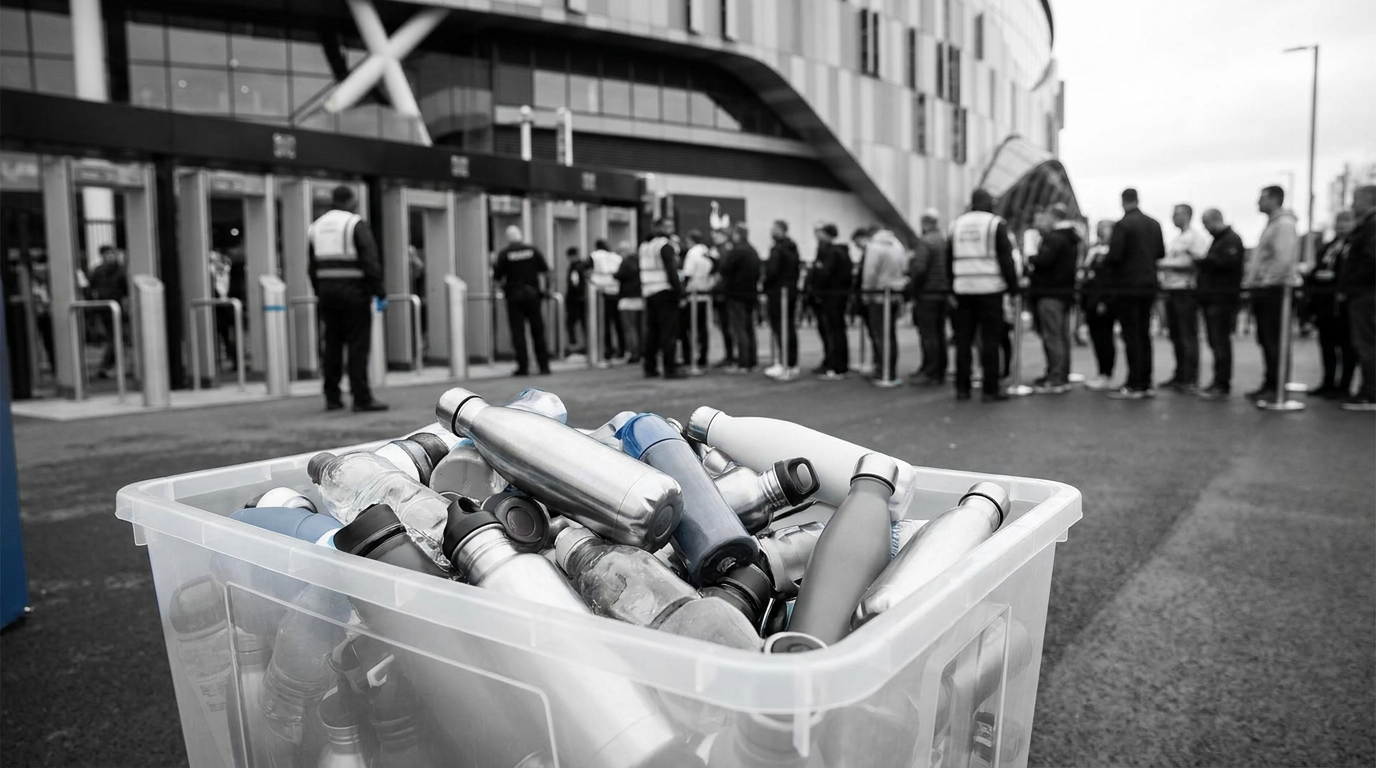
FIFA has barred spectators from bringing reusable water bottles into stadiums for the 2026 FIFA World Cup, citing safety concerns. An updated stadium code of conduct, in effect since Tuesday, reverses last month’s guidance that had allowed empty, transparent, reusable plastic bottles up to 1 liter. The rule will be enforced at security screening points across all host venues in the United States, Canada and Mexico. The 48-team tournament runs from June 11 to July 19, 2026.
The updated code also prohibits other rigid or semi-rigid drink containers — including bottles, cups, jars and cans — to reduce the risk of injury if items are thrown toward the field or into the stands. Officials said several venues already restrict outside bottles for safety reasons, and a single, tournament-wide rule is intended to align with existing stadium policies and simplify entry checks for fans.
Security procedures at entry will reflect the expanded list of prohibited containers, with visible signage planned around checkpoints.
Organisers framed the change as a safety-first policy designed to protect players, referees, fans, volunteers and staff. The prohibition standardises what spectators can bring across all venues and aims to avoid confusion for travelling supporters attending matches in multiple host cities. Enforcement will take place at perimeter screening, and items that fall under the expanded restriction list will not be permitted inside.
Fan comfort remains a key consideration, with temperatures at some locations expected to range between 26 and 28 degrees Celsius (79 to 82 degrees Fahrenheit). Measures such as hydration stations, misting stations, fans and cooling tents will operate around stadium perimeters to support hydration and heat management.
Inside the stadium footprint, officials said pricing for water bottles will remain consistent with other events typically held at each venue, and vendors plan to scale up supply for peak ingress times.
Tournament-wide safety standard
Single policy across host countries
The move reverses a recent allowance for empty, transparent bottles up to 1 liter and applies a uniform entry policy across the United States, Canada and Mexico. Officials said the unified approach is designed to streamline screening and reduce the risk posed by rigid containers that could be used as projectiles. The update also aligns the World Cup’s rules with common venue practices already in place at many host stadiums.
Security teams will apply the expanded restrictions at checkpoints around stadiums, and signage is expected to highlight the items that cannot be brought inside. The intent is to quicken entry while reducing discretionary calls at gates by clearly listing prohibited drink containers.
Heat mitigation and hydration logistics
Hydration access and in-stadium pricing
Supporter groups and attendees have raised questions about coping with heat and accessing drinking water. Under the new rules, spectators will need to rely on stadium-provided hydration options or purchase bottled water once inside. Organisers said venue operations will include additional resources to mitigate heat risks, and matches will include fixed hydration breaks for players — one in each half — throughout the competition.
Event planners said they are working with each Host City Committee and local authorities on heat mitigation plans tailored to venue layouts and expected conditions. Resources may include additional shade structures, high-capacity hydration points and wayfinding to help fans locate cooling areas quickly around the stadium footprint. Fans are encouraged to plan ahead for warmer kickoffs and allow extra time for security screening given the expanded list of prohibited containers.
Host City Committees are expected to publish detailed venue guides ahead of matchdays, including maps of hydration points, cooling areas and entry procedures under the updated code of conduct. Organisers said further operational details will be communicated closer to matchdays, and fans should monitor official venue guides and tournament communications for final entry rules and heat-mitigation resources.