Rivian R2 Base Model Delayed to Late 2027
Rivian delays its R2 electric SUV base model to late 2027, revising its starting price to "around $45,000" amid market changes.
Jason Kwon ·
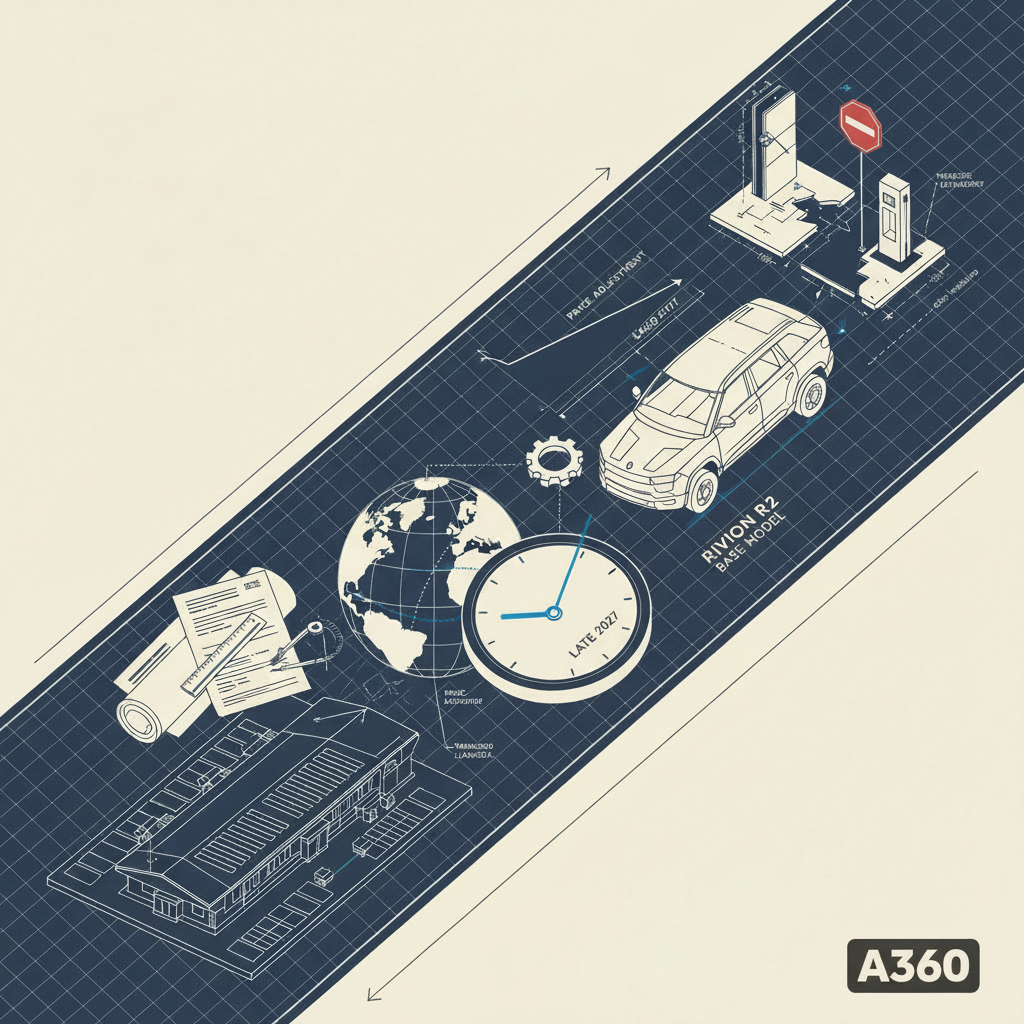
Rivian Automotive has announced a delay for the base model of its R2 electric SUV, pushing its availability to late 2027. This adjustment, communicated on March 12, 2026, means the most affordable version of the vehicle will arrive later than initially anticipated. Concurrently, the company has revised its pricing communication, now indicating the R2 will start "around $45,000," a departure from its previous firm commitment of "starting at $45,000."
This strategic shift follows the removal of the specific $45,000 starting price from Rivian's official website in February 2026. The initial reveal of the R2 occurred in March 2024, at which point the $45,000 price was a key selling point for the entry-level variant. The two-year gap between the initial announcement and the revised availability highlights evolving market conditions and internal production considerations.
Market Dynamics and Pricing Strategy
The decision to delay the base R2 model and modify its pricing language reflects broader changes in the electric vehicle market. Since the R2's initial unveiling, the landscape for EV manufacturers has evolved considerably. Key factors include the discontinuation of the $7,500 federal EV tax credit, which previously incentivized consumer purchases of electric vehicles, including those from Rivian.
Another significant development impacting Rivian's revenue streams is the cessation of regulatory credit purchases by legacy automakers. Historically, companies like Rivian, which produce zero-emission vehicles, could sell regulatory credits to traditional manufacturers that needed to meet emissions standards. This revenue source has diminished, adding financial pressure on EV startups.
Production and Financial Implications
Rivian's strategy appears to prioritize higher-margin configurations of the R2, which typically offer more features and command higher prices. By delaying the base model, the company can potentially optimize its production lines for more profitable variants first, helping to improve overall financial performance and cash flow in a competitive market. This approach is common among automotive manufacturers, especially in the early stages of a new model's lifecycle.
The R2 is a crucial model for Rivian, designed to expand its market reach beyond the premium R1T pickup and R1S SUV. The vehicle is intended to compete in a more accessible price segment, making the base model's eventual availability critical for broader market penetration. However, the delay suggests a recalibration of the company's rollout strategy in response to economic headwinds and supply chain complexities.
Outlook for Rivian and EV Sector
Investors and consumers will be closely watching Rivian's execution of the R2 launch. The company's ability to navigate these market shifts while scaling production and maintaining financial stability will be key to its long-term success. The broader EV sector continues to face challenges related to charging infrastructure, battery costs, and consumer adoption rates, making strategic flexibility essential for manufacturers.
The revised timeline for the R2 base model underscores the dynamic nature of the electric vehicle industry, where initial projections often need adjustment due to external economic factors and internal operational considerations. Rivian's focus remains on delivering a competitive product while adapting to a rapidly changing market environment.
Implications
Country Impact: The delay in the R2 base model could impact U.S. consumer adoption of more affordable EVs, potentially slowing the transition to electric vehicles for a segment of the market. It also reflects broader economic pressures affecting manufacturing and consumer incentives.
Industry Impact: For the electric vehicle industry, Rivian's decision highlights the challenges of bringing lower-cost EVs to market amidst fluctuating economic conditions and the removal of government incentives. It may signal a trend where manufacturers prioritize higher-margin models first.
Market Impact: Rivian's stock performance could be influenced by investor perception of this delay, potentially leading to short-term volatility. The revised pricing language also introduces uncertainty regarding future revenue projections and market positioning for the R2.