America's Gas Glut: A World in Shortage
US natural gas glut & low prices contrast with global scarcity & high prices due to Middle East disruptions.
Atlas Newsdesk ·
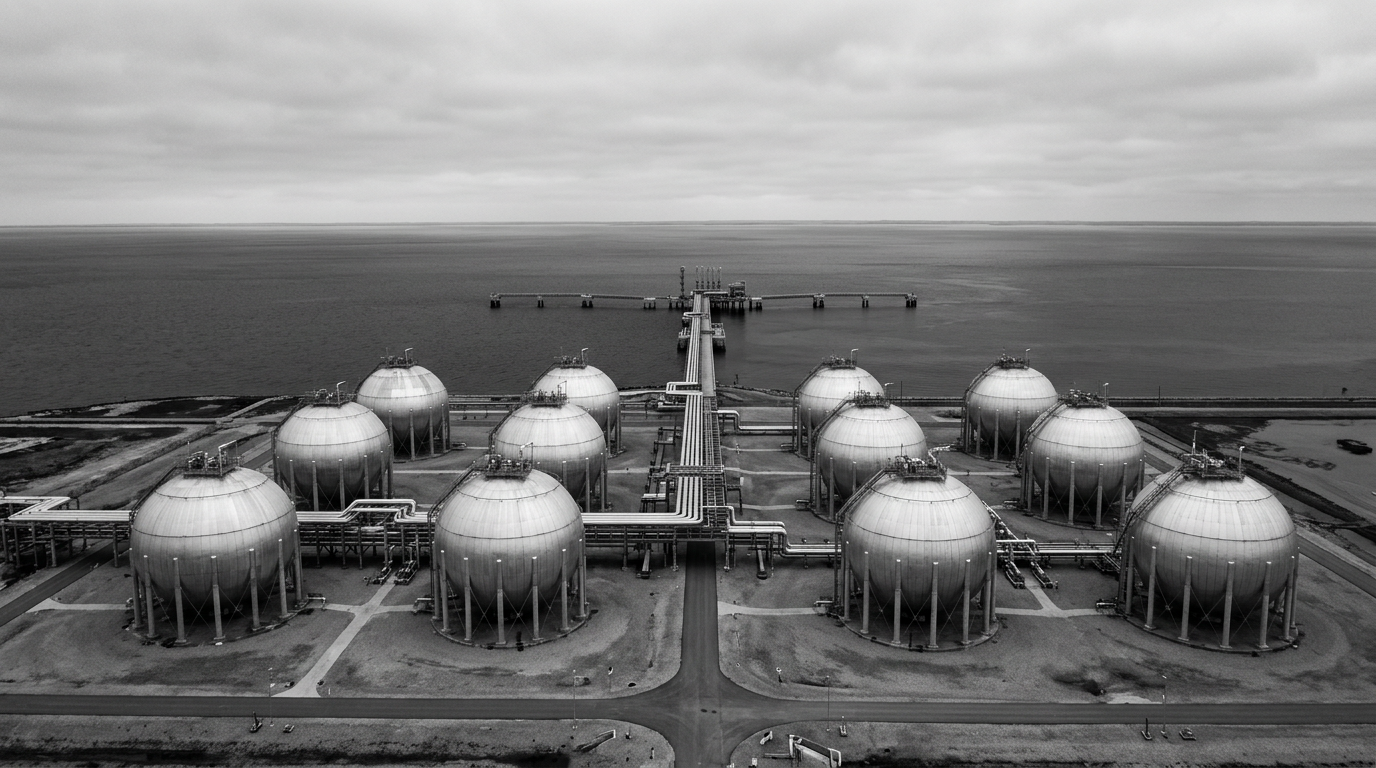
The global natural gas market has bifurcated significantly as of May 1, 2026, with the United States experiencing a supply glut and low prices while Europe and Asia face scarcity and soaring costs. This divergence is primarily driven by the ongoing conflict with Iran, which has disrupted approximately 20% of global liquefied natural gas (LNG) supply from the Gulf region, damaging Qatari facilities and impeding tanker traffic through the Strait of Hormuz.
Consequently, international gas prices have surged, with European prices increasing by 84% and Asian prices by 108%, reaching approximately $21 to $22 per million British thermal units (mmBtu). In contrast, U.S.
Henry Hub futures have dropped by 12% to a 17-month low of $2.52 per mmBtu. Despite record U.S.
gas production, which reached 107.7 billion cubic feet per day (bcfd) in 2025, the country's LNG export facilities are operating at maximum capacity, and domestic pipelines are full, preventing additional U.S. gas from reaching overseas markets.
This situation has led to negative spot prices at the Waha Hub in West Texas, where producers sometimes pay to have gas taken away due to pipeline constraints. While U.S. LNG export firms like Venture Global and Cheniere Energy have benefited from increased demand for their existing capacity, domestic producers face depressed prices. New pipeline capacity is not anticipated until late 2026 or early 2027, prolonging the domestic oversupply.