US beef prices reach $8.00/lb amid cattle shortage
US beef prices hit a record $8.00 per pound, up 12% year on year, as cattle inventories fall to the lowest level since 1951.
Atlas Newsdesk ·
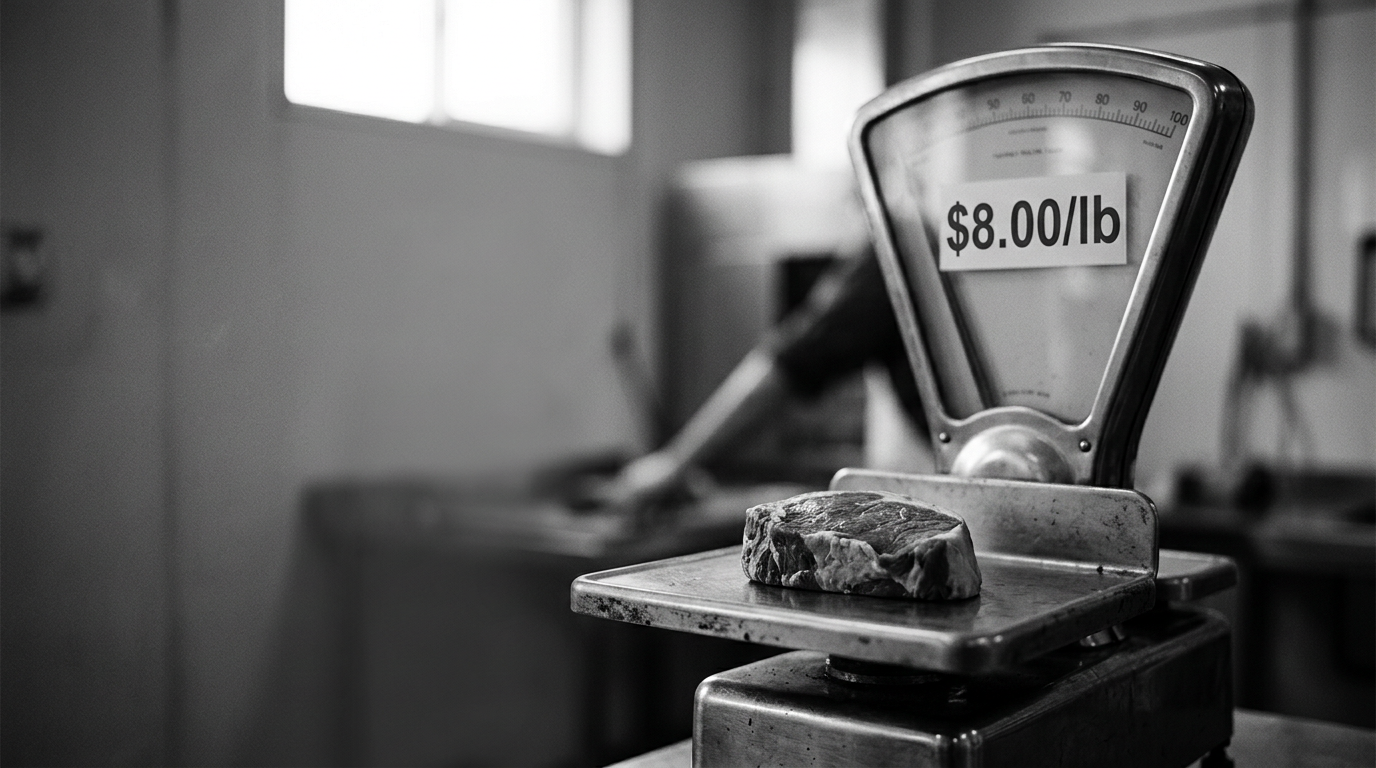
Beef prices in the United States have reached a record $8.00 per pound, with retail costs up 12% over the past year as a nationwide cattle shortage pushes expenses higher from ranch to checkout.
Officials and industry participants describe the current cycle as being driven by the smallest cattle inventory since 1951. The shortage is tied to prolonged drought conditions and disease pressure affecting more than 60% of grazing land, limiting pasture productivity and forcing operational adjustments.
Short supply, higher costs across the chain Ranchers are receiving record prices for calves, reflecting tight supply and strong competition for available animals. However, producers say those higher revenues are being eroded by rising costs for fuel, equipment, and supplemental feed, which becomes more necessary when pastures are parched.
The same dynamics are being felt downstream. Feedlots and meatpacking operations are paying historically high prices for livestock at a time when fewer cattle are available to process, making it harder to cover fixed costs efficiently.
Processing concentration and under-capacity pressure
Meatpacking facilities process the bulk of US beef through a concentrated structure: four major firms handle about 85% of the nation’s beef, according to the information provided. With fewer animals moving through plants, operators report under-capacity conditions that spread fixed costs across a smaller volume.
That under-utilization, combined with higher livestock purchase prices, is contributing to margin compression among processors. Participants say the result is a market where costs rise quickly, while profits do not necessarily follow.
Consumer limits shape how far prices can go
Meatpackers and retailers say passing every cost increase to consumers is not straightforward because demand can weaken as prices climb. They report that large jumps in beef prices can prompt shoppers to switch to cheaper alternatives such as chicken or imported beef.
This price sensitivity is described as a limiting factor even as retail prices reach record levels. Industry participants say the cost of production is tracking close to what the market can sustain, leaving little room for broad profit expansion.
Profits remain constrained despite record retail prices
Across the supply chain—producers, feedlots, and processors—participants report stagnant or negative profit margins despite the headline rise in beef prices. The reported pattern is that higher sales prices are being offset by the higher costs required to raise, feed, transport, and process cattle in today’s constrained environment.
How long these conditions persist remains uncertain, with the underlying drivers in the provided material centered on drought impacts and disease pressure across grazing areas, alongside capacity and cost challenges in processing.