Iran Targets US Bases with Ballistic Missiles in Escalation
Iranian forces used Kheibar Shekan missiles to strike US installations in Jordan and UAE, marking a significant escalation since hostilities resumed August 31, 2026.
Atlas Newsdesk ·
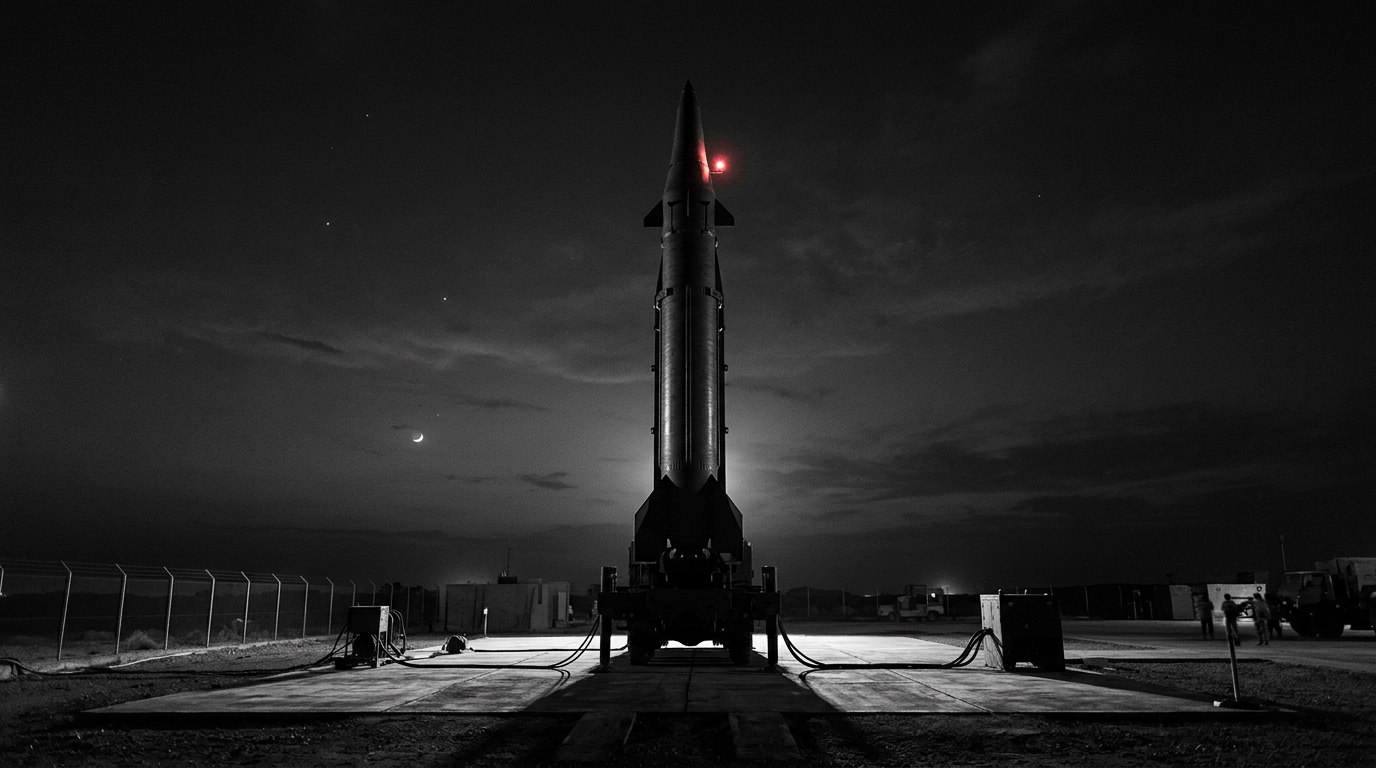
Iranian forces launched domestically developed Kheibar Shekan medium-range ballistic missiles at United States military installations situated in Jordan and the United Arab Emirates. These strikes, impacting facilities near Azraq, represent a notable escalation in the ongoing confrontations between US forces and Iran's Islamic Revolutionary Guard Corps (IRGC). The renewed hostilities commenced on August 31, 2026, following a month-long lull, after initial conflicts began in February of the same year. The deployment of these advanced missiles signals a strategic shift in the nature of the current engagement.
Advanced Missile Capabilities Utilized
The Kheibar Shekan missile, which translates to 'Castle Breaker,' was first publicly unveiled by Iran in 2022. This weapon system boasts an estimated operational range of approximately 1,450 kilometers. It is designed to carry a payload weighing between 449 and 590 kilograms, indicating substantial destructive power upon impact. A crucial characteristic of the Kheibar Shekan is its solid-fuel propellant. This design facilitates rapid launch preparation, often achievable within minutes.
The solid-fuel design significantly reduces the logistical requirements typically associated with older liquid-fueled missile systems. This curtailed preparation time also reduces the detection window for opposing forces, thereby enhancing its operational effectiveness and survivability in contested territories. The IRGC's broader arsenal includes numerous short- and medium-range ballistic missiles, alongside various cruise missile variants, allowing Iran to project military influence across the wider Middle Eastern region.
Strategic Responses and Regional Dynamics
The extensive weaponry available to Iran challenges existing security frameworks and contributes to an already volatile security environment in the Middle East. In response to these recent actions, US Central Command has continued to conduct counter-strikes. These operations by American forces have reportedly focused on Iranian military infrastructure, including targets situated on Larak Island, which is strategically located within the Strait of Hormuz.
The Strait of Hormuz is globally recognized as a critical maritime route for international oil shipments. Consequently, any military activities or escalations in its vicinity carry profound international economic and geopolitical implications. Such developments raise significant concerns for global maritime shipping routes, particularly those vital for energy transport. The renewed exchange of fire and the use of more sophisticated weaponry, such as the Kheibar Shekan, underscore the deepening security challenges in the Middle East and highlight the potential for widespread disruptions to international commerce.
The persistent tensions in the region have historically impacted global energy prices and supply chains. This latest escalation, employing advanced ballistic missile technology, suggests a heightened level of risk that could further destabilize an already sensitive geopolitical landscape. International observers are closely monitoring the situation for further retaliatory actions or diplomatic interventions that might mitigate the growing risk of broader conflict.
Historical Context of Tensions
The current confrontation has roots extending back to February, with a brief cessation of hostilities before their resumption. This pattern of intermittent conflict and escalation reflects long-standing geopolitical rivalries and strategic competition in the Middle East. Previous engagements have often involved proxy forces or targeted infrastructure, but the direct targeting of US military installations with advanced ballistic missiles marks a more direct and potentially dangerous phase in the conflict. The introduction of faster, more powerful weaponry increases the urgency of de-escalation efforts.