Washington weighs typhoon aid optics after mass evacuations in China
A typhoon forcing 2 million evacuations in China tests U.S. humanitarian diplomacy: can Washington offer aid to a rival without appearing naive?
Lauren Collins ·
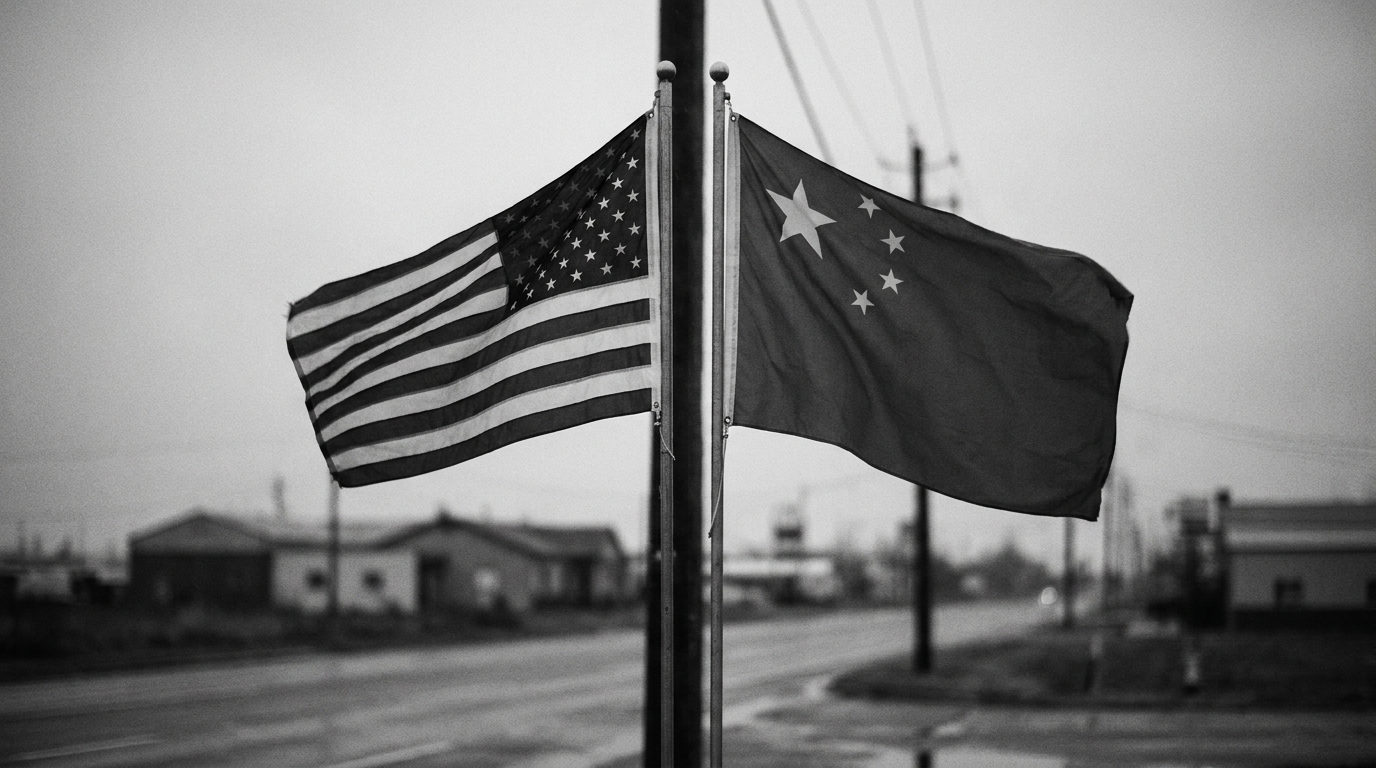
# Washington weighs typhoon aid optics after mass evacuations in China
Washington faced a narrow but consequential diplomatic opening after Typhoon Bavi made landfall in China’s Zhejiang province, where authorities evacuated nearly 2 million people, according to the supplied report. No White House, State Department or USAID response was included in the material, leaving the immediate U.S. posture unclear as the storm’s damage assessment unfolds.
China Washington
For U.S. officials, the question is not only whether China needs outside help. It is whether a public American offer of assistance would create a useful humanitarian channel, be dismissed by Beijing, or become another flashpoint in a relationship already defined by distrust.
Typhoons routinely test East Asian governments because they combine fast-moving emergency management with large-scale economic risk. Zhejiang is one of China’s coastal provinces tied into manufacturing, ports and export logistics, so evacuations on this scale can carry consequences beyond flooded streets and damaged homes. The report said Bavi had earlier battered Japan and Taiwan before sweeping into China’s east coast, making it a regional weather event rather than a purely domestic Chinese emergency.
In Washington, natural disasters in rival states create an awkward policy lane. The White House normally uses condolences and aid offers to signal that humanitarian concerns can sit apart from geopolitical disputes. The State Department often handles the diplomatic language, while USAID would be the agency associated with emergency assistance if Washington chose to make a concrete offer.
China Washington
The U.S.-China relationship gives that routine playbook sharper edges. The two governments remain divided over Taiwan, technology controls, trade practices, the South China Sea and military activity in the Indo-Pacific. At the same time, both sides periodically try to preserve limited channels on climate, public health, counternarcotics and crisis communication because neither capital benefits from every disagreement becoming a full rupture.
A disaster response could fit into that limited-cooperation category. A message of condolences costs little and can be framed as support for affected civilians rather than support for the Chinese government. A material aid offer would be more sensitive because Beijing may prefer to show that it can manage the emergency itself, especially after ordering evacuations approaching 2 million people.
Domestic politics would also shape any U.S. decision. Members of Congress who take a hard line on China could question why U.S. resources should be offered to Beijing, particularly if the administration cannot show a clear humanitarian need or a strategic gain. Supporters of a limited offer could argue the opposite: that refusing even symbolic assistance after a major storm would make competition look punitive toward ordinary Chinese citizens.
China’s likely reaction is an open question. Beijing has often treated foreign disaster assistance as a matter of sovereignty and national capacity, accepting help when useful but resisting gestures that appear to carry political conditions or public-relations costs. If Chinese authorities believe the evacuation operation demonstrates competence, they may see a U.S. offer as unnecessary even if they welcome a carefully worded message of sympathy.
For the Pentagon and National Security Council, the main concern would be avoiding mixed signals. A humanitarian note should not be confused with a shift in U.S. deterrence policy, military posture or technology restrictions. That is why Washington’s wording matters: it can separate compassion for disaster victims from concessions on the strategic disputes that dominate the relationship.
The macro stakes are indirect but real. Severe storms can interrupt ports, factories, power systems and local transport networks, especially along densely developed coastlines. If disruption remains brief, the effect is likely to be managed inside China’s domestic emergency apparatus; if it damages logistics nodes or industrial zones, companies tied to regional supply chains may face delays that travel outward through trade flows.
For China, the immediate test is operational: sheltering evacuees, restoring services and preventing secondary losses after landfall. For the wider region, Bavi’s path through Japan, Taiwan and China reinforces the shared exposure of East Asia’s industrial coastlines to extreme weather. For Washington, the storm lands in a policy space where climate risk, humanitarian diplomacy and great-power competition overlap.
The clearest test is whether the White House, State Department or USAID
issues a formal statement by 2024-10-31 that goes beyond condolences and specifically offers humanitarian assistance to China. If Washington makes that offer, even one Beijing declines, it would suggest U.S. officials see value in preserving a narrow humanitarian channel during strategic competition; the macro effect would be a modest stabilizing signal, China would gain the option of accepting symbolic or technical help, and regional disaster diplomacy could get a small boost.
If the U.S. limits itself to a brief statement or says nothing
publicly, the readout will be different: competition and domestic political caution would be outweighing humanitarian outreach, China would rely on its own response narrative, and the wider disaster-relief space between the two powers would remain thin. The key unknowns are the final damage toll, whether Beijing asks for or rejects outside assistance, and whether U.S. officials decide that public restraint serves the relationship better than a highly visible offer.