Washington weighs alliance optics as Russia warns on Japan's Typhon plans
Russia's public warning over Japan's potential Typhon deployment puts Washington between two priorities: strengthening a key Pacific ally and limiting…
Lauren Collins ·
# Washington weighs alliance optics as Russia warns on Japan's Typhon plans
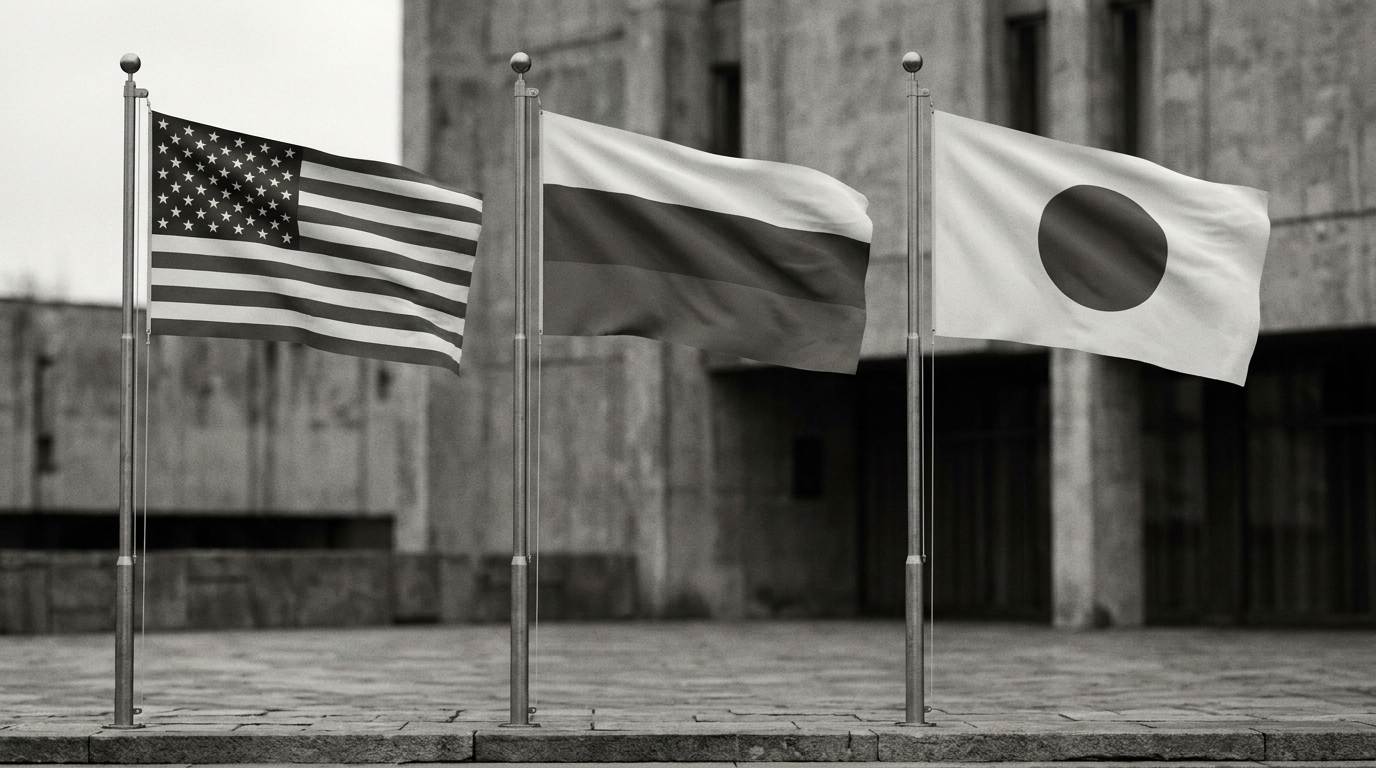
Washington is being pulled deeper into a missile dispute in Northeast Asia after Russia's Deputy Foreign Minister Andrey Rudenko warned that Japan's deployment of U.S.-made Typhon systems would threaten Russia's Far East. Rudenko said Moscow is "closely following" Japan's expanding military activity, a signal that the Kremlin may try to make Tokyo's defense modernization a U.S.-Russia issue as well as a regional one.
Northeast Asia
For the Biden administration's successors in Washington, the problem is not simply Russian anger. The United States wants Japan to move faster on deterrence against China and North Korea, but every visible U.S.-origin missile system in the region now carries a second message for Moscow: the post-INF Treaty arms control vacuum is no longer theoretical.
The Typhon system, also known as the U.S. Army's Mid-Range Capability, is a land-based launcher associated with the Mk 41 vertical launch architecture and designed to fire missiles such as the Standard Missile-6 and Tomahawk. Its military value is straightforward: it can put mobile, conventionally armed strike options on allied territory without relying only on ships, submarines or aircraft.
That is why the system is politically sensitive. A launcher that can support air defense or anti-ship missions can also be read by adversaries as part of a longer-range strike network, especially when placed near contested waters or Russian territory. Moscow has spent years objecting to U.S. missile defense and strike infrastructure near its borders, and the end of the Intermediate-Range Nuclear Forces Treaty in 2019 removed a legal framework that once banned many U.S. and Russian ground-launched missiles with ranges between 500 and 5,500 kilometers.
Northeast Asia
Japan's defense debate has also changed. The country still operates under a postwar constitution that renounces war, but Tokyo has widened its interpretation of self-defense, raised defense spending ambitions and moved toward counterstrike capabilities after repeated North Korean missile tests and China's rapid military expansion. In Washington, that shift is generally seen less as remilitarization than burden-sharing: Japan is expected to do more because the U.S. military cannot absorb every Indo-Pacific contingency alone.
The U.S.-Japan security treaty sits at the center of that calculation. The White House sets alliance priorities, the State Department handles diplomatic signaling, the Pentagon manages deployments and exercises, and Congress watches whether allies are investing enough to reduce strain on U.S. forces. The National Security Council would have to coordinate all of that if Russia turns Rudenko's warning into a formal protest or links it to broader talks with Washington.
Russia's Far East gives the dispute a sharper edge. Moscow's Pacific posture includes strategic forces, naval facilities and air defense assets spread across a vast region that has become more important as Russia leans toward China during its confrontation with the West. A U.S.-made missile system in Japan would not only be assessed through a Tokyo lens; Russian planners would examine how it might affect bases, sea lanes and command structures on Russia's eastern flank.
China and North Korea are the other drivers that Washington cannot ignore. Beijing has built a large missile force intended to complicate U.S. and allied operations near Taiwan, the East China Sea and the South China Sea. North Korea has tested missiles capable of reaching Japan and beyond, making missile warning, interception and retaliation central to Tokyo's security planning.
That triangle shapes Washington's dilemma. If U.S. officials minimize the system to calm Russia, they risk undercutting deterrence messages aimed at Beijing and Pyongyang. If they emphasize Typhon's reach and flexibility, they hand Moscow and Beijing a ready-made argument that Washington is militarizing Japan and destabilizing Asia.
The likely U.S. line is therefore narrow: defend Japan's right to strengthen its defenses, stress alliance coordination and avoid suggesting that Moscow has a veto over deployments on allied territory. The Pentagon is likely to frame the system as conventional and tied to regional deterrence, while the State Department would try to keep the dispute from bleeding into other channels where Washington and Moscow still need crisis management.
Congress could push in a harder direction. Lawmakers focused on China may argue that Russian objections are proof that distributed missile systems in allied countries create real deterrent pressure. Arms control advocates may counter that the United States needs clearer guardrails before more ground-launched missiles appear across the Indo-Pacific.
Defense companies are not the center of this story, but the sector
will read it carefully. If Japan and other allies accept more U.S.-origin ground-based missile systems, demand could grow for launchers, interceptors, targeting networks and command-and-control equipment.
If the diplomatic costs become too high, governments may lean instead
on sea-based systems, air-launched weapons or less visible stockpiling.
The macro effect is indirect but real. A sharper missile competition in Northeast Asia can raise political risk around trade routes, energy flows and defense budgets across the Pacific. It can also make crisis communication harder at a time when Washington is trying to manage simultaneous pressure points involving Russia in Europe, China in Asia and North Korea's weapons program.
By 2026-08-31, the clearest test is whether the State Department or Pentagon publicly backs Japan's Typhon-related plans while describing the system as conventional and defensive in alliance terms, or whether Russia escalates from warning to formal diplomatic protest or named military countermeasures in its Far East. If Washington holds a disciplined line, the macro effect is likely to be contained political friction, Japan gains room to proceed, and the defense sector sees stronger demand signals for distributed missile networks. If Moscow answers with exercises, deployments or explicit linkage to U.S.-Russia arms control, the macro risk shifts toward a wider regional missile race, Japan faces more pressure over basing and transparency, and the industry confronts both larger demand and a more contested export environment.