Washington Watches Sirik Blasts for Clues in Iran-Israel Shadow Fight
Explosions in Sirik, Iran, near sensitive Gulf waters are drawing U.S. attention amid rising tensions in the ongoing U.S.-Iran-Israel contest.
Lauren Collins ·
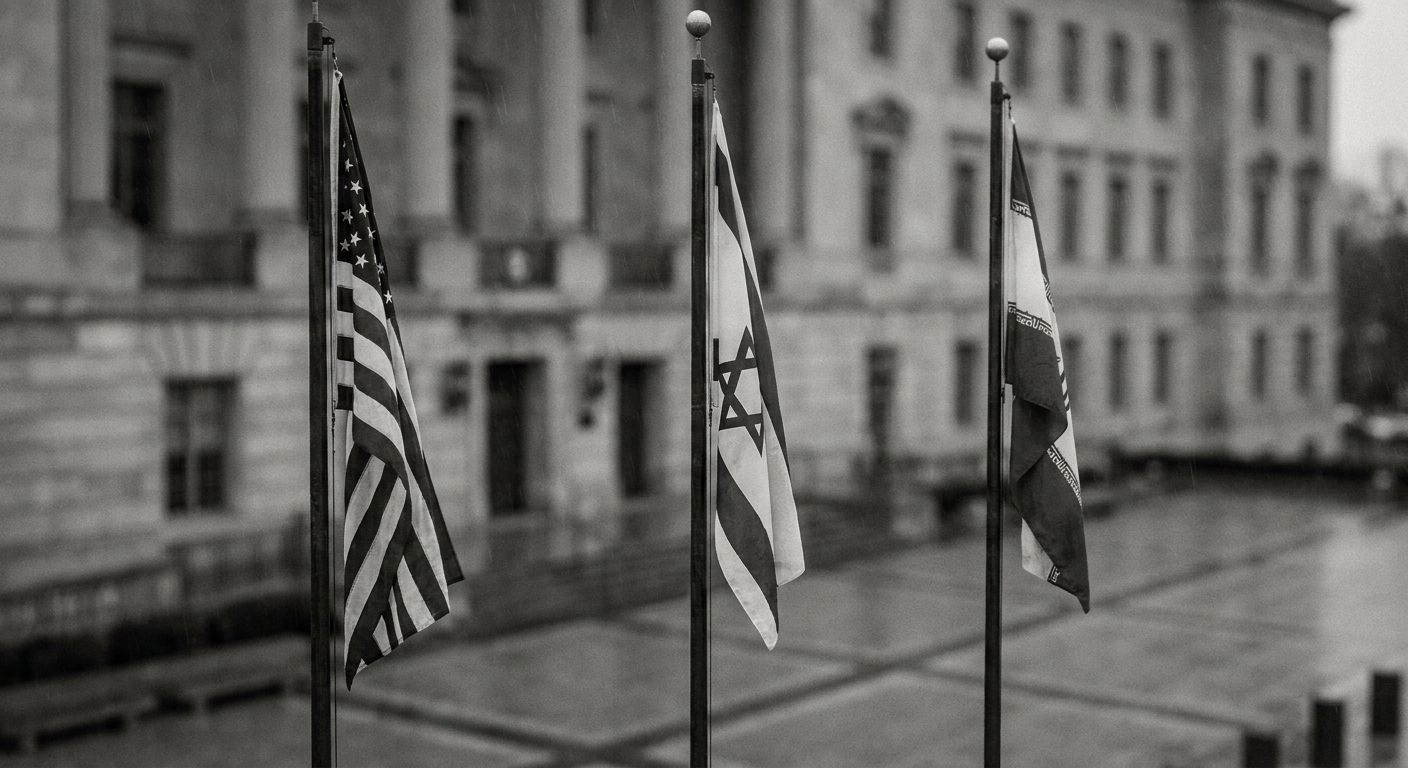
# Washington Watches Sirik Blasts for Clues in Iran-Israel Shadow Fight
Explosions were heard Thursday morning in Sirik, a city in southern Iran, according to local media reports. Washington has not publicly attributed the incidents, but the location and timing will put the reports under close scrutiny by U.S. officials already managing tensions with Tehran, Israel, and Iran-backed groups across the region.
Washington Watches Sirik Blasts
For now, the core fact pattern is narrow: several blasts were reported, and no verified public evidence in the provided material identifies a target, cause, perpetrator, or casualty figure. That uncertainty matters in Washington because incidents inside Iran can move quickly from local security stories to regional crisis signals if they touch military facilities, ports, drones, missiles, or the Strait of Hormuz.
Sirik sits on Iran's southern coast, a region Washington watches because it borders waters central to Gulf energy flows and U.S. naval planning. Any unexplained blast in that area can trigger several competing interpretations: an industrial accident, a domestic security incident, a military malfunction, or an external operation meant to send Tehran a message without starting an open war.
The U.S. government reads these events through several channels. The White House and National Security Council look first at escalation risk, especially whether Israel, Iran, or an Iran-backed group might respond in a way that forces U.S. military or diplomatic action. The State Department focuses on public messaging and crisis communication with allies, while the Pentagon watches for threats to U.S. forces, shipping lanes, and air-defense posture in the region.
Middle East policy
Congress adds another layer. Lawmakers who focus on Iran often push the administration to show deterrence against Tehran and its regional network; others press for limits on any slide toward direct U.S. involvement. A murky incident in Iran can therefore become a Washington debate before the facts are settled, especially when Israel's security operations and Iran's proxy strategy sit at the center of U.S. Middle East policy.
The Israeli dimension is unavoidable, but it remains unproven in this case. Israel has long treated Iran's nuclear, missile, and drone programs as strategic threats, and U.S. analysts often examine unexplained events inside Iran for possible links to that shadow conflict. Still, suspicion is not evidence; without official confirmation or credible technical details, Washington's assessment would remain a set of hypotheses rather than a finding.
The Red Sea context sharpens the stakes. U.S. officials have been trying
to contain attacks on commercial shipping by the Huthi movement, which Washington links to Iranian support, while avoiding a broader regional war.
If the Sirik reports were later tied to Iranian naval assets
or weapons logistics, the incident would fit into a larger pattern of pressure around maritime security. If they prove accidental, the geopolitical signal fades quickly.
For Tehran, public handling of the incident will be part of the story. Iranian authorities often face a trade-off after unexplained security events: acknowledge enough to control domestic rumors, but avoid details that expose vulnerabilities or invite escalation. Washington will look for changes in Iranian air defense alerts, naval movements, official language, and any attempt to blame Israel, internal actors, or technical failure.
For Israel, ambiguity can serve a strategic purpose if an operation occurred, because silence may deliver deterrence while reducing pressure for immediate retaliation. For the United States, ambiguity is harder to manage. U.S. officials need to reassure partners, protect forces, and avoid validating claims they cannot prove publicly.
The first-order market risk is not the blasts themselves, based on the limited public information provided. It is the possibility that a verified military target near Gulf waters would raise fears of retaliation around shipping, energy infrastructure, or U.S. positions in the region. That is why a local report from a southern Iranian city can receive attention far beyond Iran's borders.
By 2024-08-30, the key test is whether any official or credible unofficial account identifies the nature of the Sirik explosions, the target, and a perpetrator. If later reporting or intelligence leaks point to an attack on an IRGC naval site or a missile or drone-linked facility, Washington's focus would shift toward deterrence management: the global macro effect would likely come through higher perceived risk around Gulf shipping, the immediate pressure would fall on Iran's security services to explain a breach, and the wider defense sector would watch for renewed demand around air defense, counter-drone systems, and maritime protection. If investigations instead show an accident, munitions malfunction, or local industrial incident, the macro effect should be limited, Tehran would frame the episode as a contained domestic matter, and the regional security industry would treat it as noise rather than a new phase in the Iran-Israel contest.