Warsh Nomination Tests Fed Autonomy and Policy Credibility
Kevin Warsh faces a tough Senate hearing on rates, Fed independence, and an investigation that could decide his nomination's fate.
Atlas Newsdesk ·
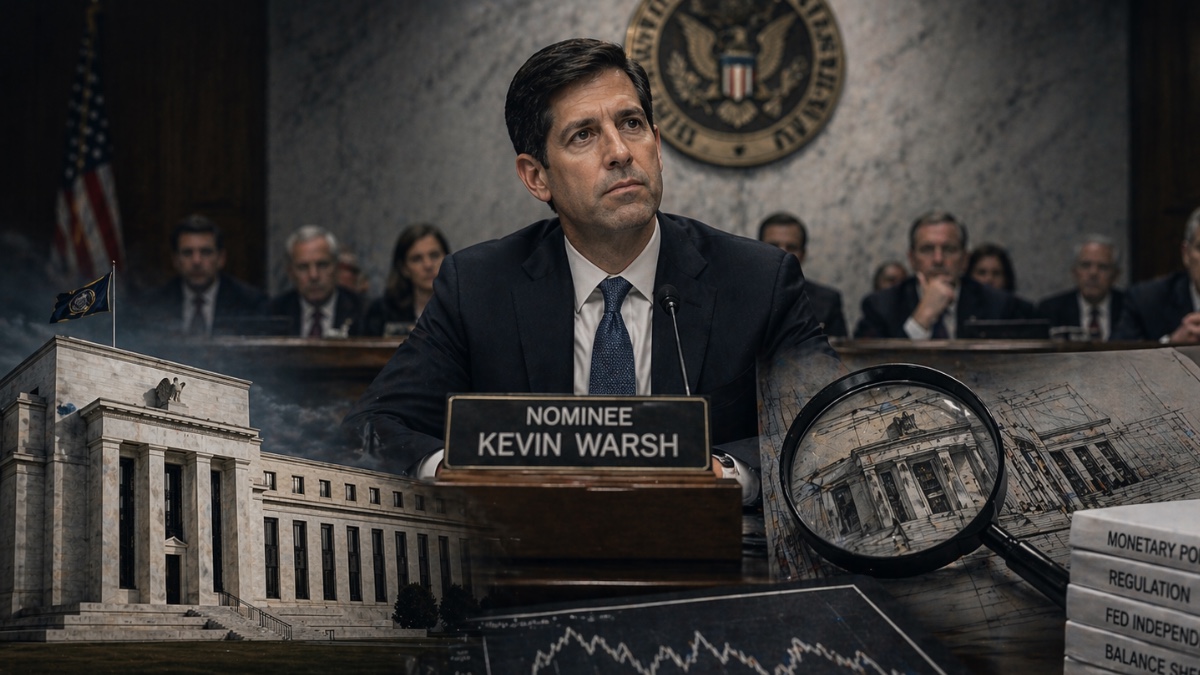
Kevin Warsh, President Donald Trump’s nominee to lead the Federal Reserve, is set to appear before the Senate Banking Committee at 10 a.m. Tuesday in what could become one of the most closely watched confirmation hearings in years. After opening remarks, Warsh will face questioning from lawmakers on monetary policy, regulatory stance, and governance of the central bank. The session comes with his confirmation still uncertain.
Independence in Focus
A central issue will be whether Warsh can maintain the Fed’s independence. Trump has been explicit in calling for lower interest rates, placing added scrutiny on the nominee’s ability to separate political preferences from economic decision-making. Senators are expected to test whether Warsh can reassure markets that policy choices would remain data-driven.
Shifting Stance on Interest Rates
Warsh’s recent support for lower borrowing costs has drawn attention. In mid-2025, he argued that advances in technology, including artificial intelligence, could lift productivity without triggering inflation, creating space for rate cuts. That position aligned him with Trump but contrasts with the Fed’s more cautious stance as geopolitical tensions, including conflict involving Iran, risk adding to price pressures.
Past Record Under Review
Lawmakers are also likely to examine Warsh’s earlier tenure on the Fed’s Board of Governors from 2006 to 2011. During that period, he built a reputation as an inflation-focused policymaker, often warning about rising prices even during the financial crisis when unemployment surged and inflation remained subdued. The shift in tone raises questions about consistency and motivation.
Investigation Clouds Path
A Department of Justice investigation into a Federal Reserve building renovation has emerged as a key obstacle. Fed Chair Jerome Powell has characterized the probe as politically driven, while some lawmakers from both parties have expressed concern. Senator Thom Tillis has said he will withhold support for the nomination until the investigation concludes, a position that could stall progress in the Senate.
Policy Tools and Market Impact
Warsh has pledged to reduce the Fed’s $6.7 trillion balance sheet, though he has not detailed how that would be achieved. The issue is sensitive because shrinking holdings too quickly could tighten liquidity in short-term funding markets. He has also expressed skepticism about large-scale asset purchases, a tool the Fed has used during past crises when rates were near zero.
Broader Implications
The hearing may extend beyond monetary policy. Senators could question Warsh on financial regulation, his views on scaling back oversight, and his personal wealth, which disclosures place at at least $192 million. His calls for “regime change” at the Fed may also draw scrutiny over potential shifts in staffing, research, and communication. The outcome of the hearing—and the unresolved investigation—will likely determine whether his nomination advances or stalls in the weeks ahead.