U.S. Soldier Charged Over $400,000 Betting Scheme Tied to Maduro Raid
Lauren Collins ·
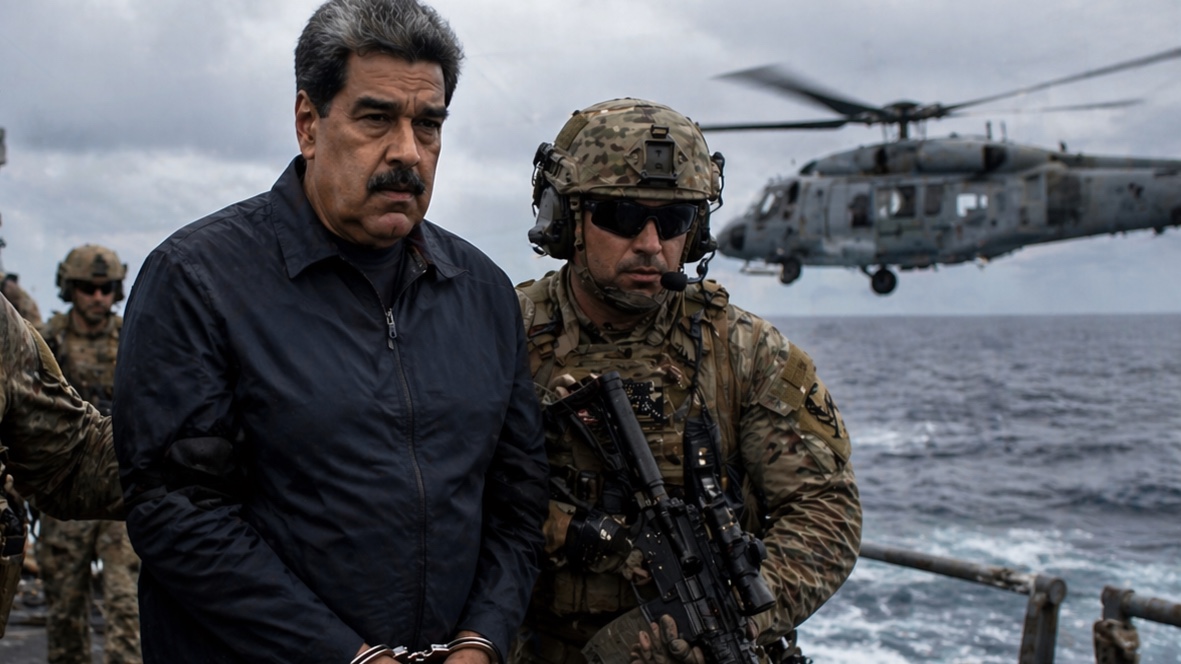
Federal prosecutors have accused a U.S. Army Special Forces member, Gannon Ken Van Dyke, of leveraging confidential information about a classified mission to apprehend Venezuelan leader Nicolás Maduro, resulting in over $400,000 in profits from strategic bets.
Alleged Betting Activity
Van Dyke reportedly placed 13 wagers on the prediction platform Polymarket between late December 2025 and early January 2026. These bets were allegedly focused on outcomes directly linked to U.S. military intervention against Maduro, events that were not publicly anticipated immediately before the operation. Within hours of his final wager, U.S. forces executed the raid in Caracas, apprehending Maduro and his wife at their home and transferring them into U.S. custody.
Suspicious Trading Patterns
Authorities indicated that the trading pattern raised alarms due to its unusual nature. The bets originated from a recently created account, were concentrated over a brief period, and centered on low-probability scenarios that ultimately materialized. Van Dyke is alleged to have invested approximately $33,000 in contracts, which yielded around $409,000 once the operation became public. The substantial return, coupled with the precise timing, prompted scrutiny from the platform and subsequently from law enforcement. Officials confirmed that Polymarket flagged the activity and cooperated with investigators.
Maduro's Capture
The raid followed several months of increasing pressure from Washington on Maduro, who faced U.S. criminal charges related to narcotics trafficking. In early January 2026, U.S. forces launched a significant operation in Caracas, capturing Maduro and transporting him out of Venezuela for prosecution in New York. While the U.S. administration had publicly criticized Maduro for months, the timing and execution of the operation were highly secretive, making accurate predictions challenging without inside access.
Charges and Implications
Van Dyke now faces multiple charges, including wire fraud, commodities fraud, and misuse of government information. A conviction could lead to decades in prison. Prosecutors argue that the case represents a violation of both financial law and military duty. The allegations also highlight how classified operational planning, typically confined to tight circles, can potentially be monetized when exposed to new digital markets.
Prediction Markets and Regulation
This case is among the first to examine how insider trading laws apply to prediction markets, which enable users to bet on real-world events such as elections or geopolitical developments. Unlike traditional financial markets, these platforms operate in a regulatory gray area, yet they can reflect sensitive information flows. The Van Dyke case suggests that individuals with privileged access may exploit these platforms in ways that regulators have not fully addressed. Lawmakers and officials have already expressed concerns about whether government employees should be entirely prohibited from using such platforms.
Diplomatic Ramifications
The incident also carries diplomatic significance. The U.S. operation to capture a sitting foreign leader drew international criticism and raised legal questions regarding sovereignty and enforcement authority. The addition of alleged financial misconduct tied to that operation introduces another layer of complexity, blending military action with financial crime in a manner rarely observed.
Future Legal Precedents
The legal proceedings are expected to influence how U.S. authorities address insider trading in nontraditional markets. A conviction could establish a precedent extending financial misconduct rules to prediction platforms. Uncertainty persists regarding how widespread such behavior might be, as investigators have not indicated whether other individuals had similar access or attempted comparable trades. For now, the case signals a new vulnerability: when sensitive government actions intersect with open, real-time betting markets, the distinction between intelligence and profit can rapidly become indistinct.