US Iraq deals put oil routes at center of Gulf strategy
US Iraq deals worth $60 billion are slated for announcement Friday, linking commerce, oil routing and Washington’s effort to reduce Iran’s leverage.
Lauren Collins ·
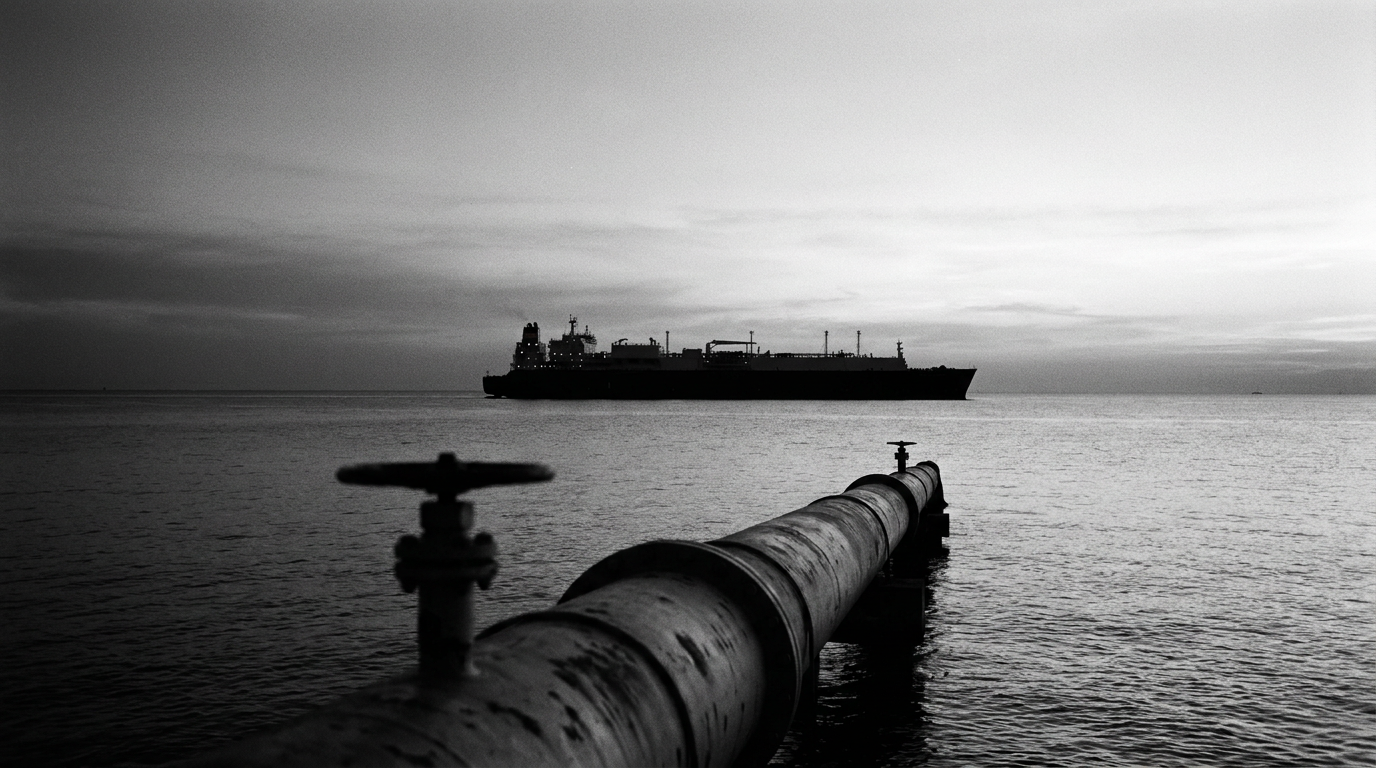
US Iraq deals worth $60 billion are slated for announcement Friday, linking commerce, oil routes and Washington’s effort to limit Iran’s leverage.
The commercial package is expected at a US Chamber of Commerce summit during a visit by Iraq’s prime minister, according to a conference agenda cited for the event. The agenda description does not identify every company, contract value or signing party, leaving the scope of binding commitments unclear.
A $60 billion summit package
The planned announcement gives the White House a business-first frame for its Iraq policy at a time when Washington is trying to reduce Tehran’s influence over Baghdad and the wider Gulf. The source material presents the agreements as part of a broader turn from security dependency toward trade, energy and infrastructure.
US President Donald Trump cast Iraq as a commercial opportunity, saying: "There are going to be a lot of deals." He also argued that Iraq had "tremendous potential because of their oil," while suggesting the US relationship with Baghdad should rely less on a military presence and more on economic partnership.
That shift matters because Iraq sits between the Gulf, Iran, Syria and Turkey, giving it strategic value beyond its own market. A stronger US-Iraq commercial track would give Washington another tool for influence in Baghdad, where energy policy, security cooperation and regional diplomacy often overlap.
Kirkuk-Baniyas returns to the map
The most geopolitically sensitive item is a plan to rebuild the Kirkuk-Baniyas pipeline, which would move Iraqi crude to Syria’s Mediterranean coast. The route is presented as a way to bypass the Strait of Hormuz, the Gulf chokepoint that remains central to oil shipping and regional security calculations.
A Mediterranean outlet would not remove Iraq’s reliance on existing export systems by itself. It would, however, create another strategic option if the project moved from plan to construction, giving Baghdad and its partners a route tied to Syria rather than the Gulf maritime corridor.
The Syria element also raises execution questions that the agenda summary does not answer. Pipeline rehabilitation, cross-border transit, security conditions, sanctions exposure and customs rules would all shape whether a route can become commercially usable rather than politically attractive on paper.
AD Ports eyes border corridors
Gulf states are also weighing a land transit corridor through Iraq and Syria, according to the same account. Abu Dhabi’s AD Ports Group is in talks with Syrian customs officials over border crossings and free zones, placing logistics infrastructure alongside oil transport in the emerging commercial agenda.
For AD Ports Group, the talks point to a possible role beyond seaports, with inland corridors, customs gateways and free-zone services becoming part of regional trade architecture. For the wider logistics sector, the attraction is clear: land routes could shorten some movements and diversify Gulf access to Levant markets if political and regulatory barriers ease.
The uncertainty is equally clear. The available information does not say whether the talks have produced signed agreements, timelines or committed capital, and it does not specify which Gulf states are prepared to finance or use the proposed corridor.
Oil routes carry macro weight
If Friday’s package is announced broadly as outlined, the immediate global macro channel would be confidence in route diversification. Iraq would gain a clearer economic link to Washington, AD Ports Group would have a stronger case for early corridor positioning, and regional logistics firms would see a signal that Gulf trade planning is widening beyond ports alone.
If the agreements instead remain mostly framework-level, the global effect would be limited because markets would wait for contracts, financing and construction milestones. Iraq would still benefit from diplomatic visibility, but AD Ports Group and other infrastructure players would face a slower path from talks to revenue.
If regional politics or legal constraints slow the Syria-linked pieces, the package would tilt back toward conventional bilateral commerce rather than a new transit architecture. In that case, the wider energy and logistics sectors would keep watching three practical tests: signed deal lists, pipeline financing and customs arrangements at the Iraq-Syria border.