US missiles target Panama-flagged ship in Iran blockade
US military said a helicopter fired missiles on Aug. 11 while stopping a Panama-flagged cargo ship described as Iran-bound under a port-access blockade.
Mateo Fernandez ·
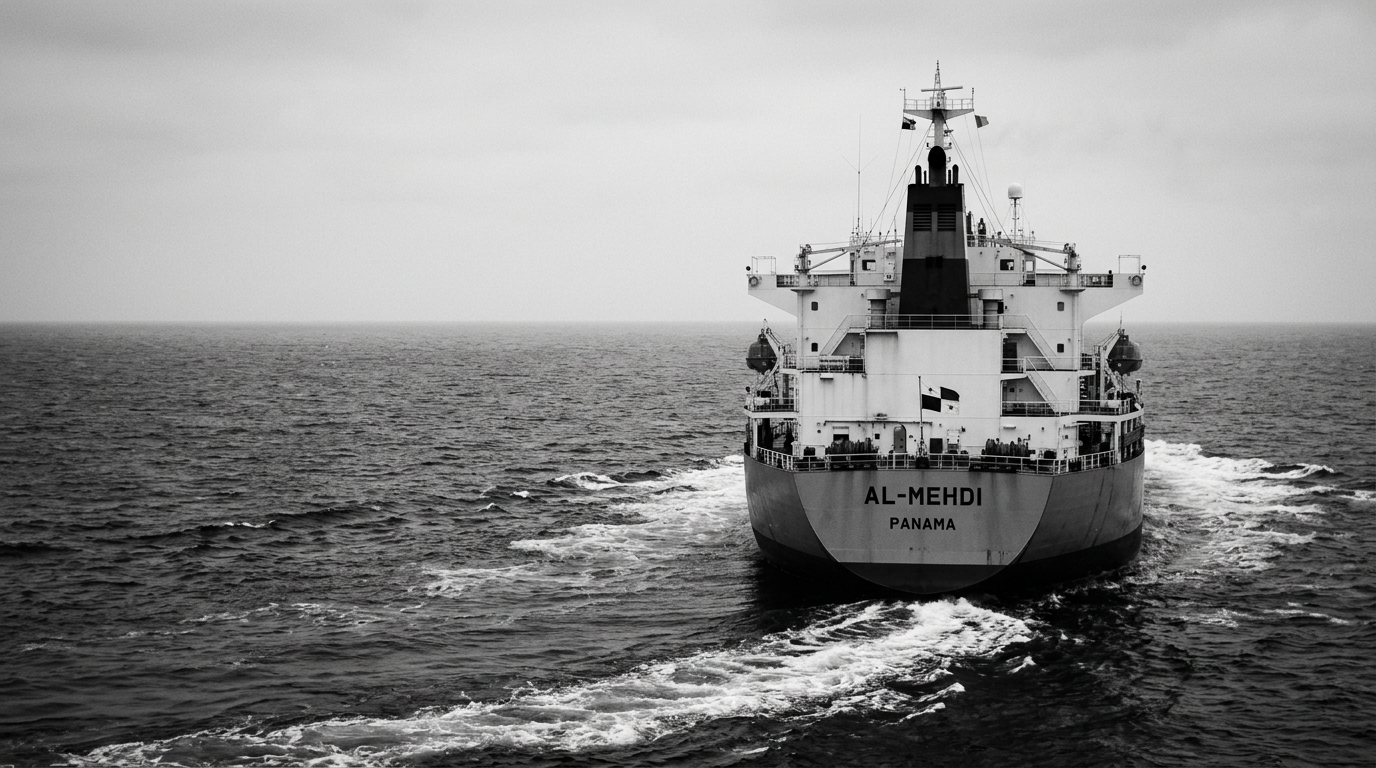
The US military said a helicopter fired missiles on August 11 during an operation to stop a Panama-flagged cargo ship it described as attempting to reach Iran. Officials framed the incident as part of a blockade aimed at limiting access to Iran’s ports, and said it was the third vessel stopped under that enforcement effort.
Officials did not provide immediate information on damage, injuries, or fatalities. They also did not identify the ship’s operator, the cargo on board, or whether the vessel altered course after the encounter.
Missile use reported during interdiction at sea The
Missile use reported during interdiction at sea
The US In its account, the US military linked the missile launch directly to the act of stopping the vessel. The description places the event as a reported instance of US force being used against a merchant ship in a corridor associated with Iran-bound traffic. Beyond confirming the action occurred during interdiction, officials offered no additional technical or operational details. The absence of ship-status information leaves unclear whether the engagement functioned as a warning action or a strike intended to disable the vessel. Panama flag highlights the complexity of commercial shipping The vessel’s Panama registration is notable because international shipping frequently separates key roles across jurisdictions. Ownership, flag state, crewing, management, and cargo interests can be distributed among different countries and legal entities. Officials described the ship as Iran-bound, but did not release supporting material such as routing documentation, contractual arrangements, or counterparties. Without that information, the immediate exposure of any particular company—such as an owner, charterer, cargo interest, or insurer—cannot be determined from the initial statements.
Compliance and safety pressure for Iran-linked routes
If enforcement continues against vessels assessed as heading to Iran, companies with any Iran-route exposure may face intensified compliance and safety challenges. The risk is not limited to ships flagged in the region, since vessels can be registered elsewhere while still trading on routes connected to Iran. For trade activity For trade activity, the dynamic described by officials is that visible military action can increase perceived transit risk. That can influence insurance pricing, route planning, and decisions on port calls, even when cargo details are not publicly disclosed.
At the operational level, the potential near-term effects cited include delays, inspection activity, rerouting, and contract disputes if a vessel is held or diverted. Because the owner and charterer were not identified in this case, any specific commercial consequences remain unresolved.
Information still missing ahead of August 12
A central uncertainty is whether the missile firing was intended as a warning or a disabling action, and what condition the ship was left in afterward. The source cited August 12 as a potential point by which Washington may provide additional details that clarify whether this remains a single enforcement episode or part of a broader pattern affecting Iran-bound commercial traffic.