Ukrainian drones hit major Russian refinery, fires burn
Ukrainian drones hit a major Russian refinery on Thursday, officials said, sparking large fires in the fourth strike in three days.
Mateo Fernandez ·
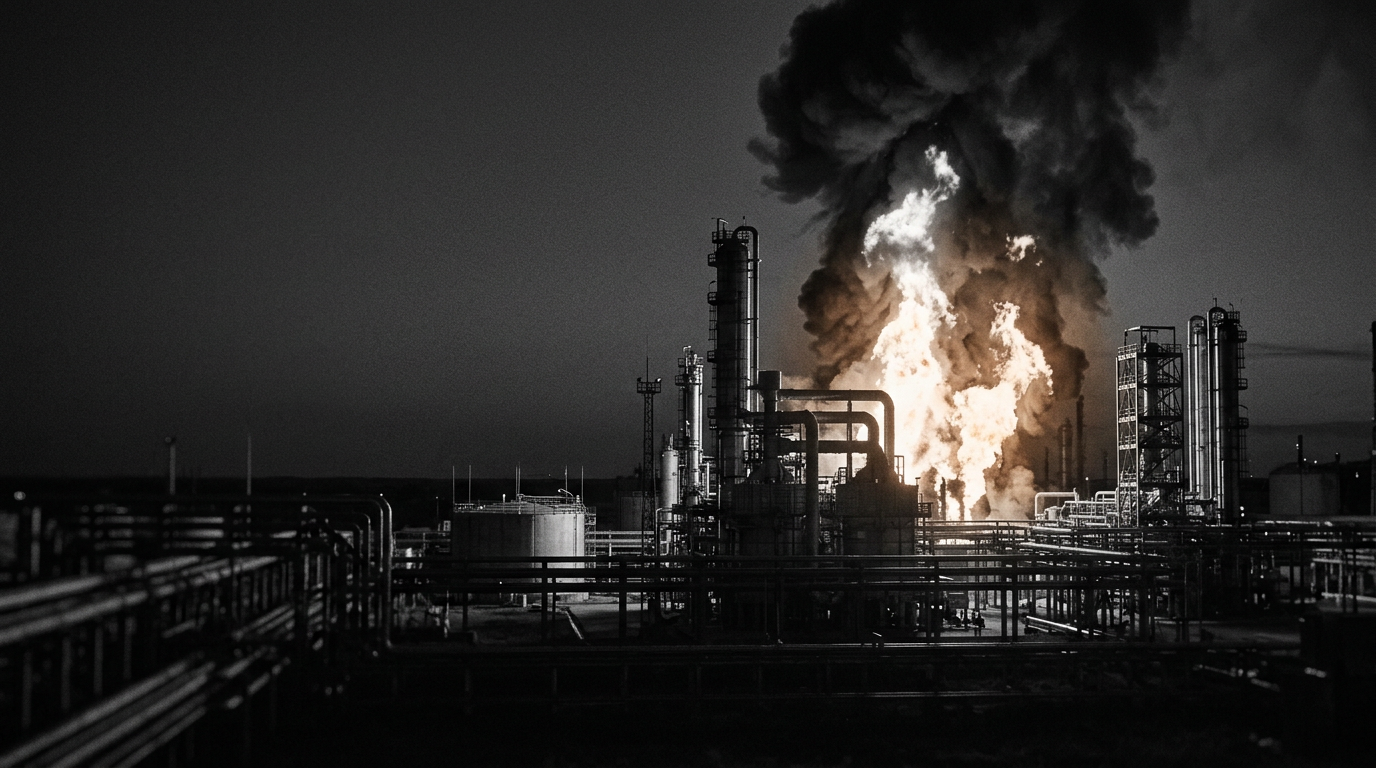
Ukrainian drones struck a major refinery deep inside Russia on Thursday, officials said, triggering large fires and extending Kyiv’s campaign against Moscow’s oil sector.
Officials said the facility continued burning through the afternoon after the attack, while emergency teams worked to bring the blaze under control. They did not provide an immediate assessment of the scale of damage or whether operations at the site had been halted.
Refinery fire follows a cluster of strikes
Officials described Thursday’s incident as the fourth strike in three days, part of a broader series of attacks targeting refineries and storage nodes. They said the aim is to pressure the energy infrastructure that supports Russia’s energy revenues and fuel supplies for military operations.
The officials said the recent pattern has focused on downstream assets such as refining capacity and storage hubs rather than crude production sites. They added that refining and terminal infrastructure can be vulnerable to repeated hits, with disruptions potentially emerging in steps as repairs and logistics constraints accumulate.
Emergency response and operational uncertainty
Officials said firefighting and emergency response efforts were ongoing as the refinery burned through the afternoon. They said containment was the immediate priority, while the status of the affected units and nearby storage remained unclear.
Traders and companies monitoring regional supply routes will be looking for confirmation of operational outages at affected terminals, officials said. They also said market participants would be watching for any reported export disruptions linked to refinery or storage impacts.
Officials flag downstream risks for product flows
Officials warned that energy markets may be sensitive to additional damage in Russia’s downstream network. They said that even if crude output holds steady, hits to refining capacity can reduce available flows of refined products, tightening supply in the parts of the system dependent on those outputs.
They said the most immediate indicators to track would be terminal activity and export reporting, which can reveal whether outages remain local or begin to ripple through broader routes. Officials urged monitoring daily export and terminal reports to gauge how quickly any local disruptions translate into wider regional tightness.
August 20, 2026 cited as a key monitoring point Officials said continued strikes could begin to constrain product flows by August 20, 2026, if damage accumulates at refining and storage hubs. They said the timeline reflects the possibility that repeated incidents may compound operational strain, but noted that the extent of impact would depend on the severity of damage and the pace of containment and restoration.
Officials said confirmation of outages, export impacts, and the pace of recovery at affected facilities will be central to assessing the campaign’s practical effect on fuel availability and energy-linked revenues.