Ukraine's decentralized energy model sets a regulatory blueprint for grid defense
A single Atlantic Council report documents Ukraine's rapid deployment of distributed energy resources and microgrids to survive repeated attacks on…
Edward Mullen ·
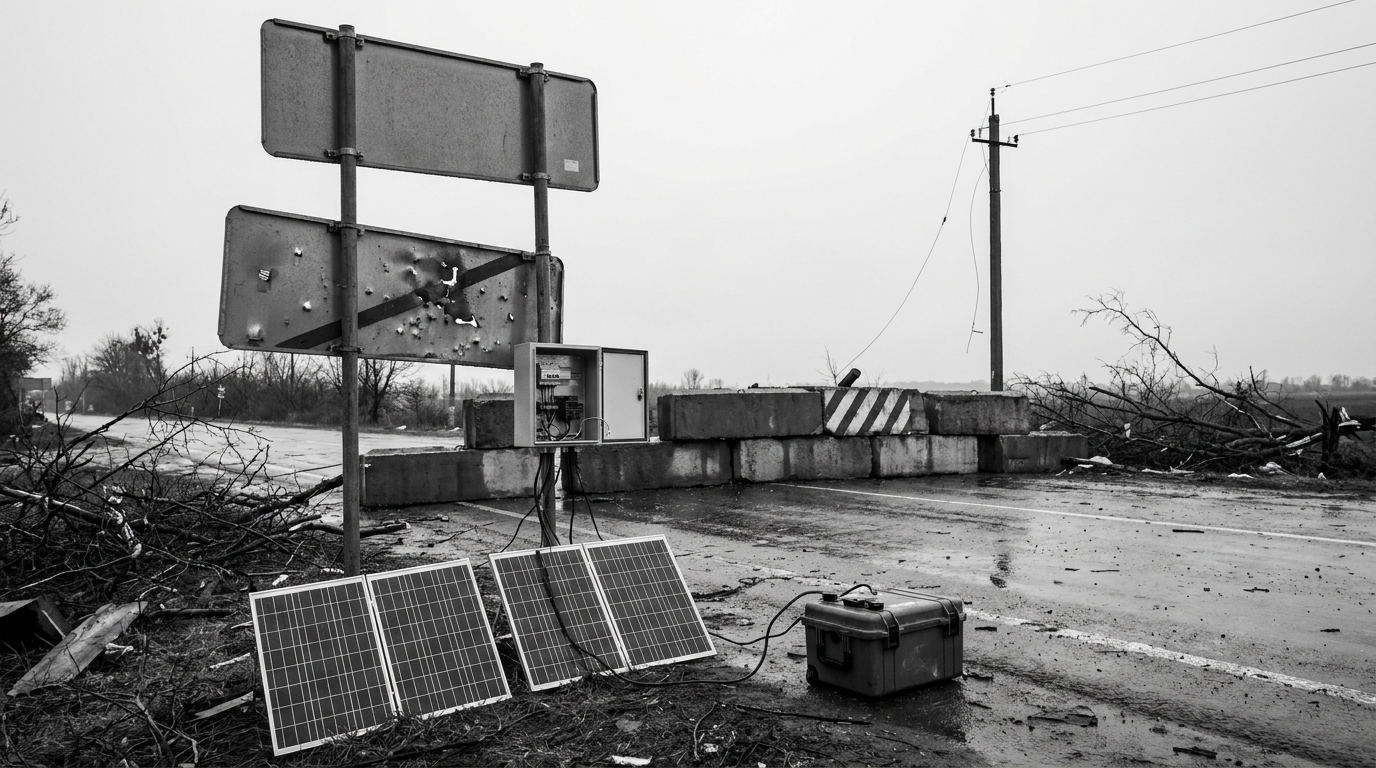
The prevailing wisdom holds that grid resilience primarily demands hardening centralized assets and transmission lines. However, Ukraine's experience under sustained Russian attack challenges this, demonstrating the efficacy of a decentralized energy model. Their response reveals not merely an operational success, but a regulatory framework for achieving lasting grid robustness.
What the Atlantic Council actually documents
The article catalogs how Ukraine accelerated deployment of distributed energy resources and microgrids to keep hospitals, communications, and water treatment running despite strikes on transmission and central generation. It describes the operational mechanics: islanding networks, prioritizing critical nodes, and stitching together small-scale generation and storage where transmission was broken.
The piece is concrete about tactics but stops short of mapping those tactics onto regulatory tools or procurement mandates that would make the approach repeatable outside wartime conditions.
Why this matters to regulators, not just engineers The practical move from large, centralized assets to modular, local resilience behaviors implies a different regulatory frame: performance-based reliability metrics, mandatory resilience zones, and new certification paths for microgrid integrators. If regulators treat resilience as a formal requirement—measured in hours of guaranteed critical-service uptime rather than MW available on the bus—then interconnection rules, market remuneration, and grid codes must change.
The Atlantic Council piece shows operational proof-of-concept; it does not assess how existing laws would need rewriting to require or fund that proof at scale.
Procurement will ripple into defense and finance policy
A second-order effect is procurement. Governments that want the Ukrainian outcome cannot simply buy more transformers: they must buy contracts that fund distributed assets, inspections, training, and long-term maintenance.
That rewrites procurement from CAPEX on central plants to service agreements for resilience capacity. This shifts budget lines from energy ministries to hybrid defense–civil budgets and invites new export-control questions for resilience technologies.
The Atlantic Council account gives the why and how of deployment but omits these procurement mechanics that determine who pays, who qualifies to bid, and which national agencies own the risk.
Who wins, who is exposed, and the overlooked middle The visible winners are microgrid integrators, local equipment vendors, and specialized engineering firms; insurers and re-insurers could also profit by underwriting resilience contracts. The exposed parties are incumbent utilities whose business models rely on centralized revenue streams and on predictable siting and maintenance cycles.
The under-noticed middle is municipal governments and regional regulators: they lack standard templates for contracting resilience and will be asked to write them quickly, creating demand for standardized certification and audit capabilities that do not exist yet at scale. The Atlantic Council narrative highlights outcomes but not the institutional capacity gap this creates.
The skeptic's counter-read
A reasonable counter is that Ukraine's model is an emergency improvisation that is too costly or inefficient for peacetime national grids. Critics could point out that microgrids introduce complexity, require skilled operators, and duplicate infrastructure, raising per-unit costs for consumers. The Atlantic Council piece documents success under attack but does not demonstrate that those operating costs or governance challenges are acceptable or optimal in non-war conditions.
Signals that will prove this becomes a regulatory blueprint Watch for three linked signals in the next six months: first, whether national or supranational bodies publish guidance that treats distributed resilience as a formal metric in energy security planning; second, whether procurement documents for publicly funded grid upgrades include explicit microgrid or DER resiliency line items and acceptance tests tied to critical-service uptime; and third, whether insurers and export-credit agencies adjust terms to favor distributed-resilience projects over centralized upgrades. If these institutional behaviors start to appear, the Ukrainian pattern is moving from ad hoc practice to codified policy; absence of these signals will undercut the blueprint thesis.
The Atlantic Council piece supplies the operational example but does not record those institutional shifts itself.
The paper is useful because it transforms a wartime tactic into a testable policy hypothesis: that decentralized energy can be standardized into law and procurement. Execs in defense ministries, utility regulators, and multilateral lenders should treat the Atlantic Council account as a prompt to map legal and budget changes, not as proof that the job is already done.