Uber and Zipline Launch Drone Delivery Partnership
Uber and Zipline will start drone deliveries in Dallas-Fort Worth later this year, aiming for one million daily deliveries by 2029 amid regulatory shifts.
Atlas Newsdesk ·
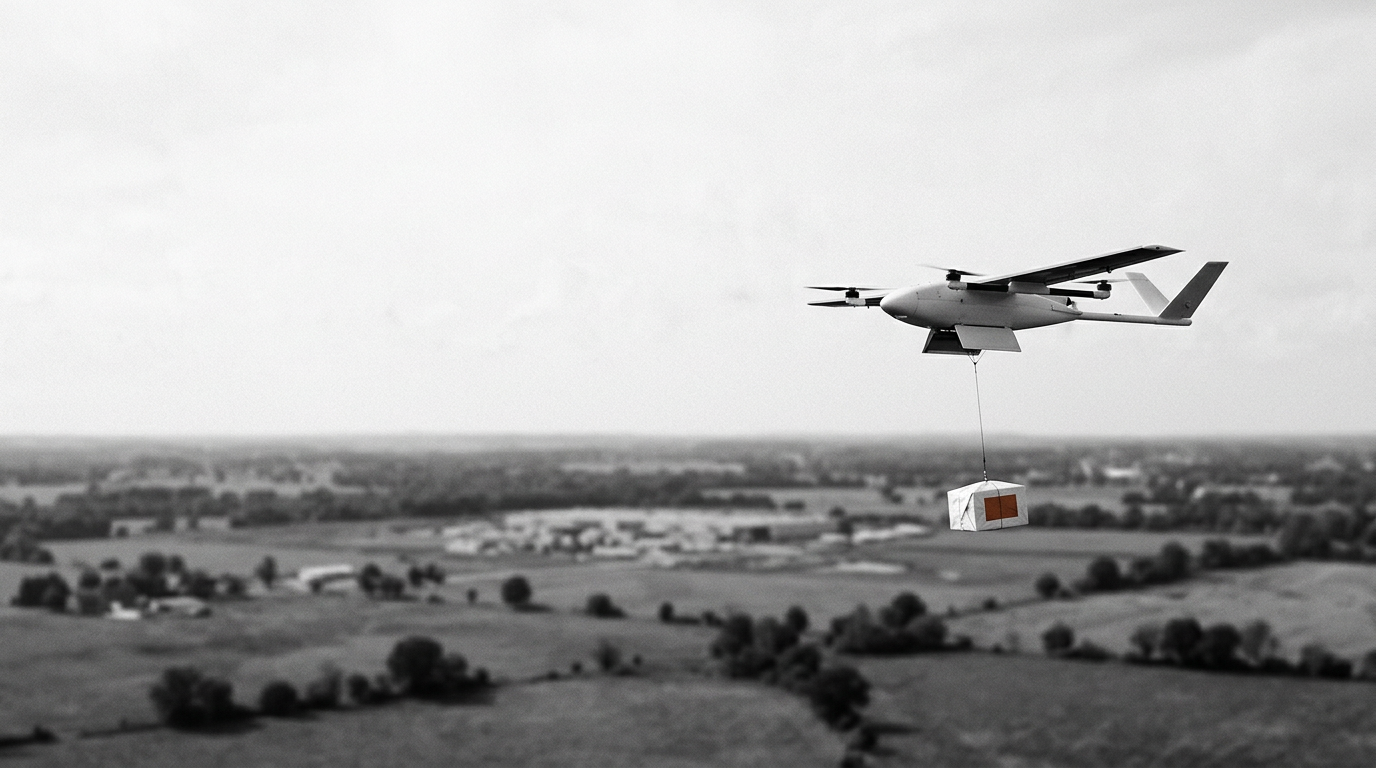
Uber has signed a strategic partnership and investment agreement with Zipline to bring autonomous drone delivery into Uber’s delivery platform. The companies said operations are set to begin in the Dallas-Fort Worth area later this year.
The initiative sets an ambitious scale target: reaching one million drone deliveries per day by 2029. The agreement is framed as both a technology integration effort and a financial commitment, with Uber investing alongside the partnership.
Dallas-Fort Worth rollout and the 2029 delivery target
The first operational deployment is planned for Dallas-Fort Worth, marking the initial launch market under the new arrangement. The companies have not detailed which products or merchants will be included at the start, but the plan centers on integrating Zipline’s autonomous drone capabilities into Uber’s delivery network.
Uber’s stated objective of one million daily drone deliveries by 2029 places the initiative among the largest scale goals publicly associated with commercial drone logistics. The timeline indicates a multi-year ramp, with early operations intended to validate the model before broader expansion.
Regulatory shifts and intensifying competition
The companies’ launch comes after recent federal regulatory shifts that, according to the source material, make it easier to deploy unmanned aerial systems more widely for commercial logistics. The timing suggests the partnership is designed to take advantage of a more permissive operating environment, although the specific regulatory changes were not detailed.
Fort Worth
The move also positions Uber to compete more directly with rivals that are pursuing independent regulatory approval for their own drone delivery networks. Rather than building a proprietary system alone, Uber is tying its delivery platform to Zipline’s autonomous drone technology while also investing in the partner.
A broader logistics mix: people, robots, and drones Uber is framing drone delivery as one component of a diversified delivery infrastructure. The company’s logistics approach, as described in the source material, combines human couriers, sidewalk robots, and drones, with the stated of improving efficiency across delivery scenarios.
Adding drones can expand the set of delivery options available to the platform, depending on operational constraints and regulatory permissions. The approach underscores that multiple modes may be used in parallel, rather than treating drone delivery as a full replacement for existing couriers.
Consolidation and a market projected at $7.7 billion
The drone logistics sector is described as entering a period of increased consolidation, as operators seek partnerships with major retailers. The competition for anchor partnerships is tied to expectations of a sizable addressable market.
In that context, the source material points to a projected $7.7 billion market by 2031, a figure that helps explain why delivery platforms and drone operators are moving to secure strategic alliances now. The agreement’s long-range target and the Dallas-Fort Worth launch will be closely watched for signals on how quickly commercial drone delivery can scale under evolving federal rules.