UAE Boosts Oil Export Capacity
The UAE will complete a second oil pipeline by 2027, doubling its export capacity and bypassing the Strait of Hormuz.
Lauren Collins ·
UAE to Expand Oil Export Capacity
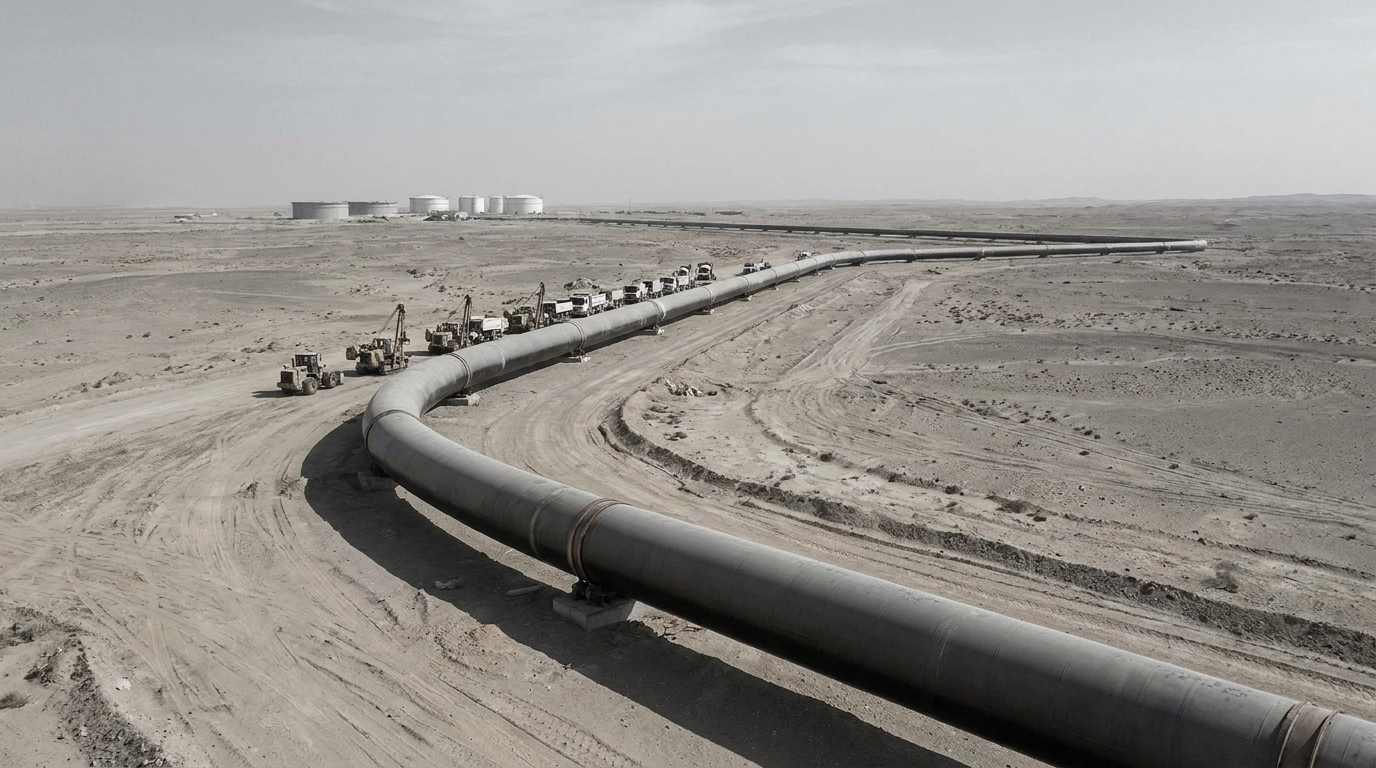
The United Arab Emirates (UAE) will complete a second oil pipeline bypassing the Strait of Hormuz by 2027, significantly increasing its crude export capacity from the port of Fujairah. This development, announced by Sheikh Khaled bin Mohamed bin Zayed Al Nahyan, Crown Prince of Abu Dhabi, aims to enhance the security of the UAE's oil exports amid regional geopolitical tensions and disruptions to maritime trade routes.
The new pipeline project, fast-tracked by the UAE's state oil company, is projected to double the nation's existing export capacity through Fujairah. The current Habshan-Fujairah pipeline can transport up to 1.8 million barrels per day (bpd). This expansion would bring the UAE's total pipeline export capacity to approximately 3.6 million bpd, providing an alternative to the Strait of Hormuz, a critical chokepoint through which 20% of global oil and seaborne gas previously transited.
This strategic infrastructure investment follows the UAE's recent withdrawal from OPEC after 60 years of membership. The move is interpreted as an effort to gain greater autonomy over its oil production and export policies.
The increased pipeline capacity would enable the UAE, the third-largest oil producer within the former OPEC bloc, to potentially ramp up oil exports independently of future production quotas, even if regional conflicts persist or if the free flow of tankers through the Strait of Hormuz does not return to pre-crisis levels.