Trump, Xi End Summit With Few Breakthroughs
Trump & Xi wrap up talks in Beijing with warm gestures but limited progress on Taiwan, trade, or Iran, despite efforts to stabilize U.S.-China relations.
Lauren Collins ·
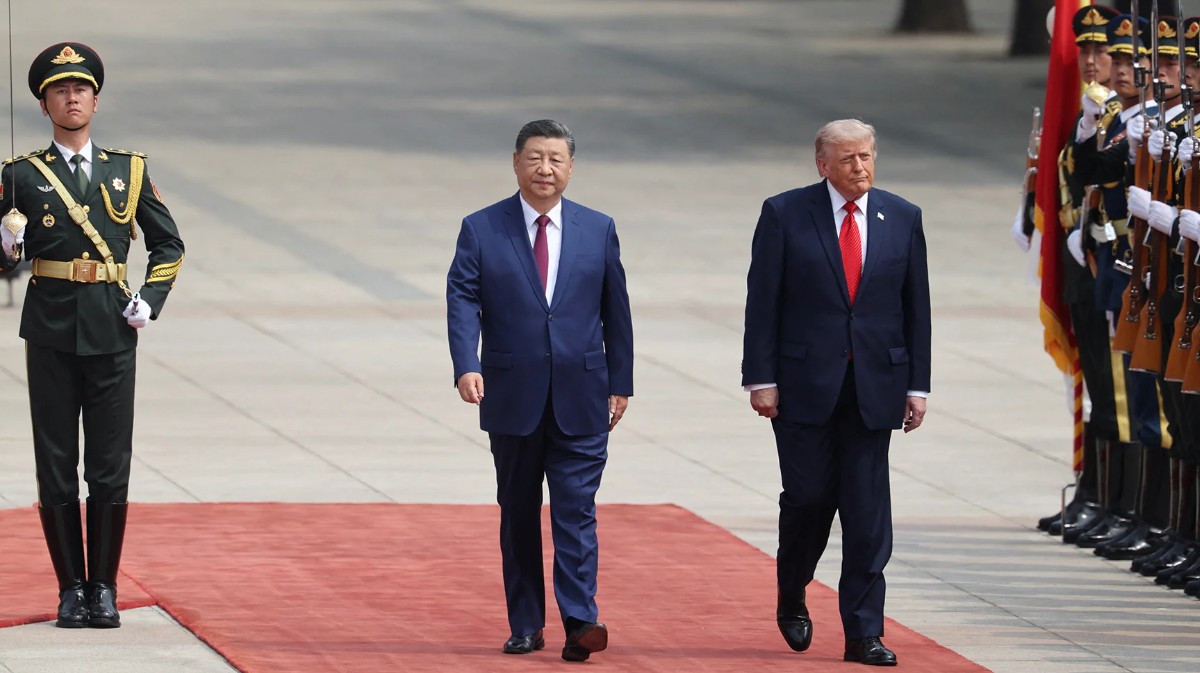
President Donald Trump and Chinese President Xi Jinping concluded a high-stakes summit Friday after two days of meetings dominated by tensions over Taiwan, trade disputes and the ongoing conflict involving Iran and the Strait of Hormuz.
The summit ended with ceremonial displays of friendship and promises of continued dialogue, but analysts said major disagreements between Washington and Beijing remained unresolved.
Xi used the meetings to warn Trump that mishandling Taiwan could push relations into a “dangerous place” and potentially lead to “clashes and conflict,” according to Chinese and U.S. officials familiar with the talks.
Trump responded publicly by emphasizing economic cooperation and praising his personal relationship with Xi, writing on Truth Social that he hoped relations with China would become “stronger and better than ever before.”
Trade deals fall short of expectations
The White House had hoped the summit would produce major economic wins ahead of the 2026 U.S. midterm elections, particularly as Trump faces domestic pressure over inflation and the Iran conflict.
Trump announced China would purchase 200 Boeing aircraft, marking Beijing’s first major order of American commercial jets in nearly a decade. However, investors reacted negatively because markets had expected a far larger deal involving as many as 500 aircraft. Boeing shares fell after Trump’s comments became public.
U.S. Trade Representative Jamieson Greer said the two countries also reached agreements involving Chinese purchases of American agricultural products and beef while creating new mechanisms to manage future trade disputes.
Still, negotiators failed to secure breakthroughs on semiconductor restrictions, rare earth mineral exports or broader tariff disputes.
Taiwan tensions remain central
Taiwan emerged as the most sensitive issue during the summit.
Xi reportedly warned Trump that support for Taiwanese independence would cross Beijing’s red lines and damage bilateral relations.
After leaving China, Trump created additional uncertainty by suggesting he had not yet decided whether to proceed with a major weapons package for Taiwan. He also implied he could directly speak with Taiwanese President Lai Ching-te, which would mark an unprecedented move since Washington shifted diplomatic recognition from Taipei to Beijing in 1979.
Taiwan’s government responded Friday by thanking the United States for continued support and warning that China — not Taiwan — remained the true threat to regional stability.
Iran war overshadows diplomacy
The Iran conflict also shaped much of the summit agenda.
The White House said Trump and Xi agreed the Strait of Hormuz should remain open and reaffirmed opposition to Iran obtaining nuclear weapons.
American officials had hoped China would pressure Tehran more aggressively during ceasefire negotiations, but Beijing avoided fully aligning itself with Washington’s strategy.
Trump entered the summit politically weakened by rising fuel prices and inflation linked to the Gulf conflict, while U.S. courts have also recently limited parts of his tariff authority.
Summit seen as stabilization effort
Despite the lack of transformative agreements, both governments portrayed the summit as successful.
Xi promoted what Chinese officials described as a framework for “constructive strategic stability” between the two powers, while Trump invited Xi to visit Washington later this year.
Analysts said the talks appeared focused more on preventing deeper confrontation than resolving core disputes involving Taiwan, trade and strategic competition.