Trump Cuts US Drills With South Korea
Trump ordered the Pentagon on Aug. 17, 2026 to sharply reduce joint drills with South Korea, citing cost and diplomacy with Pyongyang.
Atlas Newsdesk ·
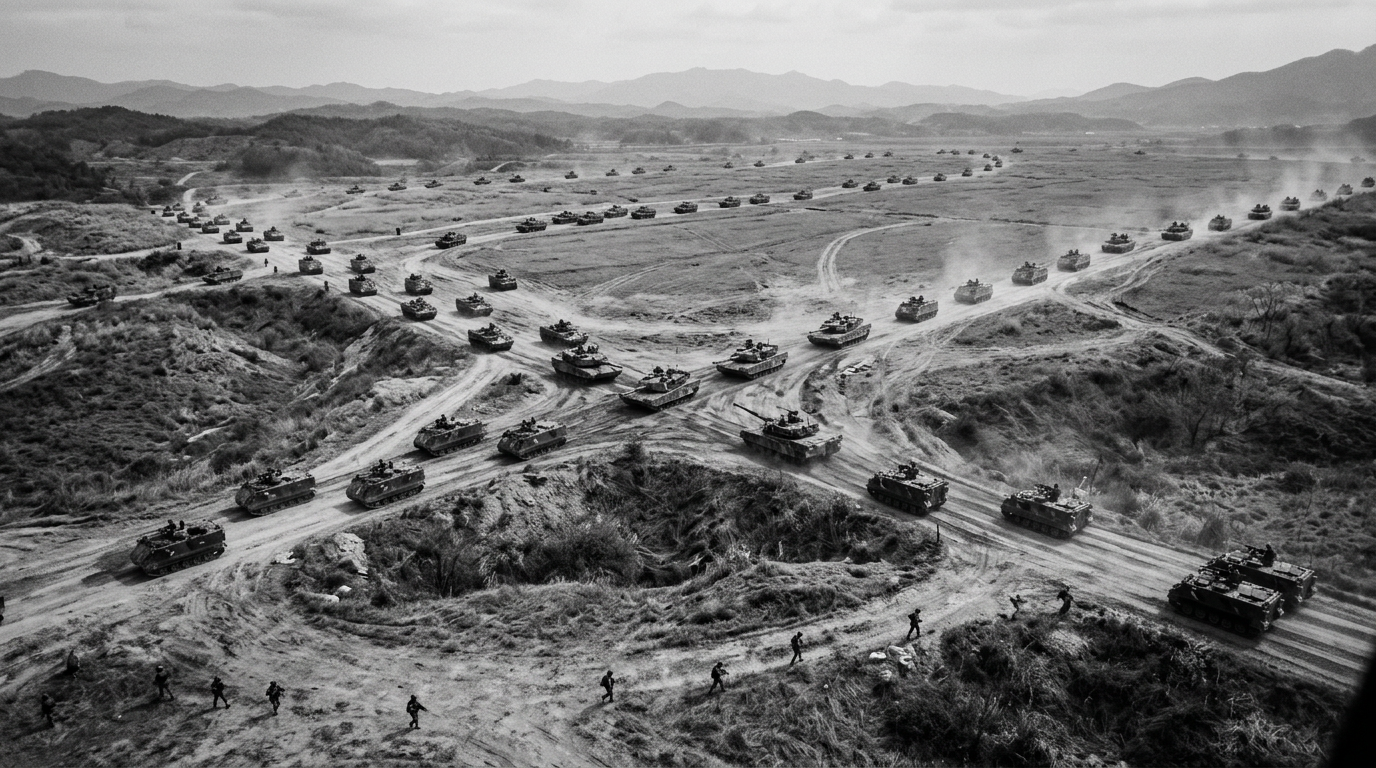
US President Donald Trump ordered the Pentagon to sharply reduce the scale of joint military exercises with South Korea, tying the move to his personal relationship with North Korean leader Kim Jong Un. Trump issued the instruction on social media on August 17, 2026, the same day the annual Ulchi Freedom Shield drills were set to begin.
In his public remarks, Trump described the exercises as expensive and poorly timed. He also said large, high-profile allied drills make diplomacy with Pyongyang more difficult, presenting the reduction as consistent with a preference for direct engagement with North Korea’s leadership rather than prominent combined training.
Ulchi Freedom Shield faces late-stage changes
According to details referenced in the presidential directive According to details referenced in the presidential directive, Trump told Secretary of Defense Pete Hegseth to reduce the scope of Ulchi Freedom Shield. The exercise was scheduled to last 11 days and to involve 18,000 South Korean personnel. Ulchi Freedom Shield is designed to reinforce regional defense capabilities against North Korea. Because the directive came as the drills were due to start, it immediately raised operational questions about what elements can be adjusted once planning calendars are already in motion. Seoul says the plan stands, leaving execution unclear South Korea’s Ministry of Defence said the drills would proceed as originally scheduled. That position created an immediate gap between Washington’s instruction to scale down and Seoul’s stated intent to keep the exercise plan unchanged.
US President Donald Trump
As a result, it remains unclear how a US-ordered reduction would be carried out in practice. The directive did not identify which parts of the drills would be cut, which units could be affected, or whether some activities might be postponed rather than canceled.
Alliance politics and readiness concerns
The order comes against a backdrop of recent friction between Washington and Seoul linked to South Korea’s refusal to join US-led efforts involving the Islamic Republic of Iran. That dispute added political strain to a decision touching one of the most sensitive areas of bilateral security coordination.
The directive also reflects a renewed emphasis on an approach Trump has argued for repeatedly on the Korean Peninsula: leader-to-leader diplomacy with North Korea. Supporters say smaller drills can reduce friction, while critics argue that cutting back training can weaken preparedness.
The timing also coincides with North Korea’s continued modernization of its nuclear deterrent, a factor that has typically reinforced allied attention to combined readiness. The source material says the expected outcome of the directive is a shift in the operational readiness posture of the US–South Korea alliance, but the immediate impact will depend on how the Pentagon and South Korea’s armed forces reconcile the US request with Seoul’s plan to run the drills as scheduled.
Until specific changes are described, the near-term effects on defense posture remain uncertain.