Trump expands Canada tariffs with 1930 trade law next month
Trump's Canada tariffs would impose a 50% duty on some goods in 30 days, testing trade ties and the North American pact.
Atlas Newsdesk ·
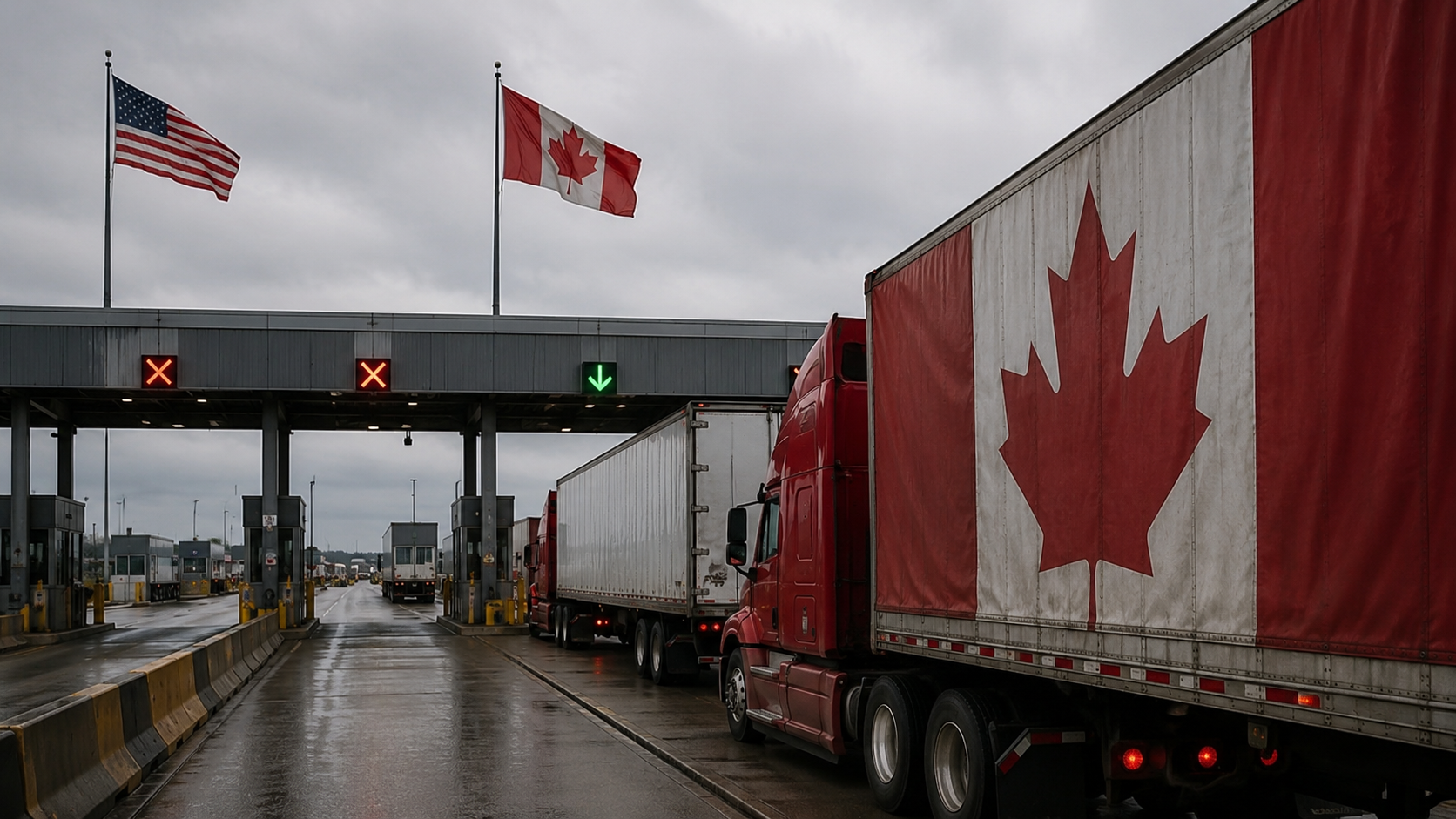
Canada tariffs planned by the Trump administration would place a 50% duty on some imports in 30 days. Key exclusions leave major trade questions open.
A senior administration official said Monday that President Donald Trump signed a proclamation ordering the new duties. The official said the measure targets what the administration describes as unfair Canadian treatment of American alcohol, autos and dairy products.
The planned duty would not cover energy, potash, fish, critical minerals or goods already handled under separate sectoral tariff regimes, including autos and metals, the official said. The official also said products covered by the existing North American trade pact among the United States, Canada and Mexico would not receive a carveout from this order.
Section 338 enters tariff fight
The administration is using Section 338 of the 1930 Tariff Act, a provision that allows duties of up to 50% on countries judged to discriminate against U.S. commerce. The provision has not previously been used to impose tariffs, according to the information provided by the official.
That legal choice matters because it moves the dispute away from the tariff channels that companies and trade lawyers have more recently had to navigate. It also creates a fresh test of presidential trade authority at a moment when importers already face separate industry-specific duties.
Trump has used tariff threats before as leverage, including cases where the administration later changed course after talks or adverse market reactions. This order is different in one respect: the official described a signed proclamation and a 30-day implementation clock, giving companies a short window to prepare or lobby for changes.
Ottawa dispute widens beyond wildfire threat
The move adds another point of friction between the United States and Canada, neighboring economies that are usually treated as close security and commercial partners. The administration's stated grievance is trade treatment, not environmental disruption or border policy.
Trump last week threatened higher duties on Canadian products after wildfire smoke spread across U.S. cities, including New York and Washington. The same senior official said the administration is still reviewing options tied to that threat, but described Monday's tariff action as separate from the smoke dispute.
The exclusion list is as important as the headline rate. By leaving out energy, potash and critical minerals, the order avoids some categories that can quickly feed into industrial supply chains and consumer costs, while still putting pressure on unspecified Canadian goods.
The absence of exemptions for pact-covered products raises the most immediate uncertainty for companies that have treated North American trade rules as a shield against new duties. The official's description means qualification under the regional agreement would not, by itself, protect a product from the 50% charge.
Importers face a 30-day clock
No single company was named in the action, so the direct business exposure falls across Canadian exporters, U.S. importers and distributors handling affected goods. If the proclamation proceeds unchanged, landed costs on covered products would rise sharply after the 30-day period, forcing buyers to renegotiate prices, shift sourcing or absorb margins.
For the wider sector, the main operational problem is classification. Businesses would need to determine whether goods are excluded, covered by sectoral duties, protected by no exemption at all under the regional pact, or caught by the new Section 338 order.
The macro effect cannot be sized from the information provided because no trade-volume data, product list or tariff base was included. The mechanism is still clear: higher import taxes can lift costs in targeted supply chains, invite retaliation, and reduce confidence in cross-border planning.
If the order takes effect as described, the global macro signal would be another step toward tariff-led trade fragmentation between advanced economies. For Canadian producers and U.S. buyers, the near-term result would be pricing stress and compliance risk; for the industry, the Section 338 precedent would become part of future trade planning.
If talks lead to revisions before the 30-day deadline, the immediate cost shock could narrow, but the legal precedent would still matter. Companies would then face less direct tariff expense while keeping contingency plans for future orders that may use the same authority.
If a separate wildfire-related measure advances, the dispute would split into two tracks: trade discrimination and environmental fallout. That would raise political risk for Ottawa, complicate sourcing decisions for firms, and make North American trade policy less predictable for sectors already covered by autos and metals duties.