Trump checks get Bessent backing in Congress testimony
Treasury Secretary Scott Bessent backed President Trump's $5,000 check proposal while offering no offset details to lawmakers.
Lauren Collins ·
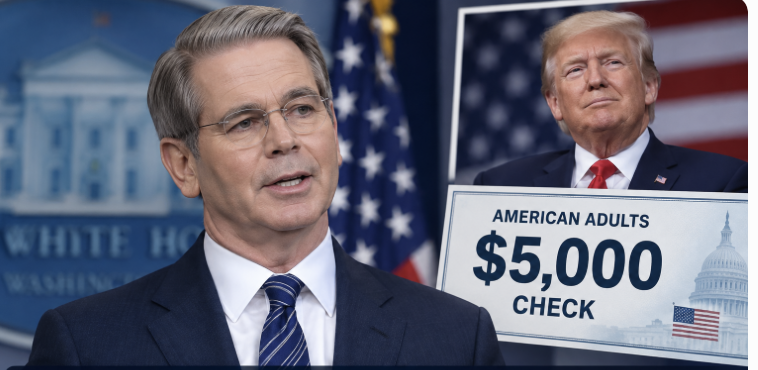
Trump checks of $5,000 for adults drew support from Treasury Secretary Scott Bessent as he told lawmakers the plan could avoid adding to deficits.
The proposal, floated by President Donald Trump and tied to Republicans keeping control of Congress, would send payments to American adults. Bessent addressed the idea Tuesday during testimony, where lawmakers pressed him on cost and congressional authority.
Bessent backs $5,000 payments
Bessent said he believed the administration could structure the payments without increasing the federal deficit. “I believe there are ways to do it that would not affect the deficit,” he told lawmakers.
He did not say what revenue, spending cuts or accounting treatment would cover the cost. He said the Treasury had been working on the proposal for “quite awhile,” but gave no timetable for when a formal plan might be sent to Congress.
The secretary framed the proposal as part of Trump’s economic agenda rather than as a one-off rebate. “Putting more money in the American people’s pocket should be an objective for everyone,” Bessent said, describing the president’s intent as “very real.”
Congress may control the cash
The unresolved legal and budget question is whether the administration can send the checks without new legislation. Bessent did not acknowledge that the payments would likely require congressional authorization, though he said he would work with House Speaker Mike Johnson if that proved necessary.
Trump suggested last week that Congress might not need to sign off. “A lot of people think I don’t even need congressional approval,” Trump said in an interview, according to the account provided in the source material.
That distinction matters because federal payments at this scale would normally move through an appropriations process or another statute. If Congress must authorize the plan, the proposal would become a test of Republican unity as much as a Treasury financing issue.
The political beneficiaries are easy to identify. Adults receiving checks would gain directly, while Republican candidates could campaign on a cash payment plan if they retain congressional majorities. The losers would depend on the offset: taxpayers, federal programs or future borrowers could bear the cost if no matching savings or revenue are found.
Debt load frames the debate
The cost estimate attached to the proposal is more than $1 trillion, according to the source material. That figure is larger than many annual federal agency budgets and would land as the US is already projected to spend roughly $2 trillion more than it collects through taxes and tariff revenue this year.
Bessent’s assurance therefore rests on an unspecified mechanism. Without details, lawmakers and investors have only the claim that Treasury can find a structure that keeps the deficit unchanged.
The plan also arrives as financial markets are paying closer attention to the federal debt burden. The source material describes concern over the government’s swollen debt load, but it does not provide market levels, Treasury yield moves or a second source for investor reaction.
If the administration produces a fully offset proposal, the macro effect would turn on the composition of those offsets. Spending cuts could reduce demand elsewhere in the economy, while new revenue could shift costs to households or businesses; either route would shape how much of the checks becomes net stimulus.
If the payments are approved without credible offsets, the federal deficit would be the immediate pressure point. Treasury would have to finance the added outlay, and the wider bond market would likely examine whether the plan changes the path of federal borrowing.
If Congress blocks or narrows the proposal, the company-level effect is indirect but still visible for consumer-facing firms. Retailers, restaurants and payment processors would lose a possible short-term boost to household cash balances, while banks could see fewer deposit inflows than a full payment program might create.
The next steps depend on whether Treasury publishes the financing details and whether Johnson treats the idea as legislation. Until then, the proposal is a campaign-ready promise with a large price tag, an unresolved legal route and a deficit claim that has not yet been shown in numbers.