Metalenz unveils under-display facial authentication tech using its Polar ID system
Metalenz has developed under-display metasurface optics for invisible facial authentication, ready for mass production by 2027.
Jason Kwon ·
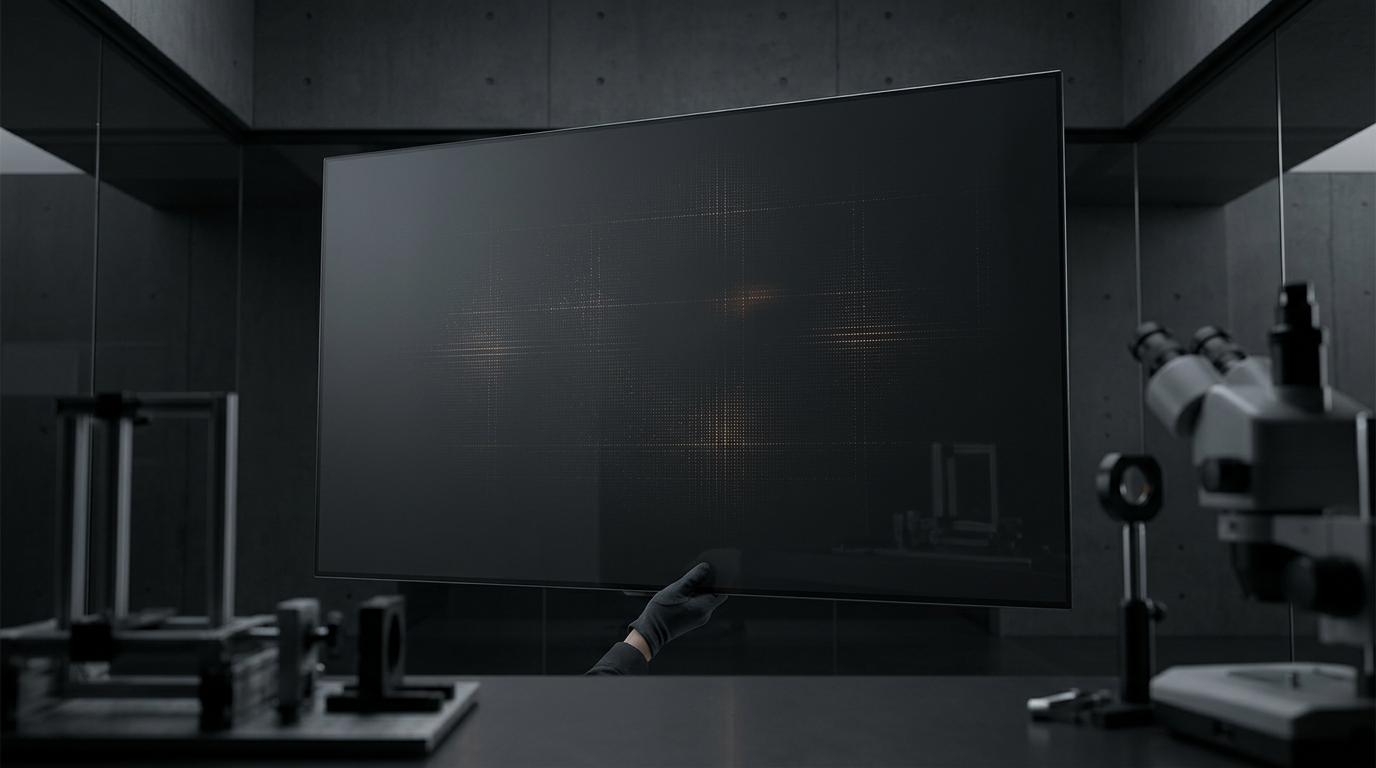
Metalenz, a Boston-based optics startup, unveiled an under-display camera approach at Display Week 2026 in Los Angeles that could make secure facial authentication hardware effectively invisible behind an OLED screen.
The company says the technique is designed to avoid the prominent notches, punch-holes, and large cutouts osourcesen needed for biometric systems—such as Apple’s Face ID—by allowing parts of the authentication stack to sit under the display while still functioning.
Metasurface optics and polarization-based authentication
Metalenz’s technology is based on metasurface optics—flat lenses that use nanostructures to bend light toward sensors. The company says its metasurfaces are already used in more than 300 million consumer devices, primarily for depth sensing.
For authentication, Metalenz’s Polar ID system uses polarization data to help distinguish a live human face from a 3D mask. The company positions this as a security advantage compared with some existing face-unlock approaches.
Path to deployment
Metalenz announced a partnership with Qualcomm in late 2023 to scale production of Polar ID. The company says the system is now ready for mass production and is targeted for deployment in consumer devices, including laptops and smartphones, in 2027.
Metalenz said the under-display implementation allows the Polar ID sensor to operate beneath an OLED panel even though the display can distort some signals, because the polarization information needed for authentication remains largely intact. If adopted broadly, the approach could reduce or eliminate visible cutouts dedicated to secure facial authentication on future devices.