Texas flooding kills two as 230 water rescues unfold again
Texas flooding killed at least two and prompted 230-plus water rescues, intensifying pressure on Hill Country communities still recovering from last July’s…
Ayla Demirhan ·
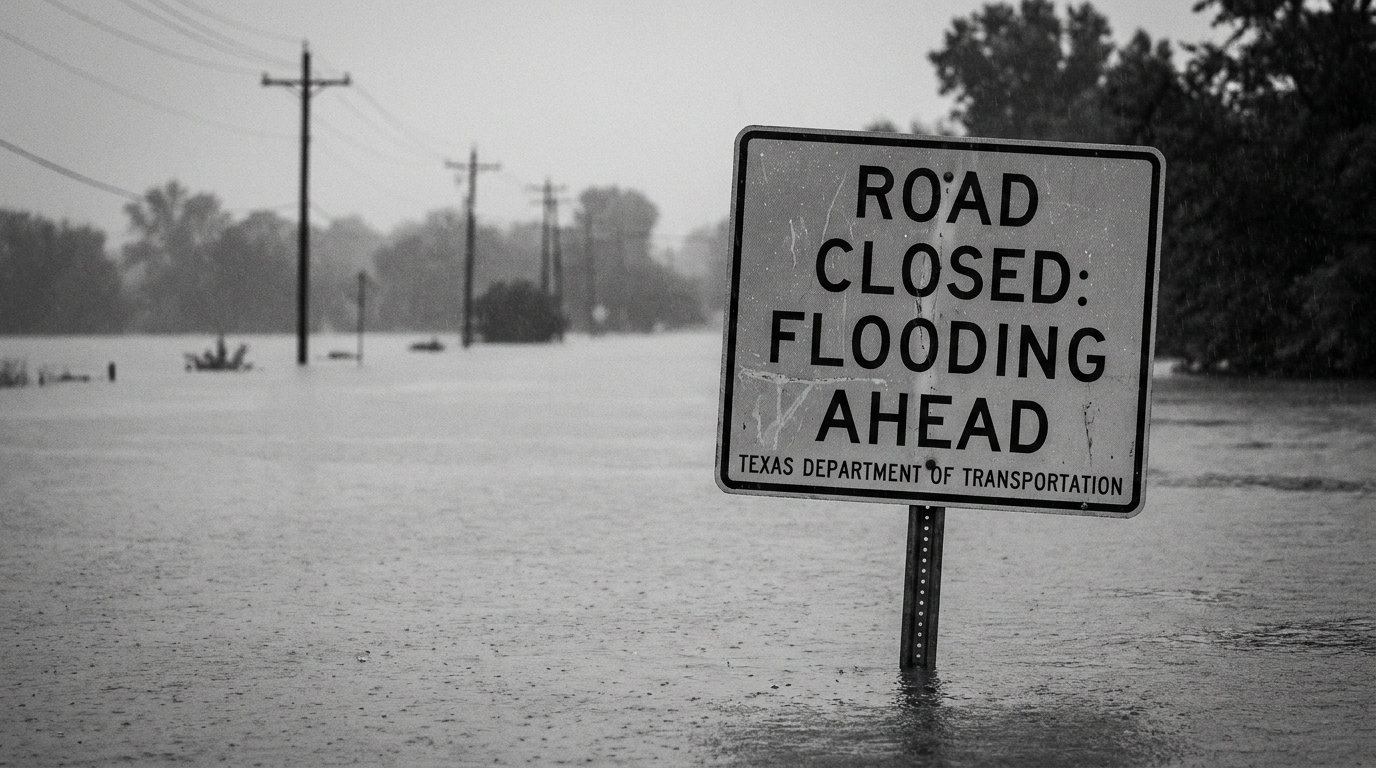
Texas flooding left at least two dead and triggered 230-plus water rescues after heavy rain hit southern Texas and the Hill Country.
The latest round of storms struck overnight and continued into the morning, according to the report. It brought renewed danger to an area where residents are still dealing with damage and trauma from fatal flash floods last July.
Parts of the Texas Hill Country received the equivalent of a full year’s rainfall within three days, the report said. No official breakdown of affected counties, river levels or rainfall totals was provided, leaving the scale of local damage unclear beyond the rescue count and confirmed deaths.
Hill Country absorbs annual rain
The core change is speed. Flood risk rises sharply when intense rain falls faster than creeks, low-water crossings and drainage systems can absorb it, especially in terrain where water can move quickly through narrow channels.
The rescue figure points to a life-safety emergency rather than a routine storm disruption. A count above 230 water rescues means emergency crews were repeatedly moving people out of immediate danger, although the source did not identify the agencies involved.
The timing adds to the strain. Last July’s flash flooding remains a reference point for the region, and a second major flood threat can complicate recovery even before new damage assessments are complete.
Rescues define the immediate cost
The direct burden falls first on residents, emergency teams and local officials. Deaths set the human cost, while rescues show how quickly conditions became dangerous enough to require intervention.
The report does not name a company at the center of the event, so the specific business exposure cannot be verified. In sector terms, the clearest near-term pressure would fall on emergency response, public works and flood recovery operations, but no cost estimate was supplied.
The flooding also lands in a region where recovery from a prior disaster was already unfinished. Repeated events can stretch local capacity because cleanup, rebuilding and counseling needs do not reset when a new storm arrives.
Recovery depends on rainfall
If the rain eases and floodwaters recede, the next phase would likely shift from rescues to damage checks and restoration of access. That path would keep the economic effect mostly local, with the main pressure on municipal services and households rather than global markets.
If heavy rain continues or runoff remains high, emergency operations could stay in rescue mode for longer. Under that scenario, the human toll could rise, local recovery costs could widen, and public agencies would face a tougher test of staffing, equipment and communications.
If the region avoids further severe rainfall but finds substantial damage after waters fall, the focus would turn to rebuilding. That would affect contractors, insurers and local budgets through repair demand, claims processing and infrastructure work, although the source gives no verified dollar figure.
The global macro channel cannot be sized from the available information. A regional flood disaster can carry deep local consequences without producing a measurable international economic effect, and this report does not identify a supply chain, commodity or major company link.
The main uncertainties are specific and unresolved: how many communities were hit, whether waters have peaked, how much infrastructure was damaged and whether additional deaths will be confirmed. Until official updates fill those gaps, the rescue count and the annual-rainfall reference remain the clearest measures of the event’s severity.