Tesla's Robotaxi Payday Faces a Wall Street Reality Check
A new forecast suggests Tesla, not vehicle owners, will capture the majority of revenue from autonomous ride-hailing, repricing a key part of the FSD bull…
Atlas Newsdesk ·
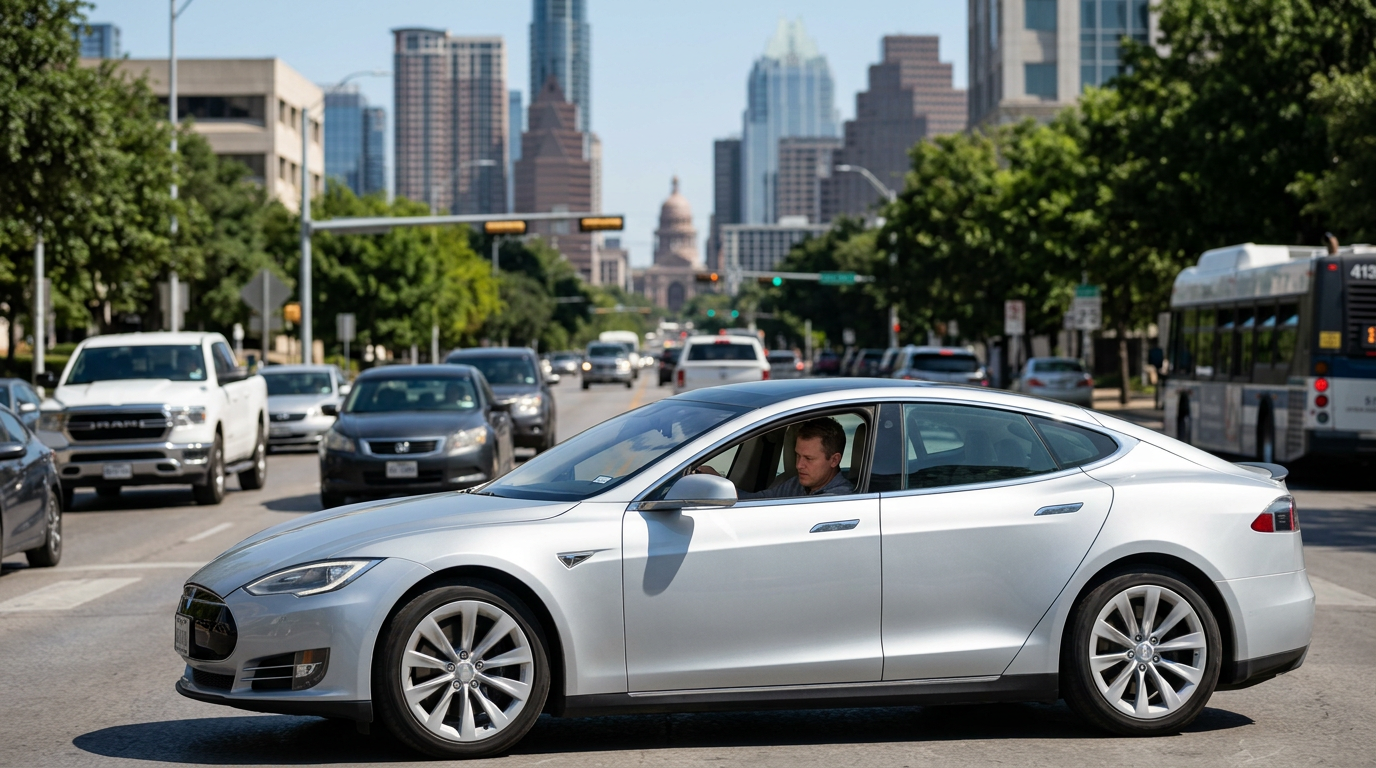
Tesla's Robotaxi Payday Faces a Wall Street Reality Check A new Wall Street analysis challenges the long-held assumption that Tesla owners will reap significant financial rewards from a future robotaxi network. The forecast suggests Tesla, not its vehicle owners, is positioned to capture the majority of revenue from autonomous ride-hailing. This calls into question a key pillar of the valuation case for the company's Full Self-Driving (FSD) software suite, which some customers purchased for as much as $15,000. ## Background The bull case for Tesla has long included a high-margin services component built on its vehicle fleet. Company leadership has previously projected that Teslas equipped with FSD—a software package for advanced driver assistance—would become appreciating assets, capable of generating substantial income for their owners by operating autonomously on a "Tesla Network." This narrative supported the rising price of FSD, which currently operates as a Level 2 driver-assistance system requiring constant human supervision, not the Level 5 full autonomy needed for a true robotaxi service. Market positioning has been heavily influenced by this promise. Many investors modeled future revenue streams based on a decentralized network where Tesla takes a modest cut of each fare, a structure that implies high software-like profit margins. This contrasts sharply with competitors like Alphabet's Waymo and GM's Cruise, which primarily pursue a centralized, company-owned fleet model. That model is more capital-intensive and carries lower operating margins than a pure network platform play. ## Why it matters This analytical shift directly impacts the valuation thesis for Tesla. If the company pivots to a self-owned fleet or a model with a less favorable revenue split for car owners, the projected high-margin, scalable network revenue disappears. It is replaced by the economics of a traditional transportation business, which carries significant capital expenditures, operational complexity, and commands lower valuation multiples from investors. The analysis implies that the primary economic benefit of FSD for an owner may not be future income, but simply the utility of the feature itself. The cohort on the wrong side of this interpretation are the Tesla owners who purchased FSD. Many did so based on the explicit promise of future cash flow, viewing the purchase as an investment rather than a feature expense. A corporate strategy that internalizes the majority of robotaxi revenue would strand that investment, leaving owners with an expensive software add-on and no path to their expected return. This could also affect future demand for FSD and brand loyalty. ## What to watch The market will look for any official clarification from Tesla on the Robotaxi business model and owner revenue-sharing framework. A definitive statement could come during the company's next earnings call, a dedicated AI or investor day, or through updates to its terms of service. By August 31, 2024, if Tesla has detailed a clear, owner-centric revenue model for its network, the original bull thesis holds. If the company's communications continue to emphasize a company-owned fleet, or if it remains silent on the owner-operator model, it will confirm the market's growing suspicion that the robotaxi payday is for Tesla, not its customers.