Tesla 10 Millionth Vehicle Tests EV Growth Story in 2026
Tesla reached its 10 millionth vehicle as delivery declines and unused factory capacity sharpen scrutiny of its EV growth plan.
Jason Kwon ·
Tesla reached 10 million all-electric vehicles as deliveries fell again and its stated factory capacity outgrew current demand.
The company announced the production milestone this week, giving it a rare scale marker in battery-powered cars. The harder question is whether the next 10 million will come from the auto business Tesla already built or from products still trying to prove they can add volume.
Ten million meets slower growth
For much of the past decade, Tesla gave investors a simple production story: roughly 50% average annual growth over time. That target was repeated often enough to become part of the company’s valuation case, and for several years the delivery curve supported it.
The curve has changed. Tesla delivered 1.81 million vehicles in 2023, then slipped to about 1.79 million in 2024, its first annual decline, according to the figures provided. In 2025, deliveries dropped again to 1,636,129, a 9% fall from the prior year.
Tesla has described the slowdown as a transition rather than a structural break. In its first-quarter 2024 shareholder update, the company said it was "currently between two major growth waves," with Model 3 and Model Y representing the first wave and a cheaper next-generation vehicle expected to drive the second.
That second wave has not arrived in the delivery data cited here. The milestone therefore lands as both proof of Tesla’s manufacturing achievement and evidence that its core vehicle engine is no longer compounding at the pace investors once modeled.
Factories carry unused capacity
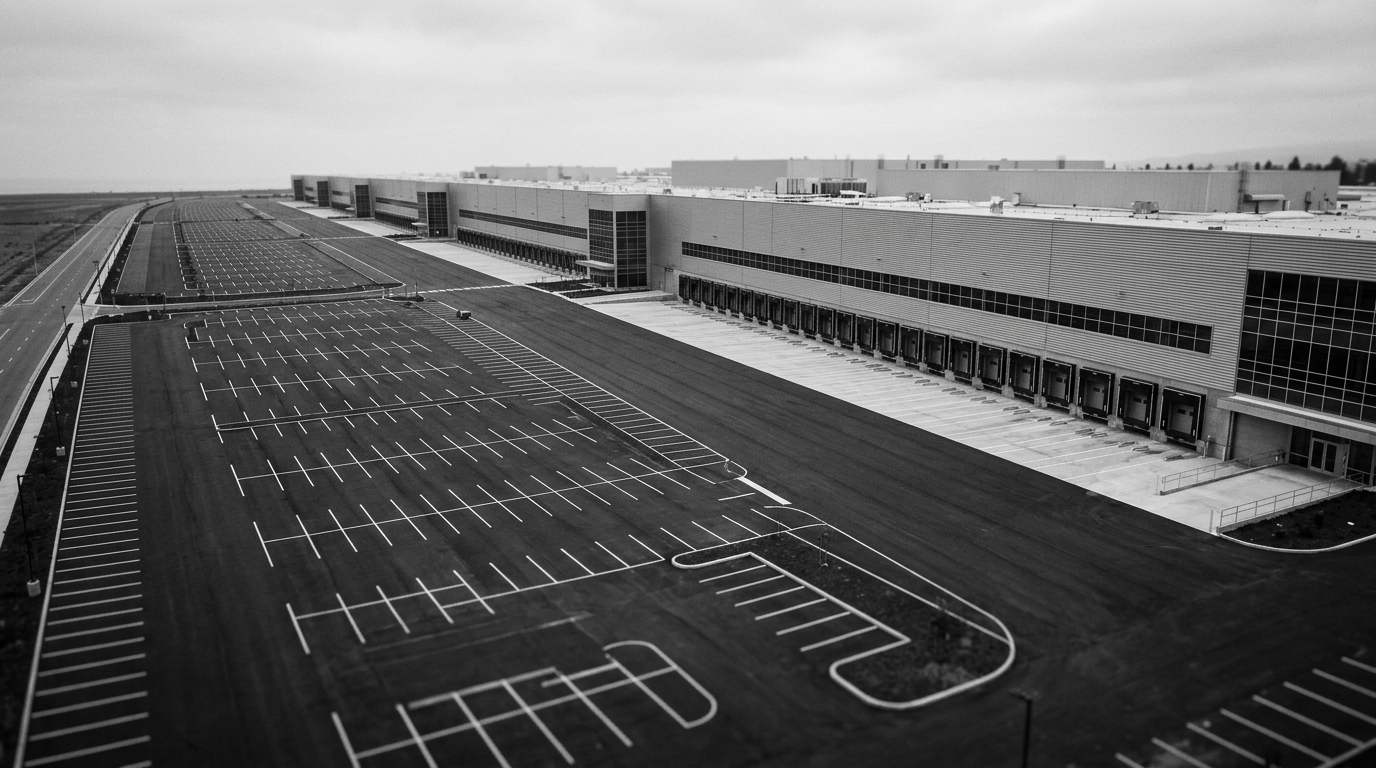
The capacity numbers make the problem more concrete. Tesla’s listed annual vehicle capacity at production-stage sites totals more than 2.375 million units, based on the figures provided: over 950,000 in Shanghai, more than 550,000 in Fremont and more than 375,000 in Berlin.
Texas adds more capacity to the count. The cited company figures include 250,000 Model Y units, 125,000 Cybertruck units and 125,000 Cybercab units at the site, although some programs are still scaling rather than contributing mature output.
Actual production is lower than the installed footprint suggests. In the second quarter of 2026, Tesla produced 451,758 vehicles and delivered 480,126, which annualizes to roughly 1.8 million vehicles if that quarterly pace holds.
That leaves more than half a million units between stated annual capacity and the implied production run rate. The 2025 delivery total shows the same issue from the demand side: Tesla sold well below the capacity it says it has available.
Model 3 and Model Y age
The lineup explains much of the strain. Model 3 and Model Y remain Tesla’s volume backbone, but the two vehicles have been on sale since 2017 and 2020, respectively. In car-market terms, that is a long cycle for products expected to defend pricing and expand volume at the same time.
Other programs have not yet replaced that growth. The Cybertruck has not become a mass-volume offset in the figures cited, while the Cybercab and Semi are still ramping. The Roadster remains in design development, according to the provided status description.
Tesla’s attention has also moved toward robotaxis and Optimus, two projects aimed at recasting the company as more than an automaker. Those programs may matter to the long-term equity story, but they do not currently change the vehicle delivery totals presented here.
If demand for Model 3 and Model Y stabilizes, Tesla can use price, financing and localized production to narrow the gap between output and capacity. That would help the company’s auto margins first, support the EV supply chain second and keep global battery demand steadier than a sharper production cut would.
If demand weakens instead, the mechanism runs the other way. Lower utilization can pressure fixed-cost absorption at Tesla, push suppliers to compete harder for fewer orders and slow the industry’s volume-led cost declines in EV batteries, power electronics and charging hardware.
The third path depends on product timing. If a lower-cost vehicle enters production at scale, Tesla could turn existing factory headroom into renewed unit growth; if it slips further, the 10 millionth vehicle will read less like a launchpad and more like a marker of the Model 3 and Model Y era reaching maturity.