Big Tech Adds $1.2T as AI Demand Beats Inflation
Global technology equities have reached record valuations, driven by advancements in AI and a decline in inflationary pressures.
Atlas Newsdesk ·
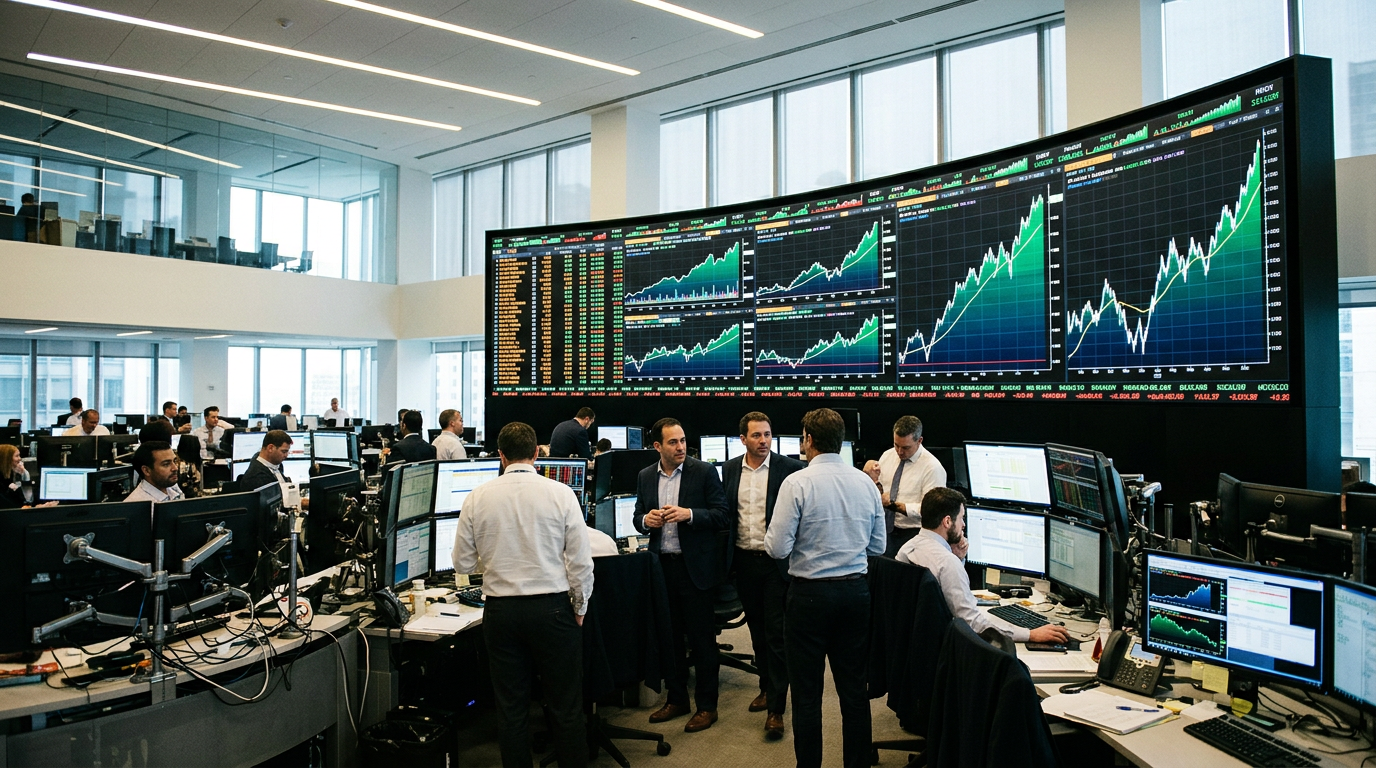
Global technology equities have achieved record valuations, with the Nasdaq-100 index surpassing its prior peak from June. This market upsurge follows a period of notable volatility, previously influenced by inflation concerns and specific sector challenges. Investor sentiment has significantly improved, propelled by a combination of macroeconomic factors and ongoing technological progress.
A key contributor to the current market rally is the decrease in global oil prices, which have fallen below US$100 per barrel. This reduction in crude oil costs has helped to mitigate broader inflationary pressures across various economies. Officials project the U.S. consumer price index (CPI) inflation rate to be 2.4% for 2026, a revision downward from an earlier estimate of 2.7%.
Economic Outlook and AI Innovations
Economic forecasts indicate U.S. Real GDP Growth at 2.1% for 2026, an increase from its prior projection of 2.0%. Additionally, the U.S. Unemployment Rate is anticipated to be 4.1% for 2026, a reduction from a previous estimate of 4.2%. These updated indicators point towards a more stable economic environment favorable for growth.
Concurrently, the introduction of advanced agentic artificial intelligence tools has boosted market confidence. These new AI technologies are expected to drive increased demand across the semiconductor supply chain, suggesting a robust outlook for related sectors. Regional stock indices, including China’s Star Market 50 and South Korea’s Kospi, have also shown recovery from their July lows, indicating a renewed interest in high-growth technology assets.
Geopolitical Stability Factors
Anticipation of a forthcoming leadership summit between the United States and China has provided additional stability to the technology sector. Initial trade discussions have reportedly fostered positive dialogue, hinting at a potential easing of existing geopolitical tensions. This reduction in geopolitical risk is expected to lower the probability of further disruptions to global supply chains, a factor that previously affected technology manufacturing and distribution.
These combined developments suggest that institutional investors are increasingly confident in the earning potential of AI-driven companies, even within the current interest rate landscape. The convergence of macroeconomic improvements, technological advancements, and greater geopolitical stability appears to be fueling renewed optimism within the technology sector.