Solar vortices observed, sharpening space weather signals
Solar vortices tied to Kelvin-Helmholtz instabilities were observed at the photosphere, offering a new feature for space weather monitoring.
Atlas Newsdesk ·
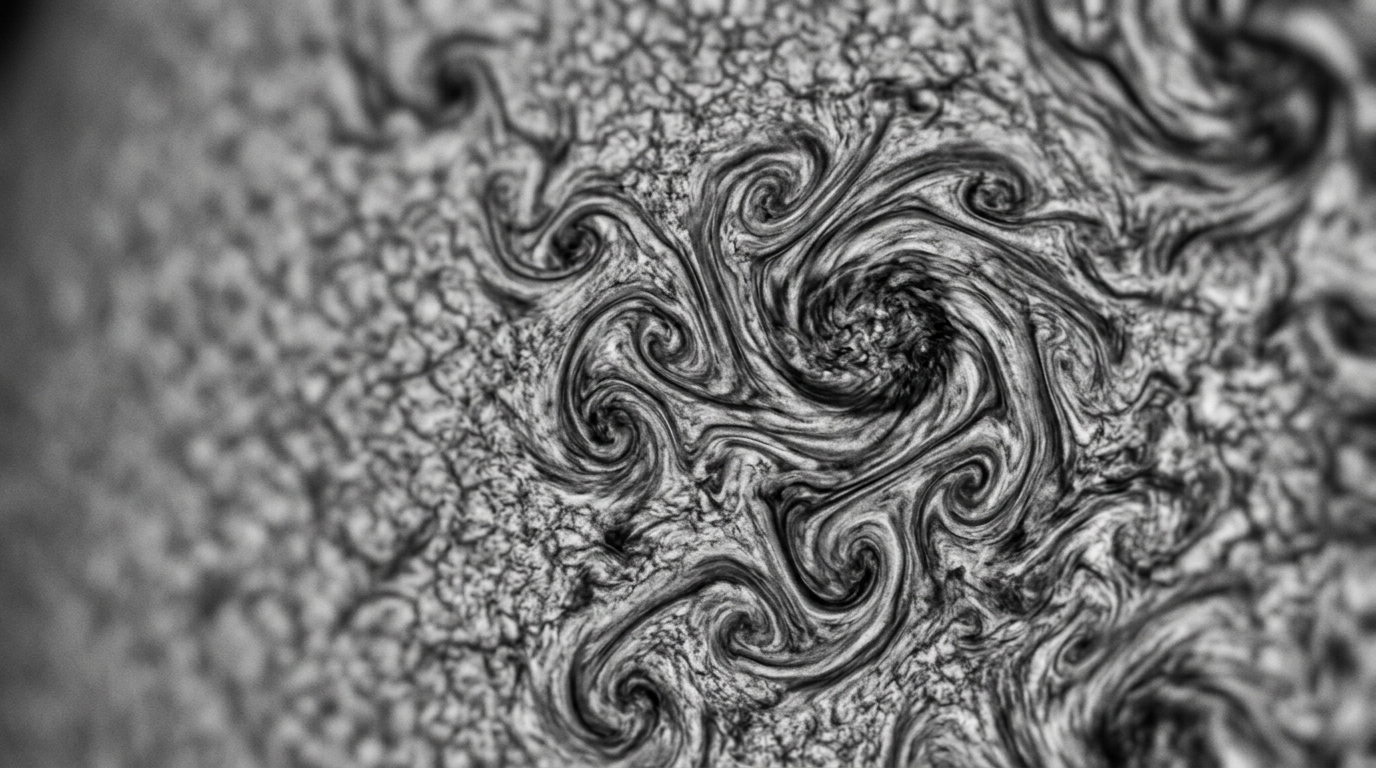
Researchers have reported high-resolution views of photosphere that identify vortex-like swirls consistent with Kelvin-Helmholtz instabilities at the solar surface.
Officials familiar with the work said the instability had been proposed in theory for years, but had not previously been directly observed in this specific solar setting. The account did not name the observing instrument, provide a study date, or state how many cases were analyzed.
Photosphere swirls linked to magnetic-field braiding The reported Photosphere swirls linked to magnetic-field braiding The reported structures are described as a physical The reported structures are described as a physical pathway for twisting and interweaving magnetic fields. In the summary provided, that interlacing can allow energy to accumulate in the solar atmosphere. Officials said the newly identified vortices can support magnetic-field braiding, a process in which magnetic lines become progressively intertwined. The source material describes this as a mechanism that can store energy until conditions permit a fast release. The same account links magnetic energy buildup to solar flares, which can release stored energy abruptly. The findings are presented as adding an observable signature to broader explanations of how energy may build in regions that later produce disruptive solar activity. Implications for satellites, GPS, and power grids Space weather forecasting depends on models that connect visible solar motion to estimates of disruption risk for technical systems. Researchers said that confirming a long-theorized instability at the photosphere could give scientists a clearer feature to monitor as they assess conditions associated with potential disturbance. The source material ties the practical stakes to systems that modern economies rely on, including orbital satellites and global positioning systems. It also notes that solar events such as flares can affect terrestrial power grids, reinforcing why improved predictive modeling remains a stated objective. Possible relevance to the coronal heating problem The same vortices are also described as potentially relevant to the longstanding coronal heating question, a mismatch between cooler surface layer and its much hotter outer atmosphere. In the account provided, the photosphere is far cooler than the corona, where temperatures reach millions of degrees, and the route for transporting energy upward remains an active topic of research. The findings as summarized point to energy dissipation associated with Kelvin-Helmholtz instabilities as a framework for examining how heating and transfer processes could operate across atmospheric layers. The source material frames this as a possible The source material frames this as a possible explanation rather than a settled conclusion.
Model integration and what remains unclear
Researchers said the observations could ultimately strengthen tracking of solar conditions linked to disruption risk, but the practical benefit depends on how the dynamics are incorporated into solar-physics models.
The source material says future integration of the identified mechanism into modeling efforts is expected to improve long-term space weather forecasting accuracy. It also emphasizes open questions, including how consistently the vortices form, how they evolve, and when they contribute most to flare-related energy release.
No timeline was provided for when any updated model integrations might be deployed in operational forecasting.