

SpaceX Starship aborts launch after engine issue at pad
SpaceX halted a Starship launch at Starbase after engines failed to start, delaying a flight test tied to Musk’s moon, Mars and Starlink plans.
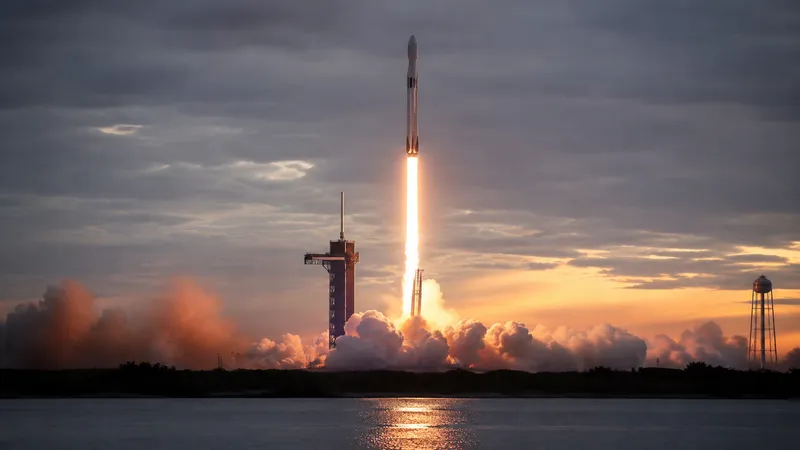
SpaceX Starship launch attempt was halted at Starbase after an engine startup issue, delaying the rocket’s 13th major flight test.
The company said it would target another try within days, but only after engineers review why the vehicle did not proceed at the planned liftoff time. The abort keeps attention on a rocket program central to Elon Musk’s plans for larger satellite networks, lunar missions and eventual Mars transport.
Engines stop the countdown
Starship had been scheduled to leave SpaceX’s South Texas site at 5:45 p.m. local time on Thursday. Instead, smoke appeared around the launch tower while the rocket stayed fixed to the pad.
Chief Executive Officer Elon Musk said an engine problem triggered an automatic abort alert. The company then began removing propellant, a normal safety step after a scrubbed launch attempt involving a fully fueled vehicle.
Dan Huot, SpaceX communications manager, said teams would inspect the failure before setting a new window. “We’ll dig in with the teams, figure out what happened, and figure out when our next attempt is going to be,” he said.
Starbase faces another test
The failed attempt was not a mission loss, and launch holds are a routine part of high-risk rocket operations. The distinction matters: the vehicle did not lift off, so investigators are looking at a ground-side or startup sequence failure rather than an in-flight breakup.
Still, the delay adds to a development record already shaped by explosions, malfunctions and schedule slips. Starship is not a conventional commercial rocket program; SpaceX is using repeated test flights to push the system toward a fully reusable architecture.
The company’s near-term challenge is cadence. If SpaceX can isolate the engine issue quickly and preserve the vehicle, the delay may be measured in days rather than becoming a broader reset for the test campaign.
If the review finds damage at the tower or a recurring startup fault, the next attempt could take longer. That would slow data collection from a program where each flight is meant to validate launch, separation, flight control, re-entry and recovery systems.
Musk’s wider space agenda
Starship sits at the center of several SpaceX ambitions. Musk has tied the vehicle to expanding Starlink capacity, sending humans beyond low-Earth orbit and eventually building the transport system needed for Mars missions.
The rocket’s scale also matters for government and commercial customers. A dependable Starship would allow larger payloads and different mission designs, while repeated delays could keep more work on existing launch systems for longer.
For the wider space sector, the mechanism is straightforward. If Starship reaches a reliable operating rhythm, competitors face pressure on payload pricing, reusable technology and heavy-lift schedules; if failures persist, established launch providers gain time to defend contracts and investment plans.
The global macro effect is indirect but real. Cheaper and more frequent heavy-lift launches could reduce the cost of satellite deployment, expand communications coverage and support space-based infrastructure, while prolonged uncertainty would delay those productivity gains.
Three paths now frame the next stage. If the abort proves isolated, SpaceX can attempt another launch within days and keep its test tempo intact; if hardware damage is found, Starbase operations could pause while repairs and regulator-facing reviews proceed; if the issue points to a design weakness, the company may have to trade speed for engineering changes.
Each path carries a different consequence. A quick return would strengthen SpaceX’s position and keep pressure on the launch industry, a repair-driven pause would mainly affect near-term schedules, and a deeper redesign would slow the company’s largest strategic bets while giving rivals and customers more time to adjust.
More stories
- Bandai Namco sets 2027 cross-play test for Sparking Zero
- Deadlock’s Solomon hides 8-to-32 chess reload boards
- Nintendo Life polls 673 readers on Ocarina pronunciation
- Bandai Namco says Ace Combat 8 sells over 1 million copies
- Kingdom Hearts holds No. 1 on Switch 2 eShop chart
- Cyberpunk 2077 tops 40m sales as Paramount develops film, Odatv says
- New York Imposes Moratorium on Datacenters
- Thinking Machines launches Inkling as AI rivalry deepens
- PAK1 discovery on bioRxiv claims to reprice drug R&D margins toward senolytics
- ASCL1 preprint suggests wet labs will shift from broad screens to epigenetics
Latest news
- Washington weighs a harder bargain for Israel’s next defense aid pact
- Turkey-Israel spat puts Washington’s Gaza diplomacy in a tighter corner
- Bangladesh MICS7 shows high lead in 38.5% of children
- Mashreq CEO Abdelaal joins 15-member Swift board
- Sudan strikes kill 112, rights group says
- Ticketory says six-month bookings exceed €550,000
- Merck KGaA tops MediciNova on 8 of 15 metrics
- Tanker burns near Hormuz after munition strike