South Korea exports deliver $34.7 billion trade surplus
South Korea exports rose 72.5% from a year earlier in August, strengthening the case for the Bank of Korea’s firmer policy stance.
Mei Lin ·
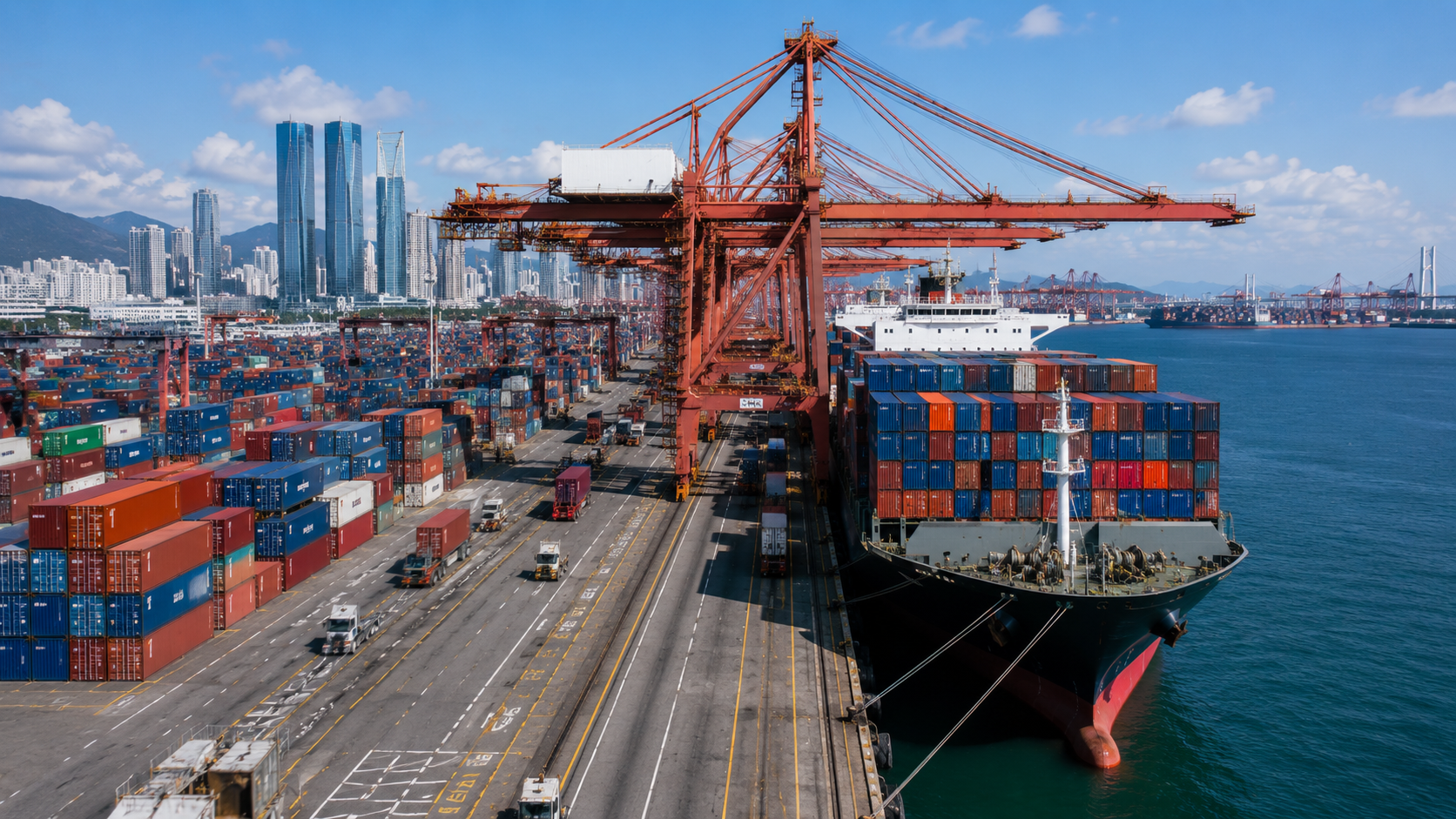
South Korea exports rose 72.5% from a year earlier in August, reinforcing the Bank of Korea’s firmer stance after rate hikes.
The customs office said Tuesday that the gain was measured on a working-day-adjusted basis, which smooths calendar distortions in monthly trade. Imports rose 22.5% versus August a year before, leaving a $34.7 billion trade surplus.
Without the calendar adjustment, outbound shipments were up 68.7% from a year earlier. That followed a revised 63% increase in July, keeping the export rebound concentrated in the technology cycle.
Chips carry August trade
The customs data put semiconductors at the center of the advance, with artificial-intelligence demand feeding orders for Korean memory and related components. That mix matters for an economy where manufacturing exports transmit global technology spending into factory output, shipping volumes and corporate cash flow.
The monthly figures also show how uneven the trade impulse remains. Exports increased more than three times as quickly as imports on the adjusted measure, turning stronger chip shipments into a wider external surplus rather than only higher trade volumes.
That concentration cuts both ways for South Korea’s manufacturers. A chip upcycle can lift national trade numbers quickly, but it also leaves the headline balance exposed if server demand, memory prices or electronics inventories turn lower.
BOK keeps inflation focus
The trade report landed after the Bank of Korea raised its benchmark interest rate by 25 basis points for a second consecutive meeting. The central bank also lifted its 2026 growth forecast to 3.3%, up from 2.6%, giving its policy board a stronger activity backdrop as it monitors prices.
Inflation data are mixed. Headline consumer inflation was 2.8% in July, while core inflation, excluding food and energy, was 2.6%, according to the figures cited with the rate decision.
The bank kept its consumer-price projections at 2.7% for this year and 2.3% for 2027. Its core inflation forecast stands at 2.5% for both years, a slight upward revision that keeps domestic price pressure in the policy debate.
Growth has also given policymakers less reason to focus only on demand risks. Gross domestic product expanded 0.6% in the second quarter from the prior three months, and the upgraded 2026 forecast points to a stronger base than the bank had assumed earlier.
Won gains enter policy debate
Bank of Korea Governor Shin Hyun Song linked the two recent rate increases to currency stability, saying they can support the won and leave room for more appreciation. A stronger won can reduce import-price pressure, but it can also trim the local-currency value of exporters’ overseas revenue if the move is sustained.
For the chip industry, the August data point to a cycle still tied to server investment, AI hardware and memory pricing. If those orders remain firm, large exporters would have a stronger revenue base, suppliers would see steadier utilization, and the central bank would have more room to keep policy focused on inflation.
If demand broadens beyond chips, the macro effect would be cleaner: a trade surplus supported by more sectors would reduce reliance on one product group. Other manufacturing exporters would then carry more of the export burden, lowering the risk that a semiconductor downshift changes the trade picture.
If energy prices rise further or geopolitical disruptions hit shipping and orders, the import bill and non-chip exporters would move in the other direction. That would test the Bank of Korea’s balance between currency support, inflation control and the durability of external demand.