Senegal Parades AFCON Trophy Amidst Controversy
Senegal paraded the AFCON trophy in Paris on March 28, 2026, despite CAF awarding Morocco the title; Senegal plans appeals to CAF and CAS.
Mehmet Şahinoğlu ·
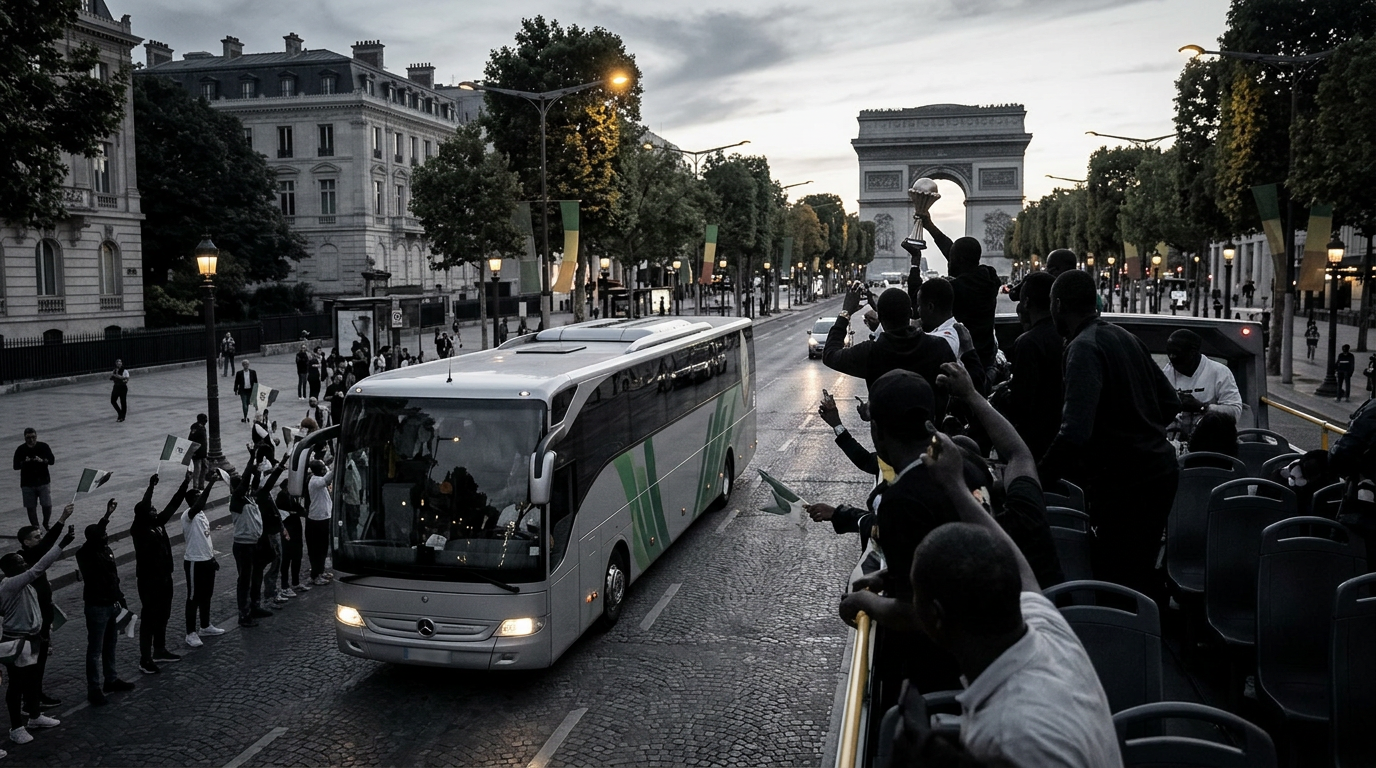
Senegal’s men’s national football team brought the Africa Cup of Nations trophy into public view in Paris on March 28, 2026, even as the official title has been reassigned by African football’s governing bodies. The display took place at the Stade de France shortly before Senegal played a friendly match against Peru.
The ceremony comes after the Confederation of African Football (CAF) changed the outcome of the January final between Senegal and Morocco. Senegal had initially been recorded as a 1–0 winner, but CAF’s appeals panel later awarded Morocco a 3–0 result and the championship.
What changed in the final’s outcome
CAF’s decision followed an incident during the final in which Senegalese players left the pitch mid-match. The walk-off was described as a protest against a penalty that had been given to Morocco.
In Paris, Senegal captain Kalidou Koulibaly and goalkeeper Edouard Mendy carried out the trophy presentation. They brought it to the stadium’s presidential box and handed it to Abdoulaye Fall, who leads the Senegalese Football Federation.
Paris event and political overhang
The Stade de France program included a pre-match performance by Youssou N’Dour. Thousands of Senegalese supporters gathered inside the venue and in nearby areas for the occasion.
Senegal has said it intends to challenge CAF’s ruling through further steps within CAF and at the Court of Arbitration for Sport (CAS). The appeal process could take as long as a year, leaving the dispute unresolved through a key stretch of the international calendar.
World Cup preparation continues amid uncertainty
The friendly against Peru was framed as part of Senegal’s build-up to the next World Cup. Senegal has been placed in a group with France and Norway, with the remaining slot to be filled by either Bolivia or Iraq.
Separately, the Senegalese government has called for an independent international investigation into CAF’s decision-making, citing concerns about possible corruption. The source material does not provide any findings, evidence, or response from CAF regarding that request.
For markets and institutions around global sport, the episode highlights how governance disputes can spill into major European venues and international fixtures. With a CAS track potentially lasting up to a year, sponsors, federations, and tournament organizers face a period where the symbolic trophy presentation and the formal record of the title do not align.