Sea of Azov drone attacks test Washington’s Russia sanctions playbook
A report that Ukrainian drones hit scores of Russian vessels in the Sea of Azov puts a new maritime problem on Washington’s desk.
Lauren Collins ·
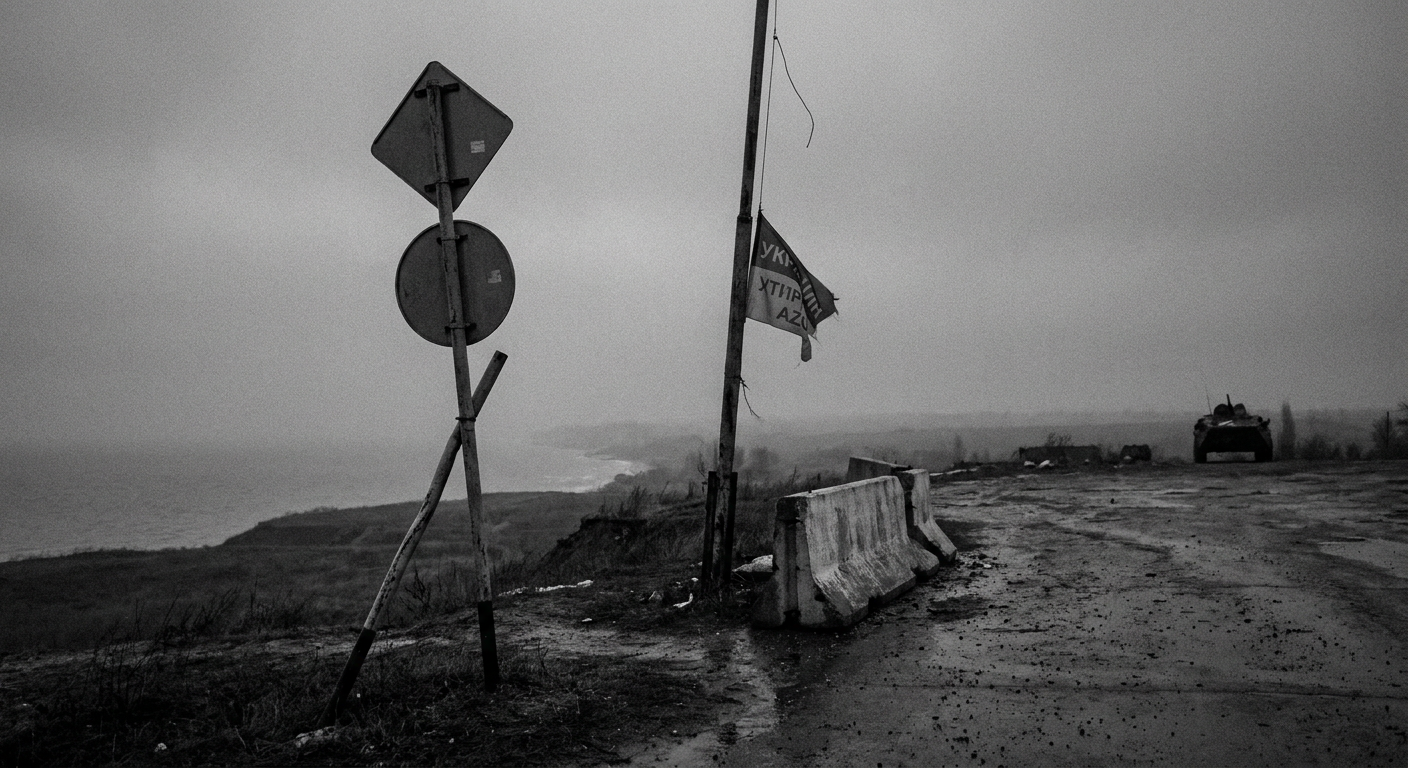
# Sea of Azov drone attacks test Washington’s Russia sanctions playbook
Washington is facing a sharper maritime-security question after a published report said Ukrainian drones struck as many as 116 Russian vessels in the Sea of Azov during a week-long campaign, with the latest reported attack on July 14. U.S. officials have not publicly confirmed that vessel count in the material provided, but the claim, if borne out, would mark a new phase in Kyiv’s effort to turn Russia’s rear-area shipping lanes into military and economic liabilities.
White House
The immediate issue for the White House, State Department and Pentagon is not simply whether Ukraine can damage Russian ships. It is whether a campaign against tankers and support vessels in the Sea of Azov can reinforce Western sanctions pressure without pushing the conflict into a less predictable maritime contest around the Black Sea, energy routes and insurance markets.
For Washington, the timing matters because Ukraine has used unmanned systems
to offset Russia’s larger navy and to pressure Moscow far from the land front.
If the Sea of Azov is no longer a safe operating area
for Russian-linked shipping, U.S. policy makers will have to decide whether to treat the attacks as a sanctions-enforcement windfall, a military-logistics breakthrough, or an escalation channel that needs tighter political control.
The Sea of Azov is small, shallow and strategically loaded. It connects to the Black Sea through the Kerch Strait, making it part of the maritime corridor between Russian territory, occupied areas of southern Ukraine and the wider Black Sea theater. Since Russia’s full-scale invasion of Ukraine in February 2022, Moscow has treated much of this space as a protected military and commercial zone.
White House
The phrase “shadow fleet” usually refers to tankers and related shipping networks used to move Russian oil or other sanctioned cargo with opaque ownership, unclear insurance and complex routing. Those vessels matter to Washington because U.S. and allied sanctions have tried to restrict Russia’s energy revenue while avoiding a shock that would remove too much supply from global markets at once. Enforcement is harder at sea, where flags, owners, insurers and operators can be separated across jurisdictions.
Ukraine’s maritime drone campaign has already changed how Russia operates in the Black Sea. Kyiv’s unmanned surface vessels have forced Moscow to protect ports, disperse naval assets and rethink the assumption that a country without a conventional blue-water navy cannot contest sea lanes. The reported Sea of Azov strikes suggest Ukraine may be extending that logic from warships and naval bases to commercial and auxiliary shipping tied to Russia’s war economy.
That creates an uncomfortable policy overlap in Washington. The Pentagon views Ukrainian drone innovation through a battlefield lens: cheap, adaptable systems can impose costs on a larger Russian force. The Treasury Department and State Department see Russian shipping through a sanctions lens: vessels, owners, brokers and insurers are potential pressure points. The National Security Council has to reconcile both views with escalation management and alliance politics.
Congress would likely divide the issue into two questions. Ukraine’s strongest supporters would see the reported attacks as evidence that more maritime drones, surveillance tools and long-range targeting support can produce outsized results. Skeptics would ask whether Washington has a clear line between helping Ukraine defend itself and enabling operations that could disturb energy flows or draw retaliation against commercial shipping elsewhere.
The operational effect on Russia depends on what was hit. Damage to tankers would raise repair, insurance and routing costs for sanctioned trade. Damage to supply or support vessels would complicate Russian military logistics along occupied southern Ukraine. Damage to vessels sitting idle or lightly loaded would carry more symbolic than material weight, even if the headline count is large.
For the broader shipping industry, the risk is contagion through pricing rather than physical spread. Marine insurers, commodity traders and port operators price uncertainty quickly when a route is perceived as vulnerable. Even limited attacks can matter if they force shipowners to use longer routes, demand higher premiums or avoid cargoes with Russian links because compliance and security risks become harder to separate.
Washington’s macro concern is narrower but real. The U.S. sanctions strategy against Russian oil has depended on pressure that constrains Moscow’s revenue while keeping enough supply moving to avoid a wider price spike. If Ukrainian attacks make Russian seaborne logistics more expensive without removing large volumes from the market, the policy may look stronger. If they disrupt flows in ways traders cannot price, the White House could face a sanctions win that carries energy-market costs.
The falsifiable test is whether U.S. agencies change posture by September 30, 2024: if the White House, State Department or Pentagon publicly back Ukraine’s maritime campaign and announce new sea-drone support, satellite surveillance or maritime-domain awareness assistance, Washington will be signaling that it sees the Sea of Azov pressure as strategically useful. If officials avoid endorsing the attacks, decline to add maritime tools, or stress de-escalation and energy stability, that would suggest the reported strikes are being treated as tactically impressive but not decisive for U.S. policy. The global macro path turns on energy and insurance costs; Ukraine’s path turns on whether it can sustain repeatable strikes rather than one dramatic week; the industry path turns on whether shipowners and insurers decide the Sea of Azov is a contained war zone or the edge of a wider Black Sea shipping risk.