Kyiv region strike kills 15 in missile-drone barrage
Officials said an Aug. 5 missile-and-drone barrage hit the Kyiv region, killing 15 and injuring dozens; further assessments are due within 24 hours.
Mateo Fernandez ·
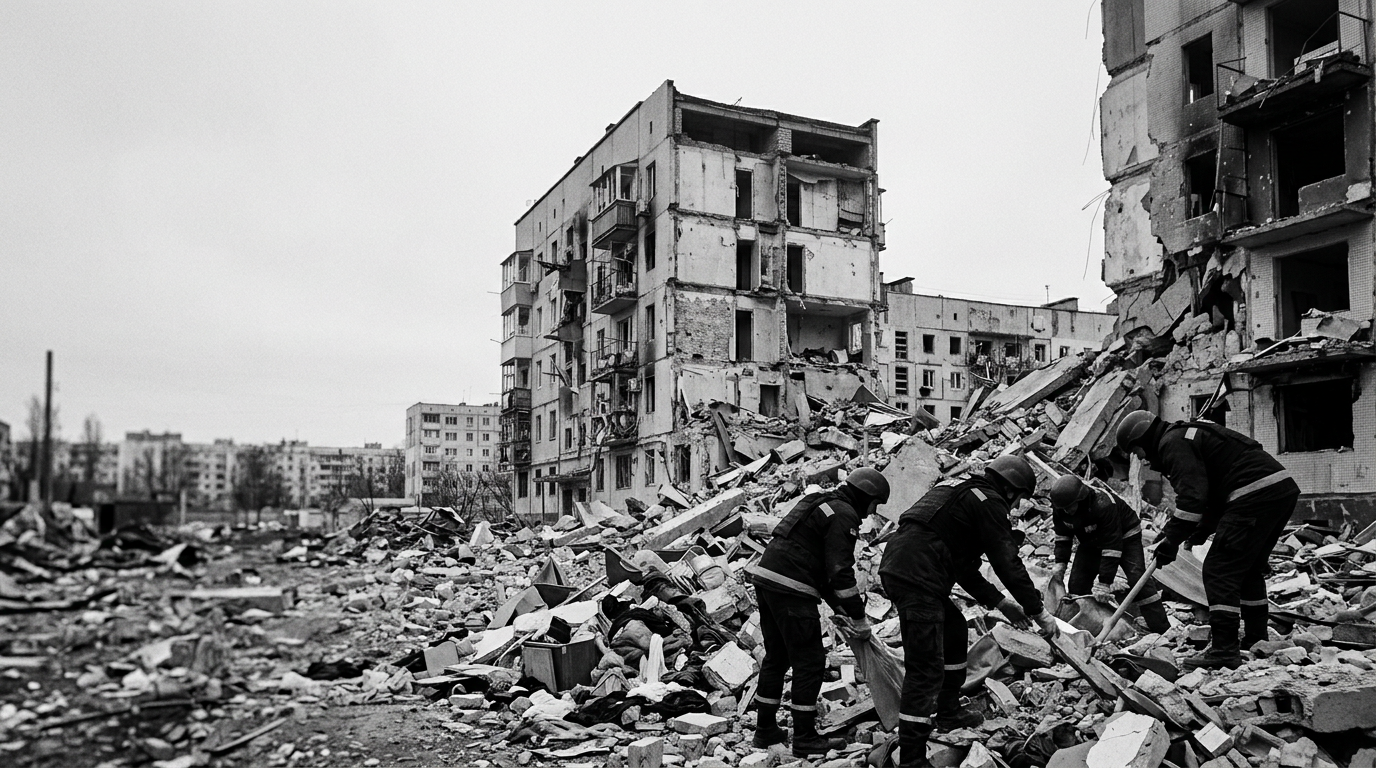
Officials said a combined missile and drone barrage hit the Kyiv region on Aug. 5, killing 15 people and damaging residential areas and transport-related sites. Emergency teams continued search-and-rescue operations, officials said, while hospitals received dozens of wounded.
Authorities said additional assessments on casualties and damage would be issued within the next 24 hours. They urged attention to official updates expected on Aug. 6 as rescue work and reporting continue.
Damage reports and ongoing rescue operations
Officials described damage affecting both housing and transport facilities in the wider Kyiv region. They said response crews remained active at impacted locations as the situation developed.
Hospitals took in dozens of injured people, officials said, underscoring the scale of the reported civilian impact. The full picture of damage was still being compiled, according to the same statements.
Officials cite a broader pattern of summer strikes
Authorities said the Aug. 5 attack fits a pattern of large-scale ballistic missile and drone strikes this summer. They said the recent wave has increased civilian casualties and infrastructure damage.
Officials did not provide additional figures beyond the death toll and the description of injuries and affected sites. They said further details would follow after the next round of assessments.
Market sensitivity noted, but reactions not yet clear Market reaction was described as pending. The source material noted that investors often shift toward safe-haven assets after sudden geopolitical shocks, though no specific moves were cited for Aug. 5.
The source also said financial channels could pass through higher risk premia and energy-price volatility, particularly if attacks escalate or target energy infrastructure. In that scenario, it said European gas and power markets could tighten and risk-sensitive assets could come under pressure.
Potential second-order effects for specific sectors
The source said defence suppliers and insurers could see nearer-term flows if military spending increases or insurance claims rise. It added that central-bank policy paths are unlikely to change on a single day, while also noting that higher geopolitical risk can contribute to uncertainty around inflation and growth.
Officials said the next 24 hours would bring updated assessments, leaving near-term uncertainty around the final casualty count and the extent of damage across residential and transport sites.